






Future of Auto Mechanics & Technology | Apex Technical School
For many people, automobiles are integral to society. Without a mode of transportation, most people couldn’t travel long distances to work, shop, visit family or vacation. Today’s cars allow people to do all of that with ease and comfort. In fact, children can watch movies from the backseat, drivers get alerts before a car merges into their lane, and self-driving cars can now transport passengers in some areas.
Advancements like these have ushered in a new era of automotive technology and innovation, transforming both the driving experience and the mechanic profession . Rapid changes in auto technology not only reshape the cars we drive, but also the skills and knowledge required of the mechanics who inspect, maintain and repair them. One thing is clear: Mechanics can expect continuous learning and adaptation as the automotive industry evolves.
The History of Automotive Technology
The automotive industry has come a long way from its humble origins , characterized by internal combustion engines developed in the 1860s and the assembly-line produced Ford Model-T of 1908. Today, the digital revolution has led to electric and electronically based vehicles.
When power steering was developed in 1951, drivers could likely never guess what the future held: electronically controlled torque vectoring differentials (1996); dual-clutch transmissions (2003); and the hybrid-electric drivetrains, Bluetooth integration, and navigation systems of the 2010s. This rapid pace of technology advances in cars in recent years has accelerated the complexity of vehicle service and repair while simultaneously providing a more luxurious experience for motorists.
Ongoing Advancements in the Automotive Industry
Advancements in automotive technology are steering the mechanic trade into new and exciting territory. Automotive repair training and education are evolving to give prospective mechanics hands-on skills to keep up with the ever-changing industry. The integration of diagnostic tools, electric and hybrid vehicles, software, and safety systems into the mechanic’s skill setcan create a strong foundation for a profession in automotive repair.

Diagnostic Tools and Equipment
Auto repair shops today are equipped with state-of-the-art diagnostic scan tools and equipment. These tools have significantly improved efficiency, enabling mechanics to identify and address issues with precision. However, this technological progress also presents challenges. According to Motor.com , mechanics must not only be proficient in operating scan tools but also in deciphering the data they provide and understanding how a vehicle’s systems operate.
With evolving automotive technology, it can be beneficial for mechanics to learn a variety of diagnostic tools that help them find issues that scan tools alone cannot find.
Diagnostic Tools and Equipment
Electricity is the building block of modern cars. Electrical wiring diagrams, networks, software, engineering, and mechanics are all important elements of electric and hybrid vehicles . Repairing electric and hybrid vehicles constitutes a unique skill set. EVs require mechanics with specialized knowledge in electric drivetrains, high-voltage systems, and battery technology.
Related: Women Mechanics in the Automotive Industry
Safety and Driver-Assistance Systems
Modern vehicles are equipped with a variety of safety and driver-assistance technologies. These systems encompass features like adaptive cruise control, lane-keeping assistance, back-up cameras and automatic emergency braking. Mechanics must not only be familiar with these systems but also possess the expertise to diagnose and repair them. This is essential for ensuring that these systems work as intended and that drivers stay safe on the roads while using this technology.

Impact on Mechanic Training and Education
As the automotive repair trade continues to change, mechanics can embrace technologies and innovations, acquire new skills, and stay up to date with industry best practices and regulations . The modern automotive era needs committed, skilled mechanics who are dedicated to their craft and passionate about cars. By continuing to grow and adapt alongside the industry, mechanics can contribute to safer, more efficient transportation and satisfied customers.
Automotive Repair Skills at Apex Technical School
Take your interest in cars to the next level with Automotive Service & Repair training. Apex offers courses that can be completed in as few as 7 months, and classes are starting soon! Learn more about the program now or contact an Admissions Rep today to get answers to your questions about certification, financial aid, and more.
Sources:
- https://www.extentia.com/post/the-evolution-of-automotive-technology
- https://www.motor.com/magazine-summary/advancements-automotive-technology-seeing-opportunity/

Plumbing Regulations & Water Conservation | Apex Technical School
Water is a precious resource that is under threat in many places throughout the world. Droughts, contamination, and poor water management practices contribute to wasted water and increased energy consumption. However, plumbing systems in homes and commercial buildings can play a major role in conserving water today and for years to come.
Though a faucet or toilet might seem insignificant in the fight to save water, these appliances are an easy way for ordinary people to get involved. Like ripples on a pond’s surface, small changes accumulate to make a big impact. Learn more about how the plumbing industry is evolving to address water conservation concerns, leading to substantial environmental preservation and cost savings.
What Is Shaping New Plumbing Standards?
Plumbing standards have changed drastically over the years. Most recently, states and municipalities have enacted specific regulations to encourage more efficient water usage in response to climate change and rising energy prices.
Government bodies and agencies, such as the Environmental Protection Agency (EPA)also have a role to play in shaping plumbing regulations. They help ensure strong guidance for the industry, its plumbers, and the manufacturers who produce appliances like toilets, dishwashers, faucets, and more.
As the world reacts to climate change and droughts in real time, plumbing regulations may need to undergo revisions as water conservation goals evolve. There will be a need for continuous updates to plumbing best practices, technology, and innovations to meet ever-changing water efficiency standards.

Sustainable Plumbing Fixtures and Approaches
There are several specific plumbing regulations and standards aimed at encouraging water conservation. Here are some examples:
- Low-Flow and Dual-Flush Toilets : Many plumbing codes now require low-flow toilets that use significantly less water per flush compared to traditional toilets. These regulations typically specify a maximum gallons per flush (GPF) allowed. Dual-flush toilets allow users to select a lower flush volume for liquid waste and a higher volume for solid waste.
- Water-Efficient Faucets and Showerheads: Plumbing regulations often mandate the installation of water-efficient faucets and showerheads that restrict water flow without compromising performance. These water-conserving plumbing fixtures are designed to reduce water wastage during everyday use, while flow rate limits specify maximum flow rates.
- Greywater Systems : In some areas, regulations support the use of greywater systems . This technology captures and treats wastewater from sinks, showers, and laundry machines for reuse in activities like irrigation, toilet flushing, or outdoor cleaning.
- Rainwater Harvesting: Certain regions have regulations promoting the use of rainwater harvesting systems. These systems collect rainwater from roofs and store it for non-potable uses, such as landscape irrigation.
- WaterSense Certification: The EPA has established the WaterSense program , which sets criteria for water-efficient plumbing fixtures. Products bearing the WaterSense label meet these criteria and are encouraged by regulations for their use.
- Leak Detection and Repair: Some plumbing codes require regular inspection and maintenance to detect and address leaks promptly.
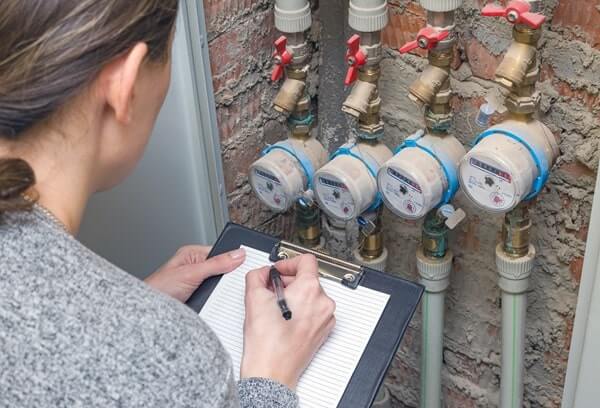
- Water Metering : Many municipalities have regulations in place that require water metering for residential and commercial properties. Metering helps track water usage and can encourage conservation by billing based on consumption.
- LEED Certification: This certification helps save millions of dollars’ worth of water and billions in energy costs. For a building to attain full LEED certification, it must meet three requirements: water-efficient landscaping, innovative wastewater technologies, and water use reduction by at least 40%.
- Education and Incentive Programs : In addition to traditional regulations, some areas have implemented educational programs and financial incentives to encourage water conservation. These initiatives may include rebates for purchasing water-efficient fixtures or educational campaigns to raise awareness about water conservation practices.
Plumbing & Water Efficiency Compliance
Plumbers have a responsibility to ensure compliance with local and governmental regulations. If homeowners have plumbing appliances that are old, compromised or even leaking slightly, plumbers can recommend efficient upgrades that can help reduce water consumption, lower utility bills, and impart environmental benefits. Plumbers can also ensure proper installation of water-efficient fixtures and educate homeowners about their new plumbing.
What Is the Future of Plumbing Regulations?
Plumbers, plumbing students, and homeowners should anticipate more strict water efficiency standards in the future. As appliances improve to meet regulatory requirements and communities take firmer stands against climate change-induced droughts in places like the American West, plumbers can help homeowners adapt to changes while leveraging their hands-on skills of the trade.
Interested in learning more about the plumbing trade? Explore the Plumbing & Pipefitting program at Apex. Admissions are rolling, which means you don’t have to wait and can apply any time throughout the year. Classes are starting soon!
Sources:
- https://www.safeplumbing.org/advocacy/saving-water/water-efficiency-studies
- https://www.iccsafe.org/advocacy/safety-toolkits/water-conservation-and-efficiency/
- https://www.contractormag.com/green/article/21158153/water-efficiency-and-leed-certification
- https://www.epa.gov/watersense
- https://greywateraction.org/greywater-codes-and-policy/

Efficient HVAC Systems & Geothermal Heating | Apex
As homeowners deal with rising energy costs, they are looking for ways to reduce their energy consumption to lower their monthly energy bills. In today’s energy-conscious world, an efficient HVAC system can be the answer to saving money while maintaining a comfortable, healthy home or office space.
Efficient heating and cooling solutions are not only good for our wallets—they can contribute to how the world tackles climate change. Each year the earth heats up, more people turn on their A/C units to stay cool. Likewise, winter weather is becoming more unpredictable, with heavy snowstorms plunging under-prepared populations into frigid temperatures. Thus, the demand for sustainable cooling and heating solutions has never been higher.
Learn how the merits of efficient HVAC systems and geothermal heating can help save money and protect the planet.
Energy Efficient HVAC Systems: The Basics
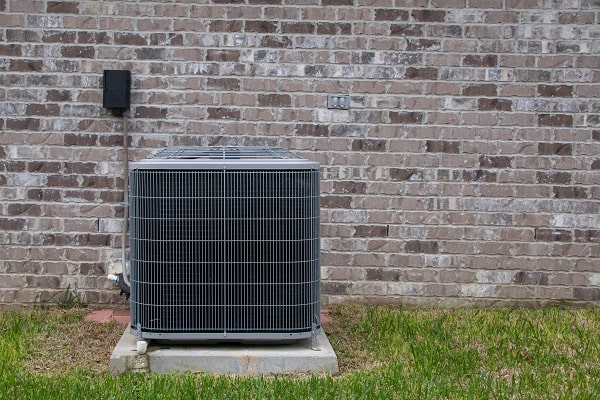
An HVAC system is comprised of heating, ventilation and air conditioning. To determine its level of energy efficiency, refer to the HVAC system’s SEER rating—or Seasonal Energy Efficiency Ratio—specified in the user manual or on the unit’s panel. The higher the SEER rating, the higher the efficiency will be.
According to Energy Star, 43% of a home utility bill is comprised of heating and cooling costs. Appropriate insulation combined with proper maintenance, energy-efficient unit upgrades and thermostat settings can cut energy use for heating and cooling by 20–50%. This has a considerable impact on lowering energy bills immediately and in the long run while also establishing eco-friendliness.
Components of efficient HVAC systems
Some efficient HVAC design improvements include:
- Variable speed compressor – This HVAC feature can help save 30% of the energy used by a typical speed compressor and minimizes system leaks.
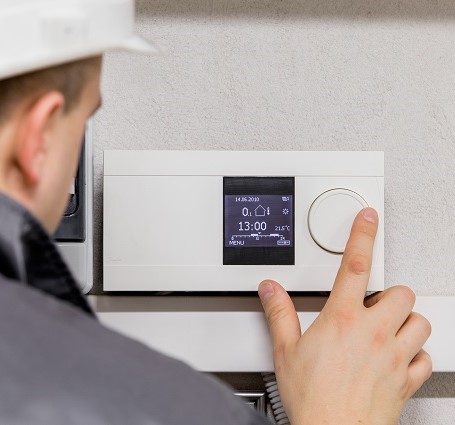
- Smart thermostats – These can be controlled by a smart phone, tablet, or other internet-connected device. Smart thermostats can, on average, save customers between 10-12 percent on heating and 15 percent on cooling, according to Smart Energy Consumer Collaborative .
- Proper insulation, sealing and ductwork – Increasing insulation is one of the fastest ways to reduce energy waste, while sealing and ductwork to reduce drafts can result in up to 5–30% of potential energy savings per year .
Benefits of efficient HVAC systems
In addition to lower energy bills, there are many benefits to efficient HVAC systems, such as:
- Improved indoor comfort and air quality
- Extended lifespan of HVAC equipment
- Decreased carbon footprint
Geothermal Heating & Cooling Systems: A Sustainable Solution
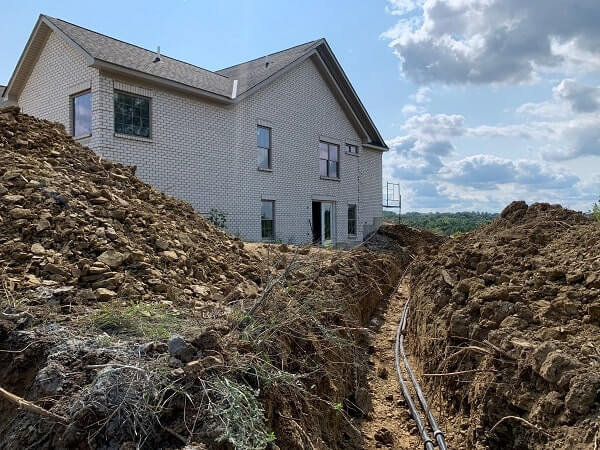
Geothermal heating harnesses the Earth’s consistent temperature below the surface to provide heating and cooling. It involves a heat pump system connected to an underground loop. The heat pump circulates a fluid through the loop, where it absorbs heat from the Earth in winter, then releases it into the home.
In summer, the process is reversed to cool the space. This efficient technology reduces energy consumption and greenhouse gas emissions, and it also offers sustainable, renewable heating and cooling solutions. Homeowners also notice more consistent temperatures throughout their homes, low noise, and a 20+ year lifespan of the system.
Environmental benefits of geothermal heating
Geothermal systems significantly reduce greenhouse gas emissions due to their low carbon footprint. By tapping into the Earth’s stable temperatures, these systems avoid the burning of fossil fuels and lessen the release of carbon dioxide and other pollutants. This endless source of energy ensures that geothermal systems can operate for decades without depleting their fuel source.
They also don’t rely on external factors like sunlight or wind, and this consistency makes them a reliable energy source, contributing to grid stability and reducing the need for backup power sources that may be less environmentally friendly.
Cost benefits of geothermal heating
Compared to a traditional HVAC system, geothermal heat pumps use between 25% and 50% less energy , which can result in lower monthly energy bill. Local and federal tax credits may be available to help homeowners and business owners offset the cost of geothermal systems. Installation is significantly more costly than a traditional HVAC; however, the long-term savings of a geothermal heat system is a compelling reason to spend more upfront.
Growing Demand for Efficient HVAC & Geothermal Heating
It’s no secret that there is a growing global push for greener technologies due to climate change concerns. The role of HVAC systems in both energy consumption and emissions can make a significant environmental difference immediately and over time.
Energy-efficient heating and cooling systems are critical to mitigate rising expenses and lessen the blow on pocketbooks. Today’s homeowners are becoming increasingly conscious of energy consumption, and they are voting with their wallets for more efficient HVAC systems and geothermal heating. The more individuals choose to purchase and invest in these options, the more demand increases for high-quality systems that offer both comfort and sustainability.
Learn About the HVAC Program at Apex
Interested in the role the HVAC trade plays in keeping spaces comfortable? Learn more about this hands-on trade and explore our Air Conditioning, Refrigeration and Appliance Controls program. Classes are starting soon!
Sources:
https://www.leecompany.com/resources/9-benefits-of-upgrading-to-energy-efficient-hvac-systems/
https://www.ecowatch.com/energy-efficiency-stats.html
https://www.energy.gov/eere/why-energy-efficiency-upgrades
https://www.energy.gov/energysaver/central-air-conditioning
How Electricians Install EV Charging Stations | Apex
The electric car market has grown exponentially in recent years. Motorists are getting more comfortable with hybrid and battery electric vehicles, and many are choosing to purchase EVs when it’s time for a new vehicle. EV drivers benefit from lower to no fuel costs, along with a more environmentally friendly transportation option in the face of increasing climate laws and regulations.
In fact, EV sales exceeded 10 million in 2022 , and the sale of electric cars more than tripled from 4% in 2020 to 14% in 2022. As the electric car market continues to expand, there is a need for EV charger installation electricians. EVs require residential and commercial charging stations, as well as electricians with the knowledge and hands-on skills to not only install them, but also ensure they adhere to the National Electrical Code (NCE).
Here’s how electricians—with their expertise in wiring, electrical codes and safety—can help to accelerate the future of electric vehicles through residential charging station installation.
Understanding EV Charging Stations
Charging stations installed at residential homes ensure that EV drivers have access to power when they need it. Charging stations are not as widely available as gas stations, so many homeowners prefer to install a convenient charging station in their garage. The two most common residential EV charging stations are:
Level 1 charging
Level 1 charging stations are the most common for residential use, as they use a standard 120-volt outlet. Many modern garages already have this outlet type installed, making this a cost-effective choice for homeowners. However, level 1 charging is the slowest, and some homeowners may contact an EV charger installer to upgrade for faster charging.
Level 2 charging
Level 2 charging stations can’t plug into a typical wall outlet—instead, they require a 240-volt special plug for homes. An EV charger installer must install a level 2 unit, which gives motorists the opportunity to charge an EV in about two hours.

Assessing the Electrical System
It’s important that a skilled electrician conduct a thorough assessment of the existing electrical system in the home before installing an EV charging station. Assessments ensure that the electrical panel is up to code and can support an EV charging station. Sometimes, the electrical panel may need an upgrade to accommodate the increased electrical load.
Residences equipped with level 2 vehicle chargers necessitate a 200-amp service. In cases where the house is equipped with a 100-amp electrical panel, an electrician will need to upgrade it to a 200-amp.
Code Compliance and Location
Licensed electricians have hands-on skills and code compliance knowledge to ensure that residential EV charging stations adhere to local electrical codes and regulations. In addition to compliance with EV charging station safety, electricians can help advise homeowners on choosing the right location for their EV charging station. Many EV charging station cords are approximately 15 feet long. Electricians can help residents consider the desired parking space proximity and the length of the charging cord when installing the charging outlet.
Safety, Testing and Troubleshooting

Electricity poses unique safety risks, whether it’s a bathroom light fixture or an EV charging port. Qualified, highly trained electricians emphasize safety precautions during installation, such as proper grounding and insulation. They also use high-quality materials and components to ensure longevity and safety for residents and their vehicles.
Electricians may perform a number of testing procedures to ensure the EV charging station functions properly, including verifying the voltage, current and power outlet. Electricians can also instruct homeowners on how to safely use their new charging station.
Despite safe installation and thorough instructions, homeowners may find they need maintenance from time to time. Electricians can also provide regular, scheduled checks and troubleshooting to reduce risks posed by a charging station.
Learn About the Electrical Program at Apex
Electricians will play a growing role in supporting the installation of EV charging stations as more homeowners buy electric vehicles and seek home charging options. It will be important for electricians to stay up to date on the latest advancements in electricity and follow safe best practices for wiring, voltage, grounding and more.
If you’re interested in pursuing a future in electrical, explore what the Electrical & Advanced Electrical program at Apex has to offer. Classes are starting soon!
EXPLORE THE ELECTRICAL PROGRAM
Sources:
https://qmerit.com/blog/ev-charging-installation-101/
https://www.greenlancer.com/post/getting-started-installing-home-ev-charging-stations
https://www.esfi.org/workplace-safety/industry-codes-regulations/the-national-electrical-code-nec/

Accessibility & Residential Building Codes | Apex
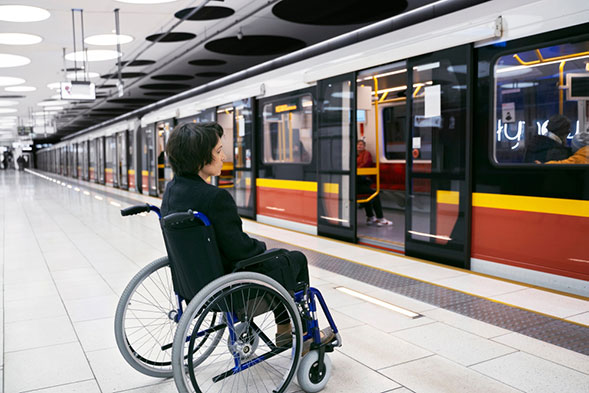
We all want to be included, from kids on the playground to adults in the workspace. Inclusion generates a sense of belonging among people. Residential spaces that prioritize inclusion give all people ways to navigate their surroundings and feel welcomed. Accessibility in residential spaces ensures that people with disabilities have the opportunity to comfortably experience a space.
Over the years, the residential building industry has grown more inclusive and accessible for everyone, thanks to regulations, new design standards and other changes. Let’s take a deeper look at how accessibility is shaping—and improving—spaces like multi-family housing, apartments and townhouses.
What are current accessibility regulations?
Current accessibility regulations in the U.S. are guided by the ADA Standards for Accessible Design. These standards specify accessible entrances, maneuverable spaces, and features like ramps and grab bars. While contractors and builders must comply with ADA regulations, they should also be aware of local or regional regulations and residential building codes, as some communities may have more rigorous requirements.
A residential building codeis a regulation that governs construction in a city or county. Fines or penalties can result from building code violations, including ADA violations. Learn more about accessibility requirements for buildings at the U.S. Department of Housing and Urban Developmentwebsite.
How has accessibility advanced in the residential building industry?
Homes have become more accessible, safer and healthier for residents thanks to advancements in technology, such as:
- Automated doors
- Voice-activated controls
- Remote monitoring systems
- HEPA-filtered air cleaners
- Elevators or chair lifts
Sustainable building practices also impact accessible design, as many green energy approaches prioritize energy savings, resource conservation and healthier living spaces for individuals with and without disabilities.
Related: A Guide to the Latest Eco-Friendly Home Construction Trends
What challenges are facing accessibility in residential construction?
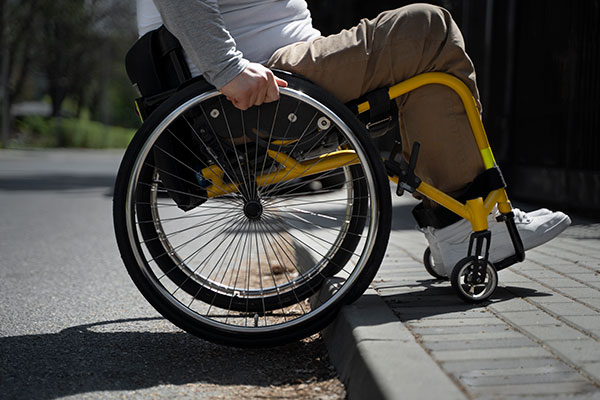
While the merits of accessible spaces are vast, the building practice faces a few challenges—namely, cost-effectiveness. Certain accessible features may require special materials, custom plans or longer timelines to complete, creating a higher price tag for builders. If a building must be retrofitted to bring it up to current accessibility standards, builders may need to be more innovative to adhere to ADA compliance guidelines. However, strong communication and practical, careful planning can help builders and other stakeholders achieve accessible solutions.
What is the future of accessible construction?
Globally, populations are living longer and many of those individuals have or will develop some type of disability throughout their lives. The architecture and construction industries have the opportunity to evolve and remove barriers for diverse groups of people to help them fully and comfortably experience residential spaces. Technology will also play a larger role in accessibility, as well as textures, colors, light and even elements like furniture.
If you’re interested in pursuing a future in the building industry, explore our Construction & Building Skills program . Classes are starting soon—contact us today to schedule a tour of our shops and classrooms and speak to an Admissions Rep about financial aid options.
Sources:
https://www.ada.gov/law-and-regs/design-standards/
https://www.hud.gov/program_offices/fair_housing_equal_opp/disabilities/accessibilityR
https://www.bankrate.com/real-estate/building-code/

Shannon Wright Instructor Profile | Apex Technical School
Apex Technical School Construction & Building Skills Trade Instructor Shannon Wright Finds Success in Conveying Knowledge and Skills to the Next Generation
Shannon Wright didn’t envision herself as a teacher.
“The teaching career chose me,” she says.
Shannon joined Apex Technical School in 2022 following several years as an instructor at another trade school. Her experience included 11 years as a field electrician in New York City, where she began as an apprentice and worked her way up to journeyperson.
An Indirect Route
A Native New Yorker, Shannon was living in Arizona when she became interested in the possibilities of electrical work during an ordinary activity – cable television installation.
“As I ended up helping the technician, I thought, could I do this? It’s 2008, why not?”
Eventually, Shannon moved back to the city and enrolled in courses at Non-Traditional Employment for Women, which is dedicated to training and placing women in careers in the construction trades.
As a field electrician, she worked on significant projects throughout New York City.
“I saw spaces that most people never see,” Shannon recalls with pride.
Projects that she worked on included the World Trade Center’s vehicular security center, LaGuardia Airport, John F. Kennedy International Airport, Rockefeller Center as well as projects for Google, Live Nation, and New York University.
Seeking Something More
Although Shannon worked for the city’s Department of Education and considered becoming a guidance counselor earlier in her career, it wasn’t until a recruiter reached out to her online that she began to seriously consider becoming an educator.
As in field work, Shannon learned the craft of instruction by doing.
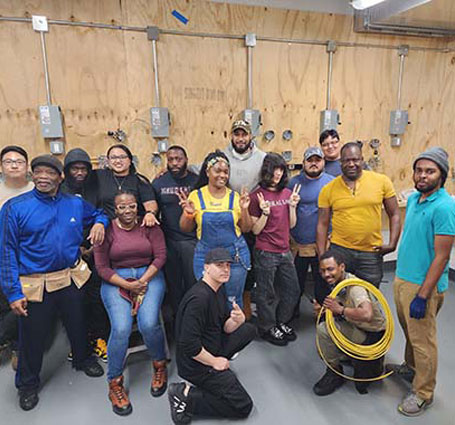
“I learned to read the room for each class” she explains. “Not every class has the same needs, so I like to take a creative approach that also ensures the students learn what is required for them gain entry level positions in the trade.”
Shannon prides herself on being a thorough and no-nonsense instructor. Her contracting class simulates real-world scenarios in which students have a budget and must plan their purchases and installations.
“This teaches them about costs, how to run a business, and they realize what a project costs,” she says.
She also uses crossword or word search puzzles to help students learn the industry vernacular.
“I make an effort to reach out to all of my students – who are all adults but at different ages and capabilities – some learn better by studying diagrams, some work best with videos, and others do best with reading,” she says. “I combine all of these to reach everyone.”
Flipping the Switch
Shannon finds great joy in seeing her students learn and begin applying their skills – both in everyday situations as well as starting sustainable careers.
One student proudly shared with her that he was the hero of his girlfriend’s house after he was able to fix an electrical problem thanks to his training.
Some students have gone on to become traveling electricians.
“One of the students who keeps in touch with me had been previously incarcerated,” she shares. “Our electrician training enabled him to turn his life completely around. He’s now been to 12 states to work on electrical projects, makes good money, and he continues to keep in touch.”

Related: Get to Know Tom Tanski, Electrical & Advanced Electrical Program Instructor
Experience Is the Best Teacher
Shannon emphasizes to her students that they must be focused and disciplined in their studies – skills that also will serve them well in the field.
As an experienced field electrician, Shannon is also well poised to advise her students on how to achieve success once they’ve entered the field.
“Learn your trade. Ask questions. Protect your feet!” she insists.
Shannon also advises that the non-technical side of being part of the electrician community is also valuable to those starting out.
“Go to your union meetings, learn about networking and being involved in your union,” she says.
For those considering life after field work, Shannon notes that her work at Apex also enables her to continuously develop her skills as an educator.
“Apex has a wonderful environment,” she says with pride. “There is support for both students and staff; it’s very refreshing! What’s wonderful is I can be myself here. I love that I am able to be Shannon.”
Are you curious about becoming an instructor? Apex Technical School is interested in meeting experienced tradespeople for instructor opportunities. Visit our careers page (for current openings) or contact us 212-645-3300.
Welding Additive Manufacturing | Apex Technical School
Additive manufacturing, specifically 3D printing, has introduced remarkable changes to industries like welding, healthcare, automotive and manufacturing in recent years. It has helped reduce lead times, cut costs and enhance performance. Let’s explore how this process is transforming critical parts of the welding industry, from prototyping to customization and more.
What Is Additive Manufacturing and 3D Printing?
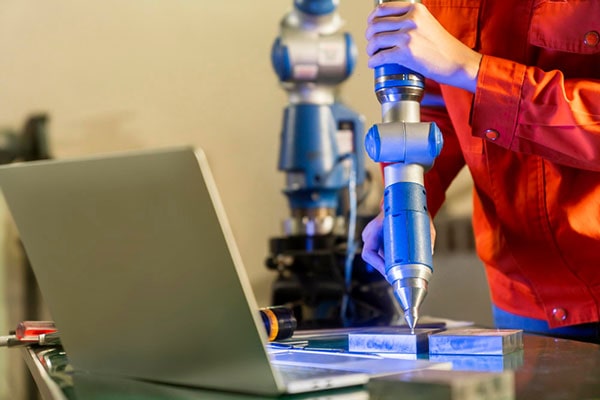
Additive manufacturing, also called 3D printing, uses a computer-controlled process to create three-dimensional objects layer by layer. Specifically, wire arc additive manufacturing (WAAM) is used to print metal parts by depositing layers of metal to make a 3D shape. WAAM combines gas metal arc welding (GMAW) and additive manufacturing.
WAAM has been revolutionary for the world of fabrication and design because it eliminates the need to manually cut and shape materials. Complex geometries and designs are now more possible than ever before, especially for complicated welding projects.

How Welders Use 3D Printing
The role of 3D printing in welding is expanding! This exciting approach is not only flexible but also full of potential. Welders of tomorrow may find even more new ways to leverage additive manufacturing. For now, welders use 3D printing in the following ways:
- Prototypes allow welders to test for fit and performance before fabricating a full-scale version.
- Customization is common in welding due to unique project requirements, and with 3D printing, tailor-made components can help welders achieve unmatched precision.
- Repairs are an easier option now thanks to 3D printed replacement parts, which give technicians the opportunity to avoid overhauling an entire component.
- Hybrid manufacturing combines 3D printing with traditional welding. This approach helps welding technicians improve efficiency and reduce wasted material.
Related: Why Robotics in Welding is on the Rise
Benefits of Additive Manufacturing in Welding
Welding professionals have been adopting additive manufacturing processes because of the advantages the technology provides. While traditional welding processes can involve creating wasted materials, 3D printing optimizes material usage by minimizing errors and reducing scraps.
In addition to more precision, 3D printing gives welders the opportunity to try new designs that their traditional welding techniques can’t accomplish alone—which may lead to increased creativity and time efficiency on the job.
These benefits are helping to bring 3D printing to more welding shops and trade jobsites; but it’s also important to be aware of potential challenges such as the cost of equipment. The technology can be a significant up-front investment for individuals or small welding companies. However, once welders have the knowledge, training and access to equipment, 3D printing can open many doors for technicians and their career goals.
The Future of Welding
It’s no surprise that 3D printing is already leaving a mark on the welding industry, and experts suggest that this trend will continue as both additive manufacturing and modern fabrication techniques advance. Aspiring welders can embrace the benefits of this cutting-edge technology—from its creative possibilities to its ability to reduce waste and increase precision. If you’re passionate about welding, keep an eye on our blog to learn more about the latest in welding advancements.
Want to learn hands-on welding skills yourself? Explore our Combination Welding Technology program . Classes are starting soon!
History of HVAC Tools | Apex Technical School
HVAC systems—that is, heating, ventilation, and air conditioning —have been used to make indoor spaces more comfortable for hundreds of years. And in the case of indoor heating, people as far back as the Romans were enjoying warm homes and businesses thanks to their early heating technologies. As HVAC systems evolved, so did the tools and equipment needed to maintain them. Find out more about the tools HVAC technicians have used, and still use, to work on today’s air conditioners and furnaces.
Who invented air conditioning and indoor heating?
Air conditioning is a modern concept, developed by Willis Carrier in 1902. The American engineer needed to solve a humidity problem at a printing company in New York, so he invented a series of coils and fans that cooled the temperature and dehumidified the building. Frederick Jones, an African American, invented the first portable air conditioning unit.
Indoor heating is even older than the history of air conditioning. Humans have been heating indoor spaces for centuries, using various methods and systems. The heating systems we use today are attributed to the Romans, who were the first to circulate warm air under floors and behind walls of homes and buildings. Wood and coal powered these early systems, but eventually these sources were replaced by steam and forced-air systems.
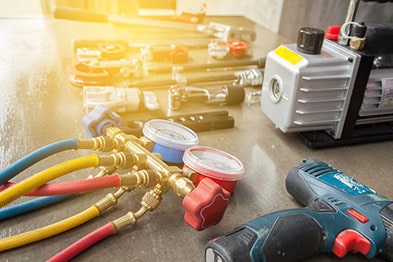
The tools used for installation and maintenance are just as important as the air conditioning and heating systems. Without the right tools, HVAC technicians couldn’t keep units in safe working order . But when HVAC was invented, the Romans and Willis Carrier couldn’t have imagined some of the tools technicians use today! Let’s dive into the history of common HVAC tools.
Multimeter
Like the air conditioning unit, the first multimeter can be traced to the early twentieth century, although its inventor is unknown. The first multimeters were used for general electrical measurements and were adapted by technicians to be used on HVAC systems.
As HVAC systems grew more complex, multimeters became specialized and included measurements for temperature, pressure, humidity and more. Today, digital multimeters are common in the HVAC industry; they are more accurate, easier to use and offer more measurement capabilities than the first multimeters of the early 1900s.
Tube Cutter
A patent for the tube cutter was filed in 1895 by John Kelsoe Fitzpatrick, although many unnamed individuals contributed to the evolution of the tube cutter throughout history. The first tube cutters were used in the plumbing and pipefitting industry, but as HVAC technologies emerged, tube cutters became an indispensable tool for technicians to efficiently cut tubes and pipes during installation and repair. Technicians today use tube cutters to slice through copper, aluminum and plastic pipes.
Refrigerant Weight Scale

The refrigerant weight scale is an important tool for HVAC technicians because it helps them measure the weight of refrigerant during the charging or recovery process. HVAC technicians know they are adding or removing the correct amount of refrigerant thanks to this valuable tool. Specific refrigerant levels ensure the system runs efficiently and safely, as it prevents over- and undercharging—problems that can cause damage or poor performance.
The inventor of the refrigerant weight scale is unknown, mostly because there have been many individuals throughout history who have improved upon this device, such as engineers, scientists and manufacturers. The development of scales and weighing systems in general can be traced back to ancient civilizations. Today, many manufacturers produce refrigerant scales with different features and capabilities to meet the specific needs of the industry.
Explore the HVAC Program at Apex
Ready to step into the HVAC classroom and use common air conditioning and refrigeration tools in the shop at Apex? Learn more about our Air Conditioning & Refrigeration program now and find out how long HVAC school is so you can start planning your future!

