






Reasons to Begin Auto Repair Classes | Apex Technical School
Doctors may come to mind first as one of society’s most important professions. They keep our bodies healthy by identifying symptoms, diagnosing conditions, repairing wounds, and staying up to date on the latest scientific research and recommendations. However, it is important to recognize that, like doctors, mechanics contribute to our society in big ways. They keep the wheels and engines of our vehicles running smoothly, ensuring that we can travel to our next destination safely and reliably—whether we’re going to work, school, or the hospital or doctor’s office.
In a world heavily reliant on transportation, automotive repair professionals provide an essential service, and they require hands-on skills to perform their job duties. Automotive repair programs ensure they are ready to respond and are prepared to problem-solve to keep a car in healthy, working order. If you’re looking for a new career and love cars, auto repair classes could make all the difference for you.
Is Automotive Technician Training Worth It?
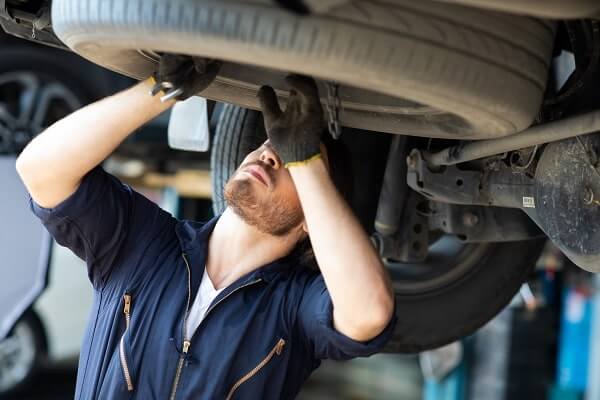
Mechanics keep society moving. Whether you drive a car, truck, or take public transportation like a bus, you’ve reached your destination due in part to the skills of a mechanic. Mechanics inspect, repair and maintain vehicles. They have knowledge of the main systems of a vehicle, from the air conditioning to the engine to the tires and more. Mechanics have strong attention to detail and are problem-solvers, working to diagnose issues with vehicles based on irregular sounds or performance issues.
So, why become a mechanic? Is a career in automotive worth it? Some individuals have a passion for cars or feel fulfilled when they are working with their hands. Mechanics have opportunitieswithin the automotive repair trade to exercise their technical skills, learn new areas of expertise on the job as they work on different types of vehicles or new technologies, and provide supportive customer service to car owners who may feel confused about the condition of their vehicle.
Automotive classes give students the chance to grow and practice skills in the auto shop and hear about automotive theory in the classroom, including safety best practices and more. Students are taught by dedicated instructors and attend classes alongside their peers, which gives them confidence and support through collaboration. Basic automotive classes offer an educational foundation and certificationthat students can carry into an entry-level position on the path toward a career in the auto repair trade.

Benefits of Trade School for Auto Repair
As you consider if trade school is right for you, it may be helpful to understand all the benefits you could gain from enrolling in an automotive repair program. Trade school is a great alternative to a four-year university because it provides students with a faster track to an entry-level position in the field, and it also doesn’t include extra classes or electives that students don’t need (like English or chemistry).
Trade school is also an ideal starting point for individuals who want a hands-on career change but don’t want to spend time going back to college. Our students often cite the following reasons for choosing our automotive classes:
- Hands-on training opportunities
- Manual and automotive transmissions, fuel systems, air conditioning repair , automotive electrical and more
- Dedicated instructors
- Classroom and shop learning environments
- Automotive repair safety
- Practice using tools and equipment of the trade
- Job placement assistance
- Supportive school staff

Related: Do We Really Need Auto Repair Shop Regulations?
Learn About the Automotive Repair Program at Apex
If you choose to attend Apex’s Automotive Service & Repair program , you’ll take part in hands-on training, including 900 hours of shop and classroom learning experiences. After you complete the program, our Job Placement Assistance team can help you prepare to enter the job market by offering support with your resume and interview tips . Ready to take the first step toward an entry-level career as a mechanic? Learn more about our program now.

Auto Repair Shop Regulations 101 | Apex Technical School
Society implements rules and regulations to protect people and prevent harm—from laws limiting pollution to laws against child labor and many other practices. Federal government agencies, such as the Environmental Protection Agency or the Department of Motor Vehicles, enforce laws by rolling out regulations (or standards) that individuals and organizations must follow.
When it comes to the automotive industry, safety on roads would be at risk without clear rules and regulations. That’s because many regulations help promote efficient repair practices and protect customers from fraud, improper repairs, andunqualified mechanics. For example, these are goals of the New York State Department of Motor Vehicles Division of Vehicle Safety Services, whichpublishes its regulations online. Many regulations vary by state, but generally auto repair shop regulations help to set standards for quality repairs.
EPA Regulations for Automotive Repair Shops
Federal agencies, such as the EPA, roll out standards aimed at keeping auto shops in compliance with environmental protections through waste management practices for oils and batteries, automotive painting, spill prevention and more. The EPApublishes a guidebookthat auto repair shops can reference for checklists and other informative steps that help them stay compliant with environmentally friendly practices.
Auto Repair Shop Policies & Procedures
In addition to following federal, state, and local regulations, most auto repair shops also institute their own internal policies and procedures. Policies ensure that all customers receive the same quality and consistent service. For example, policies might cover:
- Markup standards to prevent price confusion
- Timeframe for quote validation (e.g., valid for 24 hours)
- Payment in full policies
- Acquiring customer emails for timely communications
- Vehicle drop-off and pick-up expectations
- Customer service surveys
Procedures help auto shop owners protect their employees and facility while limiting risk and liability. Examples of auto shop procedures may include:
- Vehicle arrival process
- Tire rotation and balancing
- Lug nut and wheel tightening
- Limiting distractions and errors
- Entering new appointments
- Maintenance check procedure
Automotive repair shops may have hundreds of policies and procedures to help ensure they run smoothly and safely—and these are just a few. Auto repair shop owners who want to build an environment of order, trust and compliance can also use checklists, forms, software and training to stay organized.

Auto Repair Labor Guides
Like state and federal regulations stipulate how an auto repair shop should meet standards, auto repair labor guides help mechanics meet fair standards when pricing estimates for repair work on vehicles. Customers want to feel like they’re getting a fair deal and quality materials, so it’s crucial that the estimate reflects that.
An auto repair labor guide lays out how much time mechanics in a shop should spend on different types of repairs, such as oil changes or air conditioning repairs. Mechanics can use the shop’s auto repair labor guide to:
- Reference the set labor rate for the shop
- Determine how long repairs will take
- Predict materials needed
- Introduce a markup to earn a profit
- Calculate an auto repair quote
Depending on the auto repair shop, some auto labor guides are computer-based while others may be in booklet format. Mechanics should have a clear understanding and access to the labor guide, which helps streamline operations in the shop and improves customer relations.

Learn More About Automotive Repair
If you like working on vehicles and are interested in the regulations and precision that keep the automotive repair industry running, this might be a career path for you! Apex Technical School offers hands-on, high-quality courses inAutomotive Service & Repairfor students who want to gain skills for entry-level employment. Explore the program and connect with our team to schedule a tour of our shops.
EXPLORE THE AUTO REPAIR PROGRAM
Sources:
https://dmv.ny.gov/forms/cr82.pdf
https://www.shop-ware.com/articles/the-ultimate-labor-guide-for-auto-repair-shops/

Trade Student Spotlight: Naheim Goldson | Apex Technical
Originally from the Caribbean, Naheim Goldson traded sandy beaches and sparkling turquoise seas for the Bronx’s vibrant, urban cityscape. With his feet on the ground in New York, he earned his GED in 2016 and received something most students only dream of—a scholarship to any college of his choice. But Naheim quickly realized that college wasn’t for him.
“I visited other schools, but they were not a good fit for me,” said Naheim. “Many had a lot of theory. I believe, for some reason, God did not want me to do that. I was very interested in theElectrical & Advanced Electrical programat Apex because it’s hands-on, and it has different levels.”
Unfortunately, at that time, Naheim didn’t have the stability he needed in life, so he put his education on hold.
“I went to work in the trades,” said Naheim. “But I knew there was more to learn than what I was doing. So, four years later, I came back to Apex. I changed my program to construction because of the diversity it offers, and it matches my personal work experience.”
Today, Naheim is a proud trade school graduate from Apex’sConstruction & Building Skills program, which he completed in October 2022.
An Opportunity to Enter the Field Quickly
With his prior experience in multiple trades, Naheim chose to enroll in the Construction & Building Skills program to expand what he calls his “book knowledge.” Apex’s construction training program gave him the opportunity to do that while maintaining a balance between work and school.
“I wanted to complete the program in 7 months so I could go to work,” said Naheim. “I had to leave my full-time job to attend Apex, but I managed part-time work on the weekends.”
This program length means students like Naheim can move through their program at a pace that works for them—while fast-tracking their time in school, compared to a two-year community college or four-year university.
Formally Learning Hand-On Techniques
Apex designs its programs to offer students time in the classroom and in the shop. Students get the opportunity to learn theories from textbooks then put those theories into practice by usingtools of the tradein a hands-on environment.
“Regarding the balance between theory and shop, I initially only wanted to do shop,” said Naheim. “But theory will explain a 45-degree cut. In class you get the instructions, and they explain every tool has its own purpose. I liked working my mind, and the next day working my hands.”
With his background in the construction trade from working in the field, Naheim had the opportunity to fine-tune his skills at Apex in a way he couldn’t on the job.
”I was always good at math in school,” said Naheim. “Carpentry is about precision and numbers, and I really liked that the design comes together with numbers. I like neatness. Building a foundation is exciting. I am the lead contractor on my team. I help with cutting and measurement. It feels good to be given that task.”
He feels that his formal training from Apex sets him apart and equipped him with the construction trade skills he was looking for.
“[It’s valuable] coming to school and formally learning the trade… for example, pulling a nail from a board is easier done with a block underneath with the head of the hammer,” said Naheim. “It’s that detail that makes someone a better carpenter.”
Supportive Programs and Staff
One of his main goals enteringconstruction trade schoolwas to become a creator. Naheim believes the world needs builders, and he felt supported by others who wanted to see him achieve his goals.
“My experience at Apex was great,” said Naheim. “Knowledgeable instructors helped me to fall more in love with what I’m doing. It is the person I am inside. People always said I was very hands-on, and I now see the potential I have. The program very much set me up for success.”
Naheim recalled coming to school excited, looking forward to learning something he reviewed on Zoom with his instructor. His favorite instructor, Mr. L., demonstrated what the real job would be like.
“He is very cool,” said Naheim. “He is observant of your work and allows you to make mistakes so you can learn. The first time I learned to weld pipes, I burnt the pipe like ‘jerk chicken,’ but after multiple attempts, I followed Mr. L’s instruction on temperature. I don’t ‘jerk the chicken’ anymore.”
He also felt supported by staff, especially Ms. Gola in Program Support. She helped Naheim access makeup hours to get caught up on missed class work.
“The school was supportive in helping me achieve my goals,” said Naheim.
Easy Admissions Process
Enrolling in construction trade school might sound confusing, but Naheim confirms the process is a breeze.
“The admission process was very easy,” said Naheim. “Everyone was helpful in gathering my paperwork and everything else throughout the process. My most memorable person was Ms. Geeta. When I called the school, I was linked to her every time by chance. She was supportive and made you feel noticed. She’d tell me, ‘Come, let us get this done!’ She was very motivational.”
‘Labor for Learning’ Is Worth It
Even though some might think changing careers or going back to school is too challenging, Naheim insists that this labor of love is worth it.
“I now see young people, and I tell them to go back to school,” said Naheim. “My grandparents used to tell me to go back to school. They repeated this quote to me often: ‘Labor for learning before you grow old; silver and gold will vanish away, but a good education will never decay’.”
He believes Apex was a positive experience that he’ll take with him wherever he goes next.

Benefits of Smart HVAC Systems | Apex Technical School
Sustainability and energy consumption are growing priorities in the HVAC industry. Commercial building owners and residential homeowners alike feel the pressure to reduce their energy consumption, and by extension, their energy bills. The heating and cooling unit is one of the biggest consumers of energy in a home or building, so engineers have looked for ways to make HVAC systems more energy friendly.
The rise of software-enabled HVAC systems may be theanswer homeownersand building managers are looking for, because these systems provide valuable data to HVAC technicians. The data describe how the heating and cooling unit is functioning—or malfunctioning—giving techs the ability to positively intervene.
What is HVAC management software?
HVAC management software systems collect and analyze data about the HVAC system’s performance. This data can tell technicians about elements such as temperature, humidity, and air quality. And technicians don’t even have to be onsite to receive information about an HVAC system!
The Internet of Things (IoT) is increasingly being used with HVAC heating and cooling systems to improve their efficiency, reliability, and functionality. IoT is a network of connected devices that can communicate with each other and exchange data over the internet. IoT-enabled HVAC systems are growing in popularity because they offer many benefits to techs and consumers.
Benefits of IoT-Enabled HVAC
- Energy efficiency
- Remote system monitoring and control
- Preventative maintenance
- Regulatory compliance for air quality and sustainability
- Proactive, guaranteed service
The Internet of Things is transforming the way contractors and HVAC technicians handle some HVAC installations, services and repairs. Find out more about these benefits below.

Why use HVAC management software?
IoT-enabled HVAC systems use sensors and smart thermostats to help techs optimize the system’s performance, lower energy levels and improve comfort for building occupants. HVAC techs can receive alerts about potential problems before they balloon into larger, more serious issues.
For example, the software may detect an airflow drop or an expensive heating-and-cooling loop. It can alert technicians and provide information to help them troubleshoot or pinpoint the cause. In a heating-and-cooling loop, a malfunctioning HVAC system may cool a room to a temperature that’s lower than the occupant’s desired setting. Then the system will attempt to adjust the error by heating the room back up. This creates wasted energy and costly bills but often goes undetected.
With the help of HVAC management software, technicians can make a home or building more environmentally and sustainably friendly. They can do all this remotely, as software-enabled HVAC systems are designed to be accessible from a central location. This saves time and reduces the need for onsite visits.
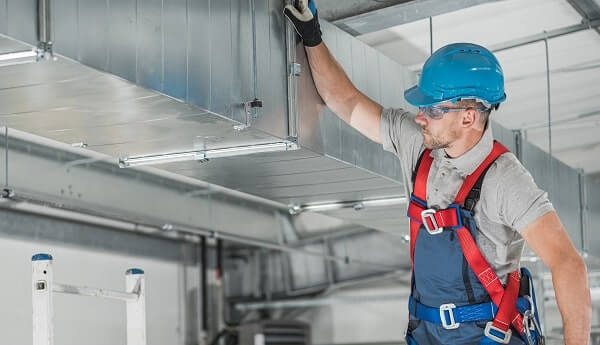
The data provided by software-enabled HVAC systems can help technicians be more proactive with preventative HVAC maintenance, ensuring that the system remains efficient and reliable while reducing the risk of breakdowns and costly repairs. The approach can also boost the level and quality of service that HVAC techs provide to customers.
Learn Hands-On HVAC Skills at Apex
Kick off a new career path at Apex! TheAir Conditioning, Refrigeration & Appliance Controls programis enrolling soon. Comejoin us for a tourof our classrooms and see the shops where you’ll be taught hands-on entry-level HVAC skills and put theory into practice. Learn more about the HVAC program now.
Sources:
https://hvactechblog.com/hvac/hvac-system-with-iot-technology/
https://www.particle.io/iot-guides-and-resources/hvac-iot/
What's the Impact of Renewable Energy on Electricians? | Apex
Renewable energy isn’t just a buzzword anymore. Many U.S. cities run partially or completely on renewable energy, and more plan to make the switch from traditional to renewable energy this decade. In fact, there has only been one year when renewable energy has been on the decline in the past decade according to OurWorldInData.
With such a strong demand for renewable energy, what does going green mean for electricians? How will efforts to ramp up sustainability impact the electrical trade? Let’s dive into what renewable energy means for current electricians and students training for an entry-level electrical role.
Electrical Industry Trends in the Green Economy
The “green economy” is the world’s growing response to our warming planet. If the planet gets too warm due to actions from humans and corporations, the earth will undergo significant climate-related disasters. To slow down this warming process, countries and communities alike are taking action towards creating a “green economy” that has a smaller impact on the natural world while keeping life safe for everyone.
In a green economy, electricians may find that they can work with alternative energies to positively impact not only the electrical trade, but also people who use electricity and energy in their daily lives. Here are some roles electricians will likely be involved as the green economy continues to ramp up.
- Infrastructure and installation of energy-saving devices and appliances
- Residential solar panel installation and maintenance, including battery banks to store energy
- Power-producing wind turbine maintenance
- Electric vehicle charging station installation and repairs

Other Industry Trends
Today, many people think of electricians as leaders in one field—the electrical industry. However, as efforts to build a green economy march ahead, electricians may be called upon in a variety of other industries, such as:
- Electric vehicles
- Mass transit
- Construction and retrofitting
- Wind and solar power
- Technology
- Industrial
- Manufacturing
- Commercial businesses
As more and more companies and homeowners make the switch to clean energy sources, there may be more opportunities for electricians to lend their hands-on training and skills. The green economy could be an exciting career pathway for green electricians and students who want to join the trade.
Interested in Electrician Training?
The Electrical and Advanced Electrical program at Apex is enrolling now! Our new electrical location will offer new classrooms and shops where students are taught hands-on techniques and put theory into practice. Want to learn more about the program? Contact us today or schedule a tour.
Sources:
https://intercoast.edu/blog/green-economy-electrician/
https://cleantechnica.com/2023/03/07/want-to-electrify-everything-train-more-electricians-quickly/

The Increasing Use of Robotics in Welding | Apex
Robots may seem like science fiction, but when it comes to welding, they are an increasingly popularwelding tool. Hollywood has given us entertaining robots, like C-3PO from Star Wars and T-800 from The Terminator, but today’s robots are giving us something even more exciting—automation in welding.
Automation enhances the welding trade like never before. It brings new possibilities to the forefront, helping companies make products more efficiently and giving human welders the opportunity to remain focused on projects that would otherwise fail without their individual creativity, flexibility and expertise. Learn more about why automation in welding is gaining ground below.
What is robotic welding?
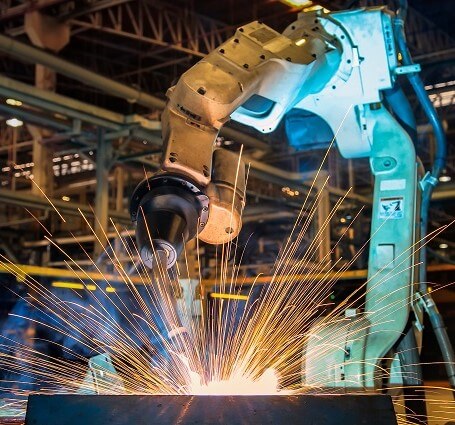
Welding robots automate the welding process, which requires a high level of skill and accuracy. Just like the American Welding Society certifies people in manual welding, it also certifies people to be robotic welding arm operators. Using a controller device, a welding operator can program the robotic welder to move, heat the rod and join two pieces of metal.
Pros and Cons of Automation in Welding
Robotic welding is ideal for large manufacturing projects that require repeatability at scale, when there simply aren’t enough professional human welders to tackle a project while staying safe. But human welders with hands-on welding training are still critical to the welding industry. Automation assists human welders for several reasons.

Robotic Welding Pros
- Ensures higher accuracy
- Produces less waste
- Spurs faster production
- Keeps people safer from high temperatures and bright light
Robotic Welding Cons
Some cons of automated welding include a higher upfront cost to invest in complex robots and less flexibility in responding to changes that require reprogramming by a human operator. Sometimes, depending on the project, a human welder could complete the task faster than it would take to program the robotic welder.

Industries That Use Robotic Welding
Robotic welding is useful on manufacturing assembly lines when a company needs to work quickly to ensure their output surpasses the competition. Robotic welders help complete the same task hundreds or thousands of times with precision. This is why a variety of industries are increasingly turning to innovations in welding to help human welders, including:
- Railroad industry
- Manufacturing industry
- Automotive industry
- Metal fabrication
- Aerospace
- Defense
- Transportation
Related: Apex Welding Student Spotlight: Jennifer Mextorf
Learn Combination Welding Technology at Apex
Some people may worry that robots could take away tasks from humans. But manual welding still has an enormous place in society. Welders who have gained hands-on skills of the trade can adapt more quickly to changes in weld styles and project requirements than robots. If the welding field sounds exciting or like it fits your interests and goals, consider learning the welding trade!
Connect with the Apex Technical School Admissions team by phone or online. We’re scheduling tours of our welding classrooms and shops now, and enrollment in the Combination Welding Technology program starts soon.
History of Plumbing Tools | Apex Technical School
Did you know plumbing has been around for thousands of years? Ancient Egyptians built plumbing systems for their living—and even their dead. The Roman Empire further advanced the trade of plumbing with public toilets and baths. Today, plumbing is a necessity in residential and commercial buildings, and plumbers and pipefitters must have specific types of plumbing tools to install and maintain these valuable appliances. Let’s dive into the history of some of the tools that plumbers turn to for daily jobs.
Wrenches
Without wrenches, plumbers would waste time. The advent of the wrench made it easier and more efficient for plumbers to finish jobs. Before wrenches, it was common for two plumbers to work on joining and unjoining pipes. Wrenches brought simplicity and individuality to plumbing.
- Pipe wrench
- The standard pipe wrench dates to 1869. It was invented by Daniel Stillson to help plumbers more easily attach two pipes or separate them. With an adjustable hook and jaw that closes around different sizes and styles of pipes, the pipe wrench is useful for installing toilets and other residential and commercial plumbing
- Adjustable wrench
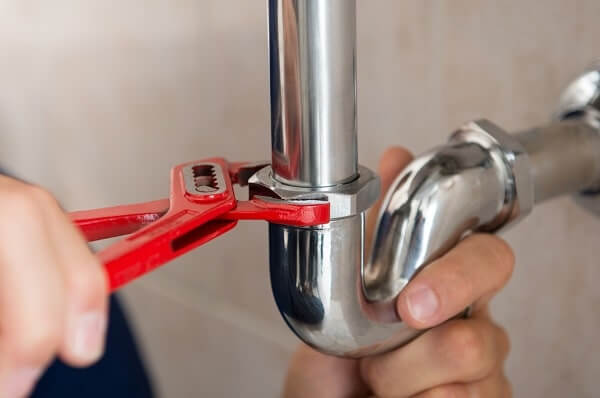
- The first patent for the adjustable wrench was filed in 1891 by Johan Petter Johansson. Since then, plumbers have happily used the adjustable wrench to remove or tighten a nut. Though small in design, the adjustable wrench is still making a big impact in small spaces and is ideal for installing sink faucets.
- Spud wrench
- The first spud wrench design dates to the 16 th century! This type of wrench is best used for tightening bolts on steel structures. In the 20 th century, Thomas Maddock created his own version of the spud wrench to tighten and loosen specially designed toilet pipes called spuds. The spud wrench has a long, thin handle and is an ideal plumber’s tool for installing toilets.
Pipes
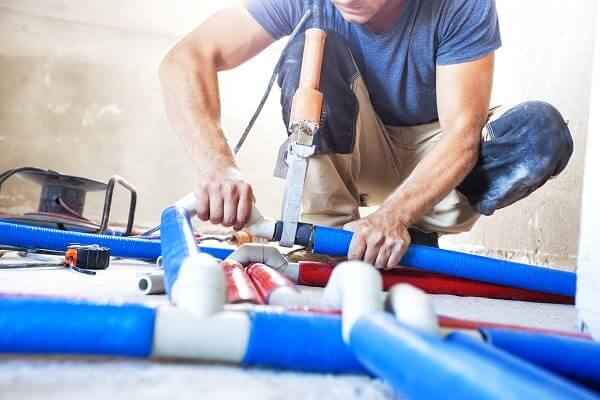
Pipes are an essential piece of equipment for any plumber—and have been important to the history of pipefitting since ancient times! Early pipe systems were made of clay, straw or bamboo that was baked and hardened. The history of pipefitting tools in plumbing has evolved dramatically, with some early pipe materials still in use today.
- Copper pipes
- The Egyptians invented copper pipes that revolutionized plumbing and water systems. Copper pipes have even been discovered inside pyramids, as the Egyptians wanted their pharaohs to be able to bathe in the afterlife. Metal pipes were popular in plumbing up until WWII, when metal became scarce. Today, copper pipes remain popular with many homeowners who like their corrosion-resistant properties.
- Lead pipes
- Lead pipes gained prominence during the Roman Empire when they were used for aqueducts that carried water to public baths, bathrooms, and crops. The Romans ultimately discovered that lead pipes were poisoning their water supply, which contributed to their civilization’s downfall.
- PVC pipes
- PVC, or polyvinyl chloride, pipes came onto the plumbing scene during WWII to replace metal pipes, such as copper, steel and iron. These metals had to be conserved for wartime efforts, and so plumbers increasingly turned to PVC pipes for a durable, long-lasting material. Modern commercial and residential buildings still commonly use PCV pipes for plumbing and water systems.
Related: Why Learning Plumbing Skills at a Trade School?
Augers
Nobody likes to see water backing up into their sink, toilet or bathtub. Fortunately, plumbers have a few tools in their arsenal to remove blockages—including some old and new favorites. Plumbing history isn’t complete without the snake.
- Plastic drain snake
- Gene Luoma invented the plastic drain snake and received a patent for the tool in 2000. He called his invention the Zip-It Drain Tool, which has a handle and finger grip, long flexible shaft and sharp barbs. The barbs collect hairs and debris that build up in household drains, eliminating the need to pour harsh chemicals down the drain. For over 22 years, the tool has helped plumbers and homeowners alike.
- Plumbing snake
- Invented in 1933 by Samuel Blanc, the plumbing snake is an electric tool that was flexible enough to go around pipes and dislodge material, such as tree roots or glass wool. Plumbers still use plumbing snakes today, especially at residential homes where trees grow by plumbing pipes that carry water to the sewer.
Explore the Plumbing Program at Apex
Ready to step into the plumbing classroom and use common plumbing tools in the shop at Apex? Learn more about our Plumbing & Pipefitting program now.
*Source: https://www.your1plumberfl.com/blog/essential-plumbing-tools/

Mechanic Interview Questions | Apex Technical School
The interview process can be intimidating—both for experienced mechanics looking to make a change and for recent trade school graduates entering the labor force. To secure the job, you must thrive in the interview, and this fact may cause you to feel nervous and excited. Tame your nerves by remembering to be two things: prepared and confident. Let us help you achieve an entry-level role in automotive repair! Get started with these job interview tips.
Interview Questions for Automotive Mechanics
The best way to prepare for a job interview is to practice questions you think the interviewer is most likely to ask. It might be helpful to think about two types of interview questions: general questions and technical questions. General questions help you and the interviewer ease into the meeting. They also help the interviewer get to know you on a personal level, including your motivations and background. Some general mechanic’s interview questions may include:
- Tell me about yourself.
- Why do you want to work in the automotive field?
- What do you know about this company?
- Tell me about your education/certification and what you learned.
- What are some skills you’ve gained at other jobs or at school that you feel you could use in this position?
After asking general questions, the interviewer may gradually switch to technical questions. Technical questions give you the opportunity to showcase your trade knowledge. These may include:
- Can you describe the automotive vehicles you have worked on and are most familiar with?
- Tell me about an automotive problem or challenge you couldn’t solve. How did you handle it?
- If you saw a coworker making a mistake or being unsafe, what would you do?
- What are your long-term automotive career goals?
Sample Answers
- What do you know about this company?
ABC Auto Repair is a long-standing company. I know it’s family-owned and operated, and it’s dedicated to providing cutting-edge service to customers. ABC’s mechanics specialize in routine maintenance, tire services, and roadside assistance. Your motto is “A safe journey, every trip.” I really like that motto because it means that your fast and friendly service is also reliable. Reliability is something I strive for in my mechanic work and on a personal level.
- What are your long-term automotive career goals?
Right now, I’m looking for a company that I can grow with. My goal is to work for my ideal company for at least five years. This timeframe will give me the opportunity to make an impact as an automotive technician, as well as develop new skillsets as the industry evolves and progresses.
Questions to Ask Before You Leave
Before the interview ends, make sure you ask the interviewer several questions. It’s true that this is your interview, but you should also pretend that you’re interviewing the company! You want to work in an environment that you enjoy, so find out a little about the culture with these questions.
- Are there opportunities for training or advancement within this role?
- What is the biggest challenge the company is facing right now?
- What would a successful person be doing in this role two months from now? Six months from now? A year from now?
Related: What Is the ASE Certification for Auto Mechanics?
What to Wear to an Automotive Job Interview
How should you dress to impress at an automotive job interview? Generally, automotive techs wear durable coveralls or pants with a protective shirt when they’re on the job. It’s okay to wear this if you get the role you’re interviewing for, but it’s a good idea to dress professionally for the interview.
Professional attire may look like slacks, a button-down shirt with a collar, and dress shoes. Avoid wearing jeans to job interviews. Make sure all clothing is free of wrinkles. Accessories like a belt and a watch can bring the outfit together.

How to Get a Job in an Automotive Repair Shop
Hands-on experience is one of the best ways to prepare yourself for an automotive technician job. At Apex Technical School, we offer students 900 hours of instruction, split between the classroom and the shop. Students are taught entry-level skills for automotive repair by dedicated instructors. Our friendly Job Placement Assistance team is available to help students access support with resumes, cover letters and interview preparation.
Interested in starting your future at Apex? Classes are enrolling now! Contact us today.

