






Tips for Distance Learning | Apex Technical School
The COVID-19 pandemic has caused school closures around the world. Some schools, like Apex Technical School, are temporarily incorporating distance learning into their curriculums. Distance learning means classes are conducted through the internet, often at the student’s home. This style of learning is new for some trade school students. Here is a list of online class study tips to help you make the most of distance learning.
Make a Routine
Unlike attending a physical classroom, distance learners are taught outside of the school environment. Like many distance learners, you may review school materials at home or in another comfortable location. Wherever your distance learning takes place, you will want to build a routine. Routines help students stay on track by creating structure in their day. Once you find a routine that fits, you will feel confident and motivated to accomplish your goals.
Accomplish Your Daily Goals
Keep track of your to-do list. Do you have to answer a series of questions about electrical safety or read about the main types of welding? Writing down your goals helps you hit deadlines and can ensure you have the knowledge you need to take on the next assignment. Consider using a calendar to create daily or weekly lists.
Create a Study Space
Distance learning requires you to be a student outside of the trade school environment. When you are at home, how will you transition from a parent, spouse or roommate into a student who needs to focus? Create a study space to help focus your mind. Your study space could be in a quiet room, like a bedroom or home office, where you can close the door and be a trade student.If you don’t have an extra room in your home, your study space could also be a quiet corner with a table and chair. Study spaces are important because they signal to your brain that it’s time to focus. Learn how to limit distractions and get other online study tips on our blog.
Take Breaks
A study space can motivate you to check off goals from your to-do list. You may feel motivated by your accomplishments and want to maintain a steady pace with your learning. However, it’s important to remember to take breaks throughout the day. A short, five to 10-minute break every hour gives your brain a chance to process new information.
Ask for Help
Distance learning outside of the classroom or shop doesn’t mean you are learning alone. In fact, asking questions is one of the most important ways to study at home. If you are confused about a topic or need to ask questions, reach out to your instructors.

Types of Car Accident Repairs | Apex Technical School
After a collision or accident, a car’s doors may be crushed, the paint may be chipped, or the fender may be dented. Individuals in the auto body trades are taught that collision damage can be classified by structural and cosmetic damage. Some cars sustain a combination of both damage types. Find out how an accident affects the operation and safety of a vehicle and how to identify types of collision damage.
Anatomy of an Accident
Auto safety and car accident repairs have evolved in recent decades. Modern cars are designed with a crumple zone, or crush zone. Auto engineers construct special parts inside the car that are designed to be damaged, crushed and broken during an accident. A strong frame encloses the occupants, while crumple zones exist in the front and rear of the car.
When an accident happens, the crumple zones absorb crash energy and redistribute it. Crumple zones help keep vehicle occupants safe and unharmed. The first car to use crumple zones to protect passengers was the 1959 Mercedes-Benz W111 Fintail.
Hidden Damage vs Cosmetic Damage on Cars
Collisions result in different types of vehicle damage. Like a scrape or bruise, some damage is visible to the eye. Other damage, like a broken bone below the skin, is hidden inside the structure of the car and requires an automotive or auto body mechanic to evaluate it. Hidden, or internal damage, can affect a vehicle’s suspension, mechanical or electrical systems.
Cosmetic damage on cars does not affect the function or structure of the vehicle. In fact, many people still safely drive cars with cosmetic damage such as scratches, dents and dings. However, it is important to repair cosmetic damage before it progresses—for example, paint scratches can turn into rust spots that disintegrate metal over time.
Structural Damage to a Car
Collisions can harm a vehicle’s structure, or frame. Examples of structural damage include frontal damage and rear damage. In frontal damage, car hoods buckle to absorb impact, prevent windshield damage and protect the driver and front-seat passenger. Rear damage also relies on a crumple zone at the vehicle’s bumper to keep the oncoming vehicle from harming the fuel tank, trunk and backseat passengers.
An individual in the auto body trade can examine damaged vehicles for cosmetic and structural damage, while an automotive repair technician can evaluate hidden mechanical damage and determine how to make improvements. Some collision damage might be irreparable—in these cases, the owner may need to purchase a new vehicle instead of relying on car accident repairs.

How to Improve Worksite Communication | Apex Technical School
Communication is an essential skill, no matter your trade, role or responsibility. Good communication helps you and your team work smoothly together. Poor communication at work, on the other hand, may result in wasted time and resources, injuries or stress. While it is essential to learn hands-on skills in trade school, it is equally important to learn effective communication skills. Here are four ways to decrease communication issues, strengthen your listening skills and improve how you communicate on a worksite.
Establish a Chain of Command
A clear chain of command at a worksite eliminates confusion. When you know who is in charge, or who specializes in certain tools and knowledge, you can find answers to questions and concerns quickly and efficiently. A chain of command relies on employees knowing the jobsite hierarchy, which may include:
- Site managers or supervisors
- Contractors
- Architects
- Construction workers and builders
- Engineers
- Electricians
- And many more
Speak in Clear, Simple Terms
Some worksites have loud machinery, noisy tools or simply many workers communicating at once. For these reasons and more, it’s important to try to speak clearly. For clearer speech, stand taller, slow down, project your voice and place emphasis on important words. A good rule of thumb in loud environments? Watch others’ body language to evaluate if they understand what you’re saying or if they need you to simplify or repeat your message.
Develop Listening Skills in Trade School
Being a good listener is just as important as speaking clearly. However, active listening requires more than just staying silent and letting others talk! Be sure to maintain eye contact so others know you acknowledge what they have to say. Verbally confirm you understand and ask questions if you are unsure if you heard their request or directive correctly.
Trade school can help students become active listeners before they set foot on a worksite. Participating in the classroom and practicing teamwork in the shop are two ways trade school students exercise active listening skills and prepare to be successful communicators in future roles.
Learn to Communicate Verbally and Non-verbally
In addition to speaking, there are several other ways to communicate on a worksite. Emails, texting, facial expressions and hand signals are all common forms of communication in workspaces and at jobsites—whether you’re in the construction, automotive, electrical, plumbing, HVAC or welding trade. Maybe you like to use voice-to-text while you are walking or driving to your worksite, hand signals instead of shouting over noisy tools, and an alarm function on a walkie talkie if you encounter a problem. Find out how you and your team work best together by using strong verbal and non-verbal worksite communication.

Common Interview Questions | Apex Technical School
Every interview is different, but there are a few things to keep in mind. You should take a copy of your resume and be prepared to answer questions about your education, skills or job history. While the interviewer may ask different questions depending on the position, company and role you’re applying for, some questions are more popular than others. It’s a good idea to know common interview questions—and practice your answers so you feel prepared and confident during your interview.
What are your strengths?
When you interview for a position, the interviewer may ask what makes you a strong choice. Pick one or two of your personal strengths relevant to the position. For example, you may interview for a construction position that requires the ideal candidate to have hands-on skills in construction but also be open to learning related skills in electrical, plumbing or carpentry.
If you are a curious person with a problem-solving mindset, you can talk about how this is a strength you can bring to this role. To further illustrate your strengths, tell a story about how you used your curiosity and problem-solving skills in a previous role, at school or in another setting where you excelled.
Why do you want this job?
Businesses want to interview and hire people who are passionate about the position. If you applied for a role, it’s likely you’re interested in it! Be direct with the person interviewing you—let them know why the job excites you. Identify two to three reasons you believe you are a good fit, such as, “I love working on cars,” and “I’m a strong team player who enjoys collaborating with others in the automotive garage.”
Explain to the interviewer why you want a job at their company.
Tell me about a conflict you’ve faced. How did you deal with it?
We all face challenges from time to time. While you may not want to discuss something negative in your interview, consider how your answer can showcase you in a positive way. Be honest about a conflict you encountered and stay professional when you tell your story.
Spend more time talking about the resolution than the conflict. Try to provide answers to the following questions: How did you resolve the conflict? What was your approach? What did you learn? How will you bring those skills to this job? Focus on explaining the solution so the person who interviews you can understand how you respond to challenges.
What type of work environment do you like?
Work environments vary from company to company and can depend on the nature of the position. Most entry-level positions in the trade industry occur in hands-on environments, such as construction sites, residential homes, automotive garages, or a combination of locations.
Work environments can be quiet, noisy, collaborative, self-paced, structured or laid back. Consider how you do your best work. Do you need quiet to focus? Do you prefer collaboration and conversation with others? If you interview for an entry-level trade position, be sure you know what works for you to be successful.
Do you have any questions for us?
At the end of the interview, you may be asked if you have any questions. It’s always a good idea to come prepared with two or three questions. This demonstrates your commitment and interest in the job position. You can ask questions about the position and the company. Or, ask the interviewer what he or she likes about working there—the answer may give you valuable insight into the company’s culture. With the right amount of preparation and practice, you can set yourself up for success.

Green Building & Sustainable Construction | Apex Technical School
Today’s homeowners have specific wants and needs. Green construction and building practices rose in popularity among homeowners and contractors over the last decade. According to the U.S. Green Building Council , eco-friendly homes are energy efficient, good for the environment and more sustainable than homes of the past. Staying up to date on the latest trends is a vital way to increase your unique value as an individual in the construction industry. Learn more about the latest eco-friendly home trends in the construction industry.
Green Building Materials
As more builders and individuals in the construction trade look for ways to reduce the environmental impact of residential homebuilding, they increasingly turn to recycled, reclaimed and sustainably sourced materials. Some homeowners appreciate green building projects that follow popular styles. Vintage, rustic and industrial design styles are widespread trends that can be achieved with reclaimed materials.
Sometimes it can be cost effective to find building materials at salvage yards and discount stores. Reclaimed wood, second-hand flooring, recycled metal and other responsibly sourced materials positively impact not only the environment but also the homeowner’s bottom line.
Energy Efficiency
Homeowners, contractors and designers increasingly look to add energy-efficient elements to their homes to save on rising energy costs and reduce harmful impacts to the environment. Some energy efficient approaches to residential home building include:
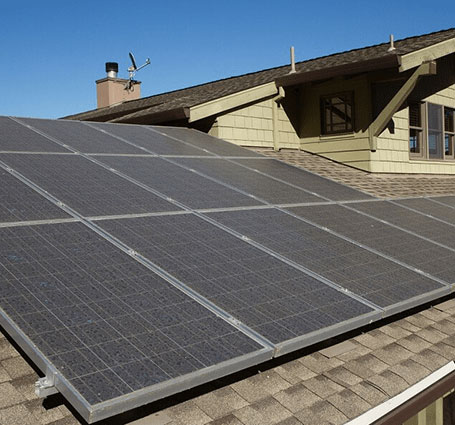
- Solar panels
- Energy-efficient heating and cooling systems
- Low emissivity (Low-E) windows that block long wavelengths
- LED lighting instead of traditional incandescent bulbs
- Energy-Star certified appliances
According to Fixr.com , many energy efficient homes offer healthier and more comfortable living conditions, give off fewer greenhouse gas emissions, have lower energy bills and fewer issues with moisture management.
Water Conservation
Climate change continues to disrupt rainfall and water supplies worldwide. Many places, such as California, have struggled with extreme drought and disastrous wildfires since 2014. Plus, 2019 was the second-hottest year ever recorded—which means water supplies may continue to be in high demand.
Builders and individuals in the construction trade can consider ways to help homeowners reduce their water consumption at home, such as using smart meters for water control, installing low-pressure toilets, and opting for tankless water heaters that heat only the water you need.
Other eco-friendly options for water conservation at home include:
- Installing low-flow showerheads and toilets
- Designing stormwater management strategies
- Installing green roofs
- Planting native and adapted vegetation in place of lawns or ornamentals
Indoor Air Quality
Advances in ventilation technology can improve the air quality inside residential homes. Better air quality can mean fewer pollutants, allergens, dust and cases of asthma, as well as cost savings over time. According to Build-Review.com , airtight insulation and efficient HVAC systems can reduce electricity expenditures and ensure the health of homeowners.
As an individual who is interested in the construction and building trade, it’s a good idea to learn about the types of HVAC systems and their long-term benefits for homeowners who want cleaner air, no odors and fewer air leaks in their living spaces. To learn more about the construction trade, explore the construction and building skills program at Apex.
EXPLORE OUR CONSTRUCTION PROGRAM
Q&A: What Do Plumbers Do? | Apex Technical School
For centuries, plumbers have made modern life cleaner and more comfortable. Plumbing is one system that residential homes and commercial businesses cannot do without. Without plumbing, we would have no hot water, air conditioners, swimming pools, or flushing toilets. However, most people don’t think about their plumbing until a problem occurs and they must rely on a plumber. If you’re interested in this important trade, keep reading to get answers to some commonly asked plumbing questions.
What do plumbers do?
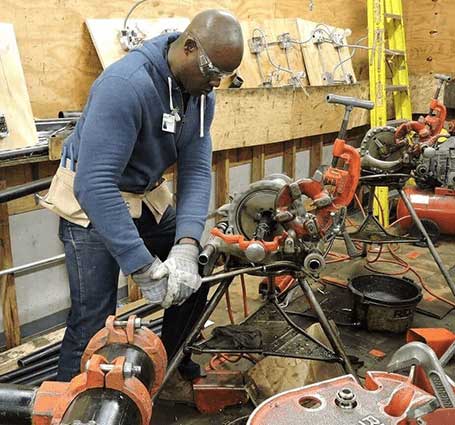
Plumbers install, repair or replace pipes and fixtures that carry water and gas, as well as waste away from homes and businesses. Plumbers work with not only toilets, bathtubs, showers and sinks but also the piping behind the walls that ensure all appliances function.
A plumber is trained in fixtures and faucets, fittings, valves and more. Plumbers also know about the history of the trade, including concepts of plumbing and basic safety.
What skills do I need to learn how to become a plumber?
If you’re interested in plumbing, you’re probably also wondering what it takes to succeed in the field. Plumbing may be a good fit for your if you identify with the following:
- Good communication skills
- Problem-solving skills
- Time management skills
- Likes to work alone or with others
- Knowledge of safety rules
Plumbers can work alone or for a contractor or business. Many are able to drive to jobsites, bring the tools they need to complete the job, and may interact with homeowners or business owners to explain repairs or installations.
Related: Plumbing and Pipefitting vs. Electrical [Infographic]
Where do plumbers work?
Plumbers can work on jobsites in a variety of industries, including but not limited to construction; maintenance departments at schools, businesses or government buildings; and residential, commercial, or industrial sites.
Many plumbers who work in the residential sector spend time in private homes installing and maintaining water tanks, hot water systems, waste disposal systems, and environmentally friendly plumbing fixtures. No matter where a plumber works, he or she must follow plumbing rules and regulations that help keep jobsites and people safe, including wearing safety gear.
Want to find out about a day in the life of a plumbing student? Learn more on our blog .
Is plumbing hard?
Some students might feel apprehensive when they are taught something new. When it comes to plumbing, training offers plenty of opportunity for understanding through hands-on learning. Hands-on training at Apex helps many students practice foundational knowledge and skills and prepares them to pursue an entry-level position in the field.
If you’re still wondering if it’s the path for you, here are three signs plumbing might be a good fit.
Attending Trade School After High School | Apex Technical School
Continuing your education after high school is an important decision. If you’re thinking about taking your next step by going to trade school, you probably feel excited and may be overwhelmed. You may be worried about how to find the right program for you or how financial aid works. Don’t worry—take a deep breath! We can help answer your questions on making the transition from high school to trade school.
Practice Your Communication Skills
High school helps students practice communication skills by learning to write essays and give presentations. Many students interested in trade school look forward to a learning that incorporates hands-on training. So how will your communication skills help you when it comes to trade school?
You can use your communication skills to practice writing professional emails. For example, if you want to learn more about Apex Technical School, your communication skills can help you contact us to ask questions or schedule a tour of our campus. Once you arrive at Apex, you can use your communication skills to talk to our admissions team about your objectives and figure out what program best fits your interests.
As a high school student interested in pursuing trade school, you already have this important skill to help you make the decision that fits your goals—the next step is to act on it.
Take Initiative
Acting on your goals means taking initiative. Going to trade school after high school provides opportunities for you to take initiative with hands-on learning. It gives students the chance to try out tools and techniques in addition to simply reading about them in books.
Skills and attributes that often go together with taking initiative include:
Taking initiative helps you take charge of your passion and your future.
Ask for Help
As a high school student, you probably asked for help many times. Whether you needed help solving a math problem, attempting a science experiment or understanding a concept in history class, you could simply raise your hand for help.
Asking for help isn’t a sign of weakness. It shows instructors, staff and other students that you’re willing to find an answer or solve a problem. We all have limitations when it comes to our knowledge and skills. Plus, everyone in trade school is there to learn new things they never knew before.
You may discover that asking for help could relieve anxiety or stress you might feel. For example, if you are unsure how to use a new construction tool in the shop, asking an instructor to demonstrate the tool for you can give you the confidence you need to complete the task at hand and be proud of the result.
Interested in learning more about classes at Apex? Contact us to get answers to your questions.

Car Repair Questions and Answers | Apex Technical School
At Apex Technical School, students interested in automotive repair typically come to campus with many questions. They are passionate about the trade and want to learn more, such as “How often do I have to change my oil?” and “Do I really need to read the owner’s manual?” Here are some common questions our students ask and are taught in auto repair classes .
Why do I need to read the manufacturer’s manual?
The manufacturer’s manual should always be in a car—typically, drivers store their manual in the glove compartment where they can easily reach it. This book holds instructions needed to operate the vehicle safely. Some of the most important topics covered in the owner’s manual include:
- How and where to check fluids to obtain accurate readings
- How to troubleshoot problems, such as changing a flat tire
- How to set up technology, such as keyless entry or a sound system
- How to reach ideal tire pressure with step-by-step instructions
- How to understand warning lights on the dash
Combined with hands-on skills, knowledge of the owner’s manual helps individuals in the auto repair trade extend the life of a vehicle.
What are the different car oil types and how are they used?
Students in auto repair training are taught the different types of motor oils and how often they should be changed in a vehicle. There are four general motor oil types:
- Full synthetic motor oil – Ideal for vehicles that demand peak-level performance and high levels of lubrication
- Synthetic blend motor oil – A mixture of synthetic and conventional base oils, plus some additives for resistance to oxidation and low-temperature properties
- Conventional motor oil – Ideal for light-duty, late-model cars with low to average mileage and a simple engine design
- High-mileage motor oil – Designed for older cars with more than 75,000 miles to help reduce oil consumption, minimize oil seepage and reduce emissions
How often should I change my oil?
According to Consumer Reports , follow the owner’s manual to adhere to the oil change schedule recommended for specific cars. Modern advances in engines and oil have made the old rule of “every 3,000 miles or every three months” obsolete.Now, many automakers have oil change intervals at 7,500 or even 10,000 miles and six or 12 months for time. Change motor oil at least once or twice a year—even if you or the driver don’t drive often. Oil must be kept fresh or it may result in shorter engine life.
What are the different types of driving?
Road conditions differ depending on where you are driving. Rural, city and highway driving have distinct features and can uniquely affect the wear and tear on a vehicle.
Highway driving:
- Higher speeds
- More constant speeds
- Fewer gear changes
- Less acceleration
- Less braking
City driving:
- Lower speeds
- More variable speed (traffic)
- More gear changes
- More acceleration
- More braking (at intersections, traffic lights and stop signs)
Rural driving:
- Variable speeds
- Inconsistent traffic flow
- Roadway obstructions (wildlife crossings, farming equipment)
- Poor road surfaces (potholes, standing water)
- Hidden driveways
What do octane rates in gasoline mean?
According the Exxon Mobile , octane ratings measure the fuel’s ability to resist engine knocking. Higher octane rates indicate the fuel has more resistance to pinging, or rattling, during combustion. Located at most gas station pumps on a bright yellow sticker, octane fuel comes in three grades: 87 (regular unleaded), 89 (mid-grade) and 93 (premium).Most vehicles use 87 octane fuel but others, such as some BMW or Mercedes models, are designed to use higher octane fuel. To determine what type of octane to put in a vehicle, check the owner’s manual.You can learn more about how to change motor oil, check brakes and more at our school in Long Island City, Queens. Explore our automotive repair program online now.
EXPLORE THE AUTOMOTIVE REPAIR PROGRAM

