






Q&A: What Do Welders Do? | Apex Technical School
Welding can be an exciting path for many people. According to Felling.com , more than 50 percent of manmade products require welding—from cars, planes and boats to mobile phones and more. If you’re considering pursuing a future in this exciting industry, you may have more questions than answers. And you’re not alone! To help you consider your next step forward, we gathered five questions and answers about the welding trade.
What do welders do?
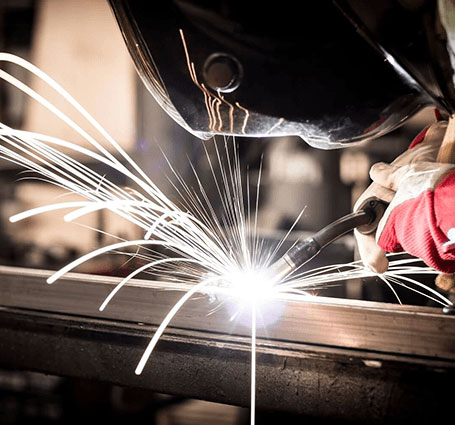
A welder is trained in cutting and joining metal parts. During the welding process, a welder heats two metal pieces and fuses them together permanently. There are four common welding types , including:
- MIG – Gas Metal Arc Welding (GMAW)
- TIG – Gas Tungsten Arc Welding (GTAW)
- Stick – Shielded Metal Arc Welding (SMAW)
- Flux-cored – Flux-Cored Arc Welding (FCAW)
Each welding type requires slightly different tools and techniques. For example, some welders use hand-held equipment to join two metals parts.
What skills do I need to become a welder?
Individuals who are interested in welding often ask what they need to do to succeed in this exciting field. Welding may be a good fit for you if you identify with the following traits:
- Attention to detail
- Safety-minded
- Problem-solving skills
- Communication skills
- Sharp eyesight
- Steady hand
Though many welders may work on a team in a shop, most spend time working on their own. As a result, welders tend to be self-motivated, hard-working people who feel satisfaction with a job well done.
Where do welders work?
Welders, cutters, solderers and brazers work across a variety of industries, including manufacturing, specialty contracting, repair and maintenance, and wholesale. Some welders work in the field of automotive welding completing structural repairs on vehicles. Welders may work outdoors in a variety of weather conditions—and some welders even work on complex projects underwater or high off the ground.
Regardless of their work location or type of welding career, welders must follow important safety measures. Working with extremely hot materials and bright lights can lead to illness or injury if welders don’t follow safety rules. Proper gear, such as gloves, masks, goggles and specialty clothing, help protect against welding burns.
Still curious? Learn more about a day in the life of a welding student.
Is welding hard?
Hands-on training and practice help countless students practice welding every year. According to the Bureau of Labor Statistics, there are more than 100 welding processes available to welders today. That may sound like a lot at first. However, a trade school welding program can help students who want to enter the welding field build a foundation of hands-on skills and knowledge and prepare them for an entry-level position.
Welding is a good option for individuals who enjoy hands-on work. Here are three signs you should consider welding training.
Where can I find welding schools near me in Long Island City, Queens?
Now that you know more about welding, it’s time to get involved in this exciting field. Welding classes are available now at Apex Technical School in Long Island City, Queens, New York. How long is welding school? Our combination welding technology program gives students the opportunity to be taught hands-on welding skills in as little as seven months.
Use our online scheduling tool to set up a time to visit our campus, talk with instructors and view our welding shop.
Sources
https://www.bls.gov/ooh/production/welders-cutters-solderers-and-brazers.htm#tab-2
What to Expect at Construction Trade School | Apex Technical School
Construction is an exciting career path for many beginners who want to use their hands to accomplish daily work and feel proud of the outcome. New construction, remodeling and renovations require skilled tradesmen and women with technical knowledge and hands-on experience. Classes focused on teaching entry-level construction, carpentry and building skills give students the opportunity to learn techniques that can be used in a variety of construction projects.
Before many students enroll in construction classes, they like to imagine what their day at trade school might be like. What will they learn? How will they spend their time? What will their instructors and peers be like? Keep reading to get ideas on these and other questions.
Learn Construction Safety and Tool Use
Students in Apex’s 900-hour construction and building skills program begin learning construction in the classroom with instructors who are eager to help students expand their interest and skills. When students walk into school, they can join their peers and prepare to be taught a combination of carpentry, electrical, plumbing, kitchen and bath remodeling.
Students learn basic theories about the trade as well as how to use equipment and follow safety procedures. In classes, students are taught safety protocols for the construction career path , including how to:
- Wear protective clothing (e.g. gloves, boots, goggles, long sleeves)
- Disconnect power sources when not using tools
- Be aware of tripping hazards
- Keep a clean, organized workspace
- Reduce distractions
In addition to safety practices, students are taught how to use tools of the trade. It’s important to not only have the right tools in your toolbox but also the skills and knowledge to use them correctly. Students get hands-on practice with hand and power tools in the shop and can ask instructors questions when they are introduced to new tools.
Carpentry Skills and Electrical
The construction and building skills program teaches six exciting segments. Students attend carpentry classes where they get a general introduction to the construction trade. As they progress, students are taught framing for floors, walls, ceilings, windows, doors and roofs. Students also attend electrical classes where they get a basic introduction to the National Electric Code. They also learn about conductors, circuit breakers and electrical blueprints.
Plumbing and Kitchen and Bath Remodeling
Classes for aspiring builders include segments on plumbing, as well as kitchen and bath remodeling. Some topics may require students to open a book or take notes while other topics may require students to work alongside instructors and peers in the shop on projects such as drain waste vent (DWV) systems in plumbing classes and light fixtures and counter installation in remodeling classes.
Are you ready to learn more about Apex’s construction and building skills program? Schedule a tour online to visit our school, tour our classrooms and ask questions.

What Will Automotive Repair Training Teach Me? | Apex
The average car is made up of 30,000 parts. That number may come as a surprise for some, but for students with a passion for cars , it’s what they enjoy seeing when they open the hood of a vehicle or slide under a car in auto repair class.
Automotive repair classes give students a chance to learn about automotive theory, expand their automotive skills, and roll up their sleeves for hands-on work. Keep reading to find out more about the mechanical skills and techniques Apex students are taught in auto repair classes.
Perform Basic Car Care and Maintenance
Some students may already know a little about the history of cars , but automotive repair classes at Apex offer students the chance to learn entry-level knowledge and build upon it in our hands-on shop classes. Instructors teach basic theories to help students understand the engine, drive-train and other support systems.
Additionally, students are taught basic car care and maintenance techniques, such as how to read an owner’s manual, check oil and oil filters, check tires, inspect fluids, examine belts and hoses, inspect and install wiper blades, and test a vehicle’s battery.
Fix the Inner Parts of a Vehicle
Students disassemble inner parts of a vehicle to understand how pieces work together and contribute to the inner workings of an internal combustion engine and an electronic automatic transmission. Students are taught how to use hand tools to assemble and disassemble parts.
Students and instructors often discuss common engine failures and why they might occur. In addition, students learn about a car’s computer software, battery, rear axles, differentials, drive shafts, torque converters, and how fluid flows through a transmission.
Understand and Test Major Components
Learning about automotive electrical theory helps prepare students to understand and test major components inside a vehicle. While working on engines and diagnosing issues, students use knowledge about electrical energy and how it works in the electrical circuits of the car. Instructors show students how to use a digital multimeter to read voltage, resistance and amps.
Cars must have brakes that operate safely. Students are taught about how braking systems work as well as how to use tools to remove brake pads and repair brake lines.
Ready to put your passion into motion? Gain automotive skills to jumpstart an entry-level position in this exciting field. Use our online scheduler to set up a tour at Apex where you can ask questions about our auto repair training program and visit our classrooms and auto shop

What Is HVAC Training Like for a Student? | Apex Technical School
Tradesmen and women in the HVAC industry work on heating, cooling and ventilation systems day in and day out. Typically, people who pursue the heating and cooling trade enjoy learning how things work. They may have a natural passion for troubleshooting and feel a sense of achievement for a job well done.
Many beginners wonder if the field is a good fit. They also wonder what a typical day is like in trade school for HVAC students. At Apex, students can expect to be taught skills and training for an entry-level position. Here are a few more things you can expect when you’re an HVAC student.
HVAC Students Study the Basics
An average day for an HVAC student begins with basic skills and theories. Students start with electrical concepts and theories used in the industry. Lessons cover a range of subjects, such as:
- Voltage circuits controls
- Wiring diagrams
- Residential and commercial units
As students learn, they build upon their technical skills and knowledge. In addition to basic electricity, students are taught the fundamentals of refrigeration. Refrigerant is used in many types of cooling and heating units to help transfer heat. Students are taught about refrigerant as well as:
- Temperature (Celsius and Fahrenheit)
- Humidity
- Heat flow and heat transfer
- Pressure and refrigeration cycle
Students spend time in both the classroom and a shop setting.
Learn to Evaluate Work Sites
Refrigeration and cooling students at Apex Technical School spend time in the shop where they are taught a wide variety of safety measures and industry practices. Students are taught about the shop environment, equipment and basic skills required of HVAC technicians to service refrigerators, freezers and air conditioners.
Students learn about safety rules and dangers to watch out for, including:
- Electrical risks
- Chemical hazards
- Equipment temperature
- Slippery surfaces
- Proper tool use
Avoiding accidents is necessary to keep yourself and others safe and unharmed in the work environment.
Work on Residential and Commercial Appliances
Refrigerators, freezers and air conditioners are widely used in areas such as residential homes, office buildings, schools, restaurants and other commercial establishments. Students in HVAC school are taught how to apply electrical and refrigeration theory by working hands-on with appliances in the shop. Instructors help students use tools and diagrams necessary for some hands-on installations and repairs.
Students also spend a portion of their day working next to other students. This helps reinforce a teamwork mindset and provides opportunity for collaboration and peer support. Knowing how to work independently and with others is often a sign of a productive, dedicated tradesperson—and many entry-level employers seek out employees who can work collaboratively.
Discover more about the air conditioning and refrigeration program when you schedule a tour online.
Want to learn more about electrical? Explore the Electrical program at Apex.

How to Relieve Stress from School, Work or Life | Apex
Everyone feels stressed from time to time. Stress shows up differently in different people—and for different reasons. Some people lose focus when they take a test, while others get shaky hands when they speak to a large group of people.
So, what is stress? How does it affect your health? What can you do to manage stress while you’re in trade school? Keep reading to learn how to recognize symptoms and manage stress.
Signs and Symptoms of Stress
Stress affects your physical and emotional health, as well as how you think and behave. A little stress every now and then is OK.
However, when stress lasts for weeks or months, it can cause high blood pressure or anxiety. It’s important to recognize stress so you can manage it. If left unchecked, stress can negatively impact your education, health and goals. Some symptoms of stress include:
- Low energy
- Headaches
- Upset stomach
- Tense muscles
- Insomnia
Stress affects people on an emotional level, too. You may feel frustrated and overwhelmed, or you could feel lonely and depressed.
Some Causes of Stress
Pursuing your technical education at trade school is an important decision. Students are excited to learn hands-on skills for an entry-level position. The journey to reaching your goals may include some stressful road bumps along the way, but if you can identify them early you can find mechanisms to help cope with stress. Some things that can cause stress in life, include:
- Deadlines
- Poor time management
- Difficulties with personal relationships (e.g. splitting up)
- Balancing work, family and school
Coping with Stress
If you’re feeling stressed on your way to school, in class or even at home, try a few simple tips to relieve the tension. Give yourself a break, text a friend, eat a snack or take deep breaths to clear your head. Try to incorporate the following habits into your routine:
- Stay organized
- Practice good time management
- Create a good workspace at home
- Develop better sleep habits
- Exercise regularly
- Talk to someone you trust
Finally, if you’re feeling stressed, remember to look at the bigger picture. You’re pursuing a trade and taking the next step for yourself—that’s exciting! You can use this knowledge to motivate you and keep you moving forward in the classroom, the shop and in life outside the school’s walls.

What Is Automotive Repair School Like? | Apex Technical School
What do students do at auto repair school? What can you expect to be taught from instructors? If you’re asking these questions, you may want to take a closer look at an average day in automotive repair class. Students who study the automotive repair trade often have a passion for cars. They bring that passion with them each day they enter the school.
Students pursuing mechanic training at Apex split their time between the classroom and auto shop where they get hands-on experience to use in an entry-level position. Check out three ways auto repair students make the most of an average day at Apex.
Acquire Knowledge of Auto Repair Tools
Learning starts with gaining knowledge of important tools. Mechanic students are taught about automotive tools and how tradespeople use them on the job. Apex students practice with tools throughout training. Tools include, but are not limited to, the following:
- Combination wrenches
- Ratchet wrench and set of sockets
- Digital multimeter
- Allen wrenches
- Punches
- Window sticker scrapers
- Torx set
- Regular and Phillips screwdrivers
- Pliers
Roll Up Your Sleeves in the Automotive Shop
Instructors teach students how to use tools by giving them the chance to use them hands-on in the shop. As a student in the program, you practice hands-on auto repair techniques such as changing oil, testing major components when a vehicle breaks down, and working on engines, transmissions and brakes. When students put their passion to work in the shop, they learn to work with peers and help vehicles operate safely.
Learn Automotive Safety
Working on vehicles can be fun, exciting and fulfilling. However, mechanic students training in automotive repair classes also devote time to safety precautions. Proper techniques, rules and gear are designed to keep everyone safe. Students learn to:
- Keep work areas clean and organized
- Put tools away in work cabinets or toolboxes
- Ensure walkways stay clear
- Wear well-fitting clothing
- Wear goggles and gloves when making certain repairs
- Keep fire extinguishers nearby for emergencies
As soon as they start training in the shop, students learn to prioritize their well-being and the safety of others. At Apex, our students and instructors enjoy establishing guidelines, rules and safety measures that promote learning.
Does automotive repair school sound like a good fit? Go online to schedule a tour to visit the school, get more information and see our auto repair shops.

Learn Life Lessons and Skills in Trade School | Apex Technical School
Trade school gives students practical, hands-on learning opportunities, such as how to use tools and how to work in a shop with peers. Many students don’t realize they can use trade school lessons in life outside the school’s walls. How can trade school offer valuable life experience? Check out these life lessons you may learn in trade school.
Expand Your Skills and Knowledge
A technical school education is an opportunity to expand your skills and knowledge. Classes are often designed to offer industry information, theories, trade history and skills for entry-level employment. Students’ commitment to trade school demonstrates the willingness to welcome new information and work through questions to find answers. When you follow your passions in school, you’re learning to keep an open mind and expand your knowledge. Open-minded individuals often listen to information and figure out if it makes sense or requires another solution. This can be helpful when making decisions about various circumstances in life.
Prioritize Safety
Trade school gives students a chance to learn how to make their way around a shop. In the shop, students are responsible for learning techniques and skills, as well as taking safety precautions. Students are taught to use tools correctly, wear protective gear and watch out for situations that may be harmful to themselves and others.
When safety is the expectation at school, students may learn to bring home a safety-minded attitude. A good safety attitude is the best way to protect yourself from accidents. When you respect policies and best practices, you do your part to keep yourself and others safe—whether you’re at home, at work or in a public space.
Collaborate With Others
As you are taught technical skills, you work shoulder to shoulder with peers. This approach encourages you to get to know and rely on each other.
Collaboration skills not only help you learn together with peers at school but could also help you maintain patience and see another perspective. These skills are often valuable to relationships with parents, siblings, partners and children. Whether you’re helping your child learn to do his chores or installing plumbing pipes in a bathroom, you reap the benefits of collaboration.
Want to learn alongside students who are passionate about the trades? Find a program that matches your interests at Apex Technical School.

Benefits of Trade School | Apex Technical School
While a plumber may be a craftsperson who brings a toolbox to fix leaks and unclog toilets, he or she can also play an important role in the safety of residential, commercial and public spaces. Plumbing school programs help beginners kickoff this exciting career path by growing their knowledge and skills in the field.
On a given day in plumbing school, students work side by side in the classroom and shop to learn theories, skills and standards of the trade. Keep reading to learn what an average school day is like for plumbing students at Apex.
Your Plumbing Tools List
Students attending plumbing school start their education with tools. At Apex Technical School, students work with tools in their program either at the time of enrollment or as they progress in their training. The toolkit helps students learn how to use basic tools and discover which items they need to carry with them to any jobsite, including:
- Hammers
- Screwdrivers
- Plumbing pliers
- Tape measure
- Plumbing wrench
- Flashlight
To learn more about plumbing tools and their uses, read Common Tools for the Plumbing Trade .
Plumbing Safety
Safety is critical to a plumbing student’s education. Students learn the importance of safety in the plumbing trade. Apex plumbing students work closely with instructors who help them understand building safety codes and blueprints.
Students also wear safety protection while working in various environments. Trade school gives students in the pipefitting and plumbing program the chance to practice basic skills while wearing safety protection and following safety measures.
Fun fact: Ancient Romans were great at plumbing! Learn more about the history of the plumbing industry .
Hands-on Plumbing Training
Individuals in the plumbing trade may play a role in many commercial and residential installations. Beyond toilets and faucets, some advanced plumbers install the oxygen patients receive in operating rooms, dental chairs, decorative fountains, gas ovens in restaurant kitchens and much more.
Many students in the plumbing industry start their journey by taking hands-on courses that prepare them for entry-level work. Students who attend Apex practice in real time, in a shop setting with instructors and peers. At the end of the day, students can go home feeling a sense of accomplishment.
Want to learn more about plumber training at Apex? Visit our campus to meet staff, tour classrooms and shops and ask questions.

