Reasons to Begin Plumbing Training | Apex Technical School
Almost every building in America requires access to water and plumbing. People in offices, hospitals, schools, government buildings and residential homes rely on flowing water for necessary daily tasks—from hygiene to cooking to watering the garden and much more. Skilled plumbers and pipefitters must be called in to keep all these pipes in working order.
If you’re interested in pursuing plumbing and pipefitting training, you may be wondering if trade classes are worth it. We’ll break down the benefits of hands-on technical training to help you decide a path that’s right for you.
Is Plumbing a Good Career Path?
Plumbers install reliable and long-lasting parts, troubleshoot problems, maintain existing pipework and appliances. They also stay up-to-date on the latest trends, such as environmentally and economically friendly options for homeowners and contractors. Such an important trade keeps America running smoothly and can offer hands-on individuals a path to a fulfilling career as a plumber or pipefitter.
Some individuals enroll in plumbing classes because they don’t like working 9–5 at a desk job. They don’t feel productive or accomplished, or maybe they simply want to move around and use their hands to complete their work for the day. As a hands-on field, plumbing offers a way for aspiring plumbers to grow practical skillsets without being tied to a desk.
Plumbing classes can introduce students to basic plumbing and pipefitting methods and tools that they can use on jobs once they enter the field. Students also benefit from structured, safety-focused learning environments, such as a realistic shop setting, where they can ask questions and practice skills alongside instructors and peers. These experiences can give students skills and confidence that they may use in a plumbing career.

Benefits of Trade School for Plumbing
There are many positive reasons to begin plumbing classesat Apex Technical School if you want to pursue a hands-on career in plumbing and pipefitting. Top reasons include:
- Hands-on training opportunities
- Introduction to hand and power tools, fixtures, faucets, fittings, DWV piping and valves
- Dedicated instructors
- Classroom and shop learning environments
- Safety knowledge
- Practice using tools and equipment of the trade
- Job placement assistance
- Supportive school staff
Related: A Day in the Life of a Plumbing Student

Learn About the Plumbing Program at Apex
The Admissions team at Apex is here to help you take the first step toward a future in plumbing and pipefitting! Plumbing classes are starting soon. Learn more about the Plumbing & Pipefitting program now, including what our instructors teach in the courses, or contact us to schedule a tour to see the campus, classrooms and shops.

Electrician Interview Questions | Apex Technical School
Congratulations—you’re going to an entry-level electrician interview! This is an exciting time, and you’re probably eager to prepare for the big day. To help you be successful, we’ve assembled a few tips, electrician questions and answers, as well as some general advice. Keep reading to find all the information you need to boost your confidence and professionalism!
Practice Electrician Job Interview Questions
Ensure you’re prepared to excel at your interview by practicing electrician questions and answers. When you know what to expect, you can feel more confident about yourself, your skills, the job you’re applying for and the nature of the electrical work you’ll discuss with your potential employer. In addition to electrical interview questions, here are other questions that can help you prepare.
Brush up on interview questions for an electrician with these sample questions:
- Tell me about yourself.
- Why do you want this job?
- Tell me about your education/certification and what you learned.
- Can you describe the electrical systems you have worked on and are most familiar with?
- Please describe some recent projects you worked on in detail.
- Tell me about an electrical problem or challenge you couldn’t solve. What did you do to find a solution?
- If you saw a coworker making a mistake or being unsafe, what would you do?
Finally, don’t leave the interview without asking the employer a couple of questions about the position or company. Asking questions at an electrical interview shows your passion—as well as your interest and seriousness in the role. It also gives you a good idea what it would be like to work in the role. You want to make sure you’re a good fit for them, and that they’re a good fit for you. Ask questions like, “What do you enjoy most about working here?” or “What would a successful candidate in this role be doing a year from now?”
What to Wear to an Electrician Job Interview
How do you want to present yourself at your job interview? Physical appearance is a priority, and it’s a good idea to wear professional clothing, such as business attire. This might mean a button-down shirt, ironed slacks (not jeans), dress shoes (leave the boots at home) and a belt.
Your appearance can say a lot about you. For instance, if you wear a full suit to your interview, the employer may get the impression that you’re not ready for hands-on electrical work. That’s why clean, pressed business attire is more likely the ideal choice for an entry-level electrician interview. Neat clothing and good hygiene go a long way.

What to Bring to an Electrician Job Interview
Find out ahead of time if you’ll be required to perform electrical tasks at the interview. The employer may want to see you test your knowledgeby working on an install or repair project. If you’ll be required to complete tasks on site, you might prepare yourself by bringing:
- Pliers
- Wire strippers
- Digital multimeter
- Electrical tape
- Screwdriver
If you aren’t required to demonstrate your skills at your electrician interview, there are still a few things you don’t want to leave at home. Make sure to bring an extra copy of your resume, as well as a positive, polite attitude. A list of references—or people who can speak to your abilities, education and character—can also be handy in case the employer wants to confirm details on your resume after the interview ends.

Are you an Apex student who is interested in job placement assistance , such as help with your resume? Our job placement team is here to help! Reach out to us today—we’re happy to support you.
A History of Carpentry Tools | Apex Technical School
Humans began fashioning and using tools as early as 2.6 million years ago. In the Stone Age, ancient peoples turned stones into basic tools such as hammers and axes, and they also leveraged sharp animal bones in more advanced toolmaking. These early tools were used for hunting and survival, but they paved the way for hand tools that helped early humans build shelters and other structures.
Some of the most important hand tools throughout history have included the knife, hammer, hand saw, and plane. Keep reading to learn the background of several of thesehand tools, which are still used today in the carpentry and building trade.
History of the Hammer
The hammer as we know it today consists of a handle and a head usually made of iron. But the earliest hammers began as only a granite hammer head, which was used to break stones into smaller pieces of flint. Over time, humans added the handle using a string of leather or vine for more control and precision.
Around 2000 to 1800 BC, hammers began to be made for specific jobs, such as blacksmithing, mining and carpentry. For centuries, tradesmen have improved very little upon the basic function of the hammer while also adjusting it for specialized uses such as soft-faced mallets, dead blow hammers and more. Hammers today often have a claw feature on the head, which carpenters and other tradespeople use to extract nails and remove boards.
It’s very common for most carpentry, construction or building jobs to have multiple types of hammers on site. In fact, students at Apex carry a hammer in their toolbox as part of the Construction & Building Skills program . This ancient and simple tool used for woodworking is still critical to the trades today.

Handsaws and Their Evolution
Experts aren’t sure when the first handsaw was invented. The knife paved the way for scissors, as well as for the handsaw. After all, a handsaw is a knife with sharp teeth on the edge that ancient humans used to cut materials like wood more efficiently. Egyptian texts show that a type of handsaw was used to help build the pyramids before 1500 BC. By the 17th century, handsaws were more readily available because blacksmiths could more easily produce them.
Specialty saws emerged in the 1800s, such as the compass saw, the ripsaw, the pitsaw and the cross-cut saw. Manufacturers produced saws that were used to help build structures. These saws had sloped, rounded edges and flat, rectangular edges. Today’s handsaws don’t look much different than the handsaws of the 1800s.
Now, many carpenters and construction workers use saws with plastic handles and removable blades that are both rust resistant and thicker than the saws hundreds of years ago.
Related:Construction History Through the Centuries
Planes for Woodworking & Building
The plane has existed for over 2,000 years and is a critical tool for craftsmen today. A plane, or a hand plane, is a tool for shaping wood using muscle power to force the cutting blade over the wood surface. Before the plane, early woodworkers likely used an adze, a stone and abrasive sand to roughly trim wood pieces.
Early examples of planes have been discovered in Rome, Britain and Germany, while the earliest known plane was excavated in Pompeii. Planes help carpenters and woodworkers remove rough surfaces and reduce a piece of wood down to the correct size for their structure. The main types of planes used in many woodshops today include:
- Block planes– Used for minor cutting, shaping, or leveling corners
- Smoothing planes– Used to remove fine shavings and create a smooth surface
- Jack planes– Used as a general, all-purpose plane for sizing and smoothing
- Jointer planes– Used to shave off large chunks and level surfaces
- Bevel-up planes– Used to vary the cutting angle by altering the bevel angle
- Joinery planes– Used to create joints
As the carpentry and building trade progresses, its tools will continue to evolve. Common tools today may be improved upon decades from now, to help construction workers, carpenters and builders become more efficient and precise in creating structures for customers.

Ready to step into the construction classroom and use carpentry tools in the shop at Apex? Learn more about the Construction & Building Skills program now.
EXPLORE THE CONSTRUCTION PROGRAM

Welding Job Interview Questions & Tips | Apex Technical School
If you’re working toward a future in welding, one of the first steps for an entry-level position is a welding job interview. For some people, interviews cause nervousness or anxiety. But they don’t have to—especially if you’re prepared ahead of time. Preparation leads to confidence, and confidence is one of the most important elements to a positive interview!
To help you prepare and learn how to get a welding job, we’ve compiled some first interview tips, including sample welding job interview questions you may be asked, what to wear to a welding job interview, and more.
What to Wear to a Welding Job Interview
In many industries, such as business, accounting or marketing, individuals who interview for job openings wear professional, tailored clothing and dress shoes. However, this attire isn’t always the right choice in the welding trade. If you’re interviewing for an entry-level welding position, you’ll likely be asked to perform a welding test as part of the interview process.
With this welding test in mind, consider wearing good quality work boots, a long-sleeve shirt and jeans to the interview. If you know a welding test isn’t involved in your first interview, consider wearing tailored clothing—such as slacks and a button-down shirt—to appear professional and polished.
Regardless of your clothing type, make sure your clothes fit well and are clean. An interview is a professional meeting, so cleanliness and polite manners go a long way toward a good first impression.
Related: Types of Welding Protective Gear
What to Bring to a Welding Job Interview
Another first interview tip: ask the hiring manager if you’ll be required to perform a welding test at your interview. If the interviewer requires you to demonstrate your welding skills during the interview, you’ll want to bring several items with you so that you’re prepared with everything you need to succeed. Bring the following items:
- Welding helmet
- Welding gloves
- Welding jacket
- A chipping hammer
- Grinder
It’s also recommended to bring a copy of your resume, which shows past welding experience, training and credentials you’ve earned. Bring a list of references, if possible. References are individuals who are willing and able to speak to your welding abilities, skills and personal character. They might be former employers, school instructors or community members who know you well. Lastly, bring a confident, positive mindset to your welding job interview.

Be Prepared to Demonstrate Your Skills
If you’re wondering how to get a welding job, the answer might be simpler than you think. Demonstrate your skills! In other words, as you’re preparing for your welding job interview, practice your welding approach. Practice increases your confidence and keeps your skills and knowledge fresh.
Many hiring managers will mention in the job posting the type of welding you’ll be required to do at the interview. MIG weldingis often used for small-to-medium sized projects, while stick weldingis commonly used for large structures and pipelines.
If you’re unsure of the type of welding required for the job, it’s a good idea to ask the hiring manager when they call to set up the interview. Asking for this detail gives you the opportunity to practice your skills and knowledge before it’s time to head to the interview.
Practice Welding Job Interview Questions
In addition to a welding test, your interviewer will likely ask you to answer several questions about yourself, the role you’re applying for and the nature of the work you’ll be doing. Here are some common questions you can anticipate hearing in your welding interview. Practice composing your answers to these and other questions , so you’ll be prepared to answer with confidence during your interview.
- Tell me about yourself.
- Why do you want this job?
- Where did you receive your training?
- Tell me about your education/certification and what you learned.
- What would you do if you noticed an error in a colleague’s work?
- Are you willing to learn new processes on the job?
At the end of the interview, you may be asked if you have any questions. It’s always a good idea to come prepared with two or three questions. This demonstrates your commitment and interest in the job position. You can ask questions about the position and the company or what the interviewer likes about working there—the answer may give you valuable insight into the company’s culture. With the right amount of preparation and practice, you can set yourself up for success.
Are you an Apex student who is interested in job placement assistance, such as help with your resume? Our job placement team is here to help! Reach out to us today—we’re happy to support you.

Trade Student Spotlight: Garrett Hansen | Apex Technical School
We sat down with Apex Technical School graduate Garrett Hansen to ask him about his experience in the Combination Welding Technology program . Originally from Brewster, New York, Garrett currently lives in Brooklyn. Before pursuing a welding job, Garrett was a manager at a daycare for dogs.
Working Part-Time While Attending Classes
For Garrett, it was important to enroll in a trade program with class times during the day. Apex offers both day and evening classes.
“I came to Apex for my classes from 8 am–2 pm,” he said. “Then I worked at my part-time job from 3 pm–8 pm. It was tough but worth it.”
Garrett’s goal was to complete his courses as soon as possible, so he could graduate and start working in the welding field . Unlike traditional four-year universities and two-year community colleges, Apex’s programs can be completed in as little as 7 months.
“I moved through the welding program at my own pace and graduated in June 2022,” he said.
Hands-On Motivation
Several elements about trade school kept Garrett motivated in the welding program. Most importantly, pursuing a trade gave Garrett the opportunity to be hands-on in the shop.
“I can’t sit behind a desk,” he said. “I need to be moving around.”
Garret knew that Apex offers an established welding programthat could put him in a position to open doors to new opportunities.
“What led me to Apex was the welding program,” he said. “Welding is a good, stable career, and it’s something I enjoy doing. I also had a friend who graduated from Apex who got a job welding.”
Rewarding Experiences
Garrett had a positive experience at Apex—from interacting with instructors and staff to learning alongside other welding students.
“Instructors are helpful and the staff is great,” he said. “I feel the welding program is set up for us to be successful. I learned the skills required to become a great welder. I asked constant welding questions and got constant help. I had a good experience because welding is both challenging and rewarding. It is what you make of it.”
Tools of the Trade
Students like Garrett get to practice with real tools of the trade in a shop setting to get them ready for what it’s like to enter the field after completing their program.
“I felt supported by always having a place to learn with the resources I needed to succeed in welding,” he said. “I enjoyed learning the welding lingo during theory, then I got into the shop and we would do what we talked about.”
When asked about his favorite welding processes and equipment, Garrett didn’t hesitate.
“My favorite process is stick welding,” he said. “There’s something about the flux and feeding rod that makes me happy. My favorite piece of equipment is the cutting torch. It blasts through metal—that makes me excited. It’s thrilling!”
Related: MIG Welding and Other Common Welding Types
Challenges and Achievements
Sometimes students face milestones they never could have imagined. Looking back on his time in the welding program, Garrett remembers important moments.
“My biggest challenge was learning to be patient and understand that I’m learning,” he said. “I had to learn that I can’t get everything perfect on the first try. I’m most proud of coming to Apex every day and getting everything done at a good pace.”
Garrett also learned that his sense of satisfaction wasn’t achieved alone.
“One of my greatest achievements was being able to teach other students how to do things,” he said. “It gave me reassurance that I was learning it myself.”
Garrett also balanced coursework by not allowing himself to fall behind.
“I did everything right so I could quickly move on the next project,” he said. “For example, the night before a quiz, I made sure I studied.”
Apex Technical School Admissions Process
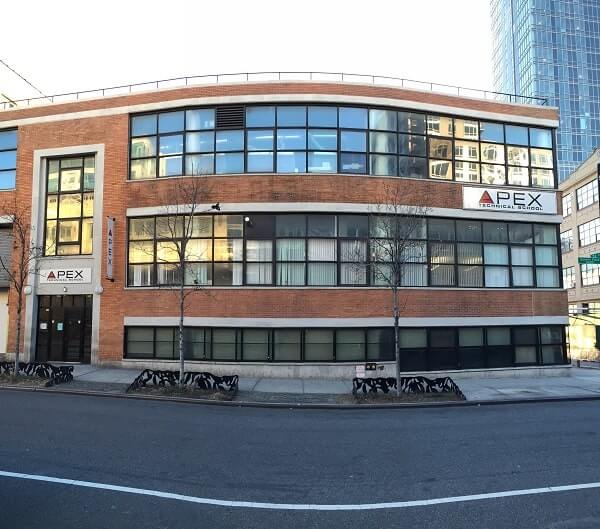
Looking back on his experience in the welding program, Garrett thinks it was the right path for him. He has simple advice for students considering enrolling at Apex: don’t be intimidated by the Apex Technical School admissions process.
“The admissions process was easy and quick,” he said. “It took one day, and I was signed up with a start date.”
If you’re interested in learning more about the Combination Welding Technology program or another program at Apex Technical School, explore our programs page. Classes are starting soon. Contact our admissions team online to get answers to your Apex enrollment or program questions. We’re excited to talk to you!

How to Pay for Trade School | Apex Technical School
Education can be a stepping stone to the next phase of your future—both personally and professionally. For many individuals, the cost of school can be a hurdle. Financial aidmakes it possible for students to more easily manage costs and pursue their goals—whether you’re interested in a trade school, community college, or traditional university.
Financial aid is popular among students at two- and four-year universities. But trade school students often don’t realize that they could be eligible for financial aid, too. If you’re enrolling in a trade school soon, keep reading to learn about financial aid options.
How to Pay for Trade School
There are several trade school financing options when it comes to paying for your education. We’ll break down your options, starting with the most popular—FAFSA:
- FAFSA
The Free Application for Federal Student Aid (FAFSA) is a form completed by current and prospective students to determine their eligibility for federal student financial aid. To be considered for federal student loans and grants, you must submit the FAFSA. Even if you don’t think you’ll qualify for financial aid, you’re encouraged to submit the FAFSA—you may be surprised by how much aid is available to eligible trade school students.
- Federal Direct Student Loans
This is a federal student loan program under which eligible students and parents borrow directly from the U.S. Department of Education at participating schools. Student loans for trade school must be repaid—they are not free money from the federal government. Apex Technical School participates in this loan program.
- Grants
Grants are based upon financial need. Grants don’t need to be repaid. Examples of grants for technical schools that students may be eligible for include the Federal Pell Grant and the Federal SEOG Grant.
- Federal Work-Study
A limited number of part-time jobs are available through the Federal Work-Study program. Students must meet the basic eligibility requirements and have a financial need. Work-study job placements are made once students begin classes.
- Scholarships
Check for scholarships for trade schools in your community, at your church, your place of employment, and online.

Trade School Financial Aid at Apex
We understand financing options can seem confusing when you’re deciding how to pay for trade school. That’s why we’re here to help explain it all and make applying as easy as possible. Our financial aid advisors will meet with you to help you understand and navigate the financial aid process . When you finish the application process, your financial aid advisor will prepare a financial aid package for you based upon your eligibility and financial need.
Your award package may include a combination of grants, loans, and other programs . Your advisor will be available to meet with you and talk through your aid, when you’ll receive it, billing and payment procedures, and more. Contact us today to find out if you’re eligible!


Tom Tanski Instructor Profile | Apex Technical School
“Teaching is the most rewarding job I ever had, and I can stay involved with the trade I love.”
A Legacy in the Trades
Tom Tanski comes from a long line of master craftsmen. His father was a general contractor and master plumber. His maternal grandfather was a union electrician, and many other family members were in construction. “I grew up doing carpentry and plumbing,” Tom says. “As soon as I was old enough to push a broom, I was on a construction site.”
Tom worked as a framing carpenter in his 20s. When he decided to become an electrician, he spent seven years attending night school while working during the day to learn his trade. He rose to the top of the profession and became a foreman, before a freak bowling injury derailed his career. He was 34.
“I just picked up a bowling ball, there was a rupture, I had nerve damage and lost fine motor skills in my right hand.”
A Fresh Start with Apex
While working as a traveling superintendent, living in hotel rooms across the country, Tom saw an APEX ad looking for teachers for its Electrical & Advanced Electrical program . He wasn’t sure he had the patience to teach, but he went to the interview anyway. That was 14 years ago.
“Teaching is the most rewarding job I ever had, and I can stay involved with the trade I love,” Tom says. “Most tradespeople don’t see themselves as teachers, yet all of us have taught apprentices in the field. We are teachers; we do this all the time. For any tradesperson who has physical limitations like I do, or anyone who has retired from the field but wants to work, this is the perfect career.”
The trades are more technically advanced than most people understand. In the electrical trades, for example, teachers and students alike are at the forefront of technology. Smart homes, next-generation solar technology, and electric car recharging stations all rely on electricity—one of the reasons why career prospects are so great for electricians.
There is so much that is rewarding about teaching for Tom. He can travel anywhere in the country and see buildings his students helped to construct. He loves seeing the moment when students finally grasp a difficult concept. And he loves giving back—one of his students was living in a shelter when he started the program, and now has his own apartment and pays his own bills.
“I was part of changing that student’s life. I never had a job before that offered that kind of reward. There is a pride in knowing you had that impact on someone’s life.”
Interested in changing lives by teaching the next generation of our workforce? Contact us at (212) 645-3300 or apply for an open position below.
Reasons for Learning Construction Skills | Apex
Construction and building professionals help America to grow as well as innovate safer, more environmentally friendly infrastructure . The field is not only a popular choice for trade students, but also an avenue for skills development. Individuals who work in construction or carpentry use a variety of skillsets, from electrical to plumbing, framing and finishing , and more.
If you’re interested in pursuing construction skills training, you may be wondering if trade classes are worth it. We’ll break down some trade school benefits to help you decide on a path that’s right for you.
Is Construction a Good Career Path?
Some students find that a trade career is a fulfilling path for them. Construction can be a field that positions an individual to expand his or her skillset and find more opportunities for professional growth. With hands-on training and years of experience, some construction tradespeople may even realize that they want to start their own construction or carpentry business.
Construction classes can introduce students to basic carpentry methods and tools that they can use on jobs once they enter the field. Classes also provide a structured, safety-focused learning environment, where students can ask questions and practice their skills alongside peers who share their passions. Through their experiences learning construction skills, students can gain knowledge and confidence that they could use in a construction career.

Benefits of Construction Skills Training
There are many positive reasons to begin construction classes at Apex Technical School if you want to pursue a hands-on career in carpentry, building or construction. Top reasons include:
- Hands-on training opportunities
- Introduction to carpentry, electrical, plumbing, and kitchen and bath remodeling
- Dedicated instructors
- Classroom and shop learning environments
- Safety knowledge
- Practice using tools and equipment of the trade
- Job placement assistance
- Supportive admissions staff
Related: A Day in the Life of a Construction Student

Learn Construction & Building Skills at Apex
Ready to take the next step toward your goals? Apex Technical School is here to help! Construction classes are starting soon. Learn more about our Construction & Building Skills program now, or contact us to schedule a visit and see our campus and classrooms.
EXPLORE THE CONSTRUCTION PROGRAM