






Reasons to Begin Electrical Classes | Apex Technical School
How much wiring is tucked away behind the walls of your home? Think about the wires you depend on to bring you light, sound and energy each day. You may not realize how helpful and necessary electricity is for daily tasks until it’s gone—a power outage can create a stressful domino effect in homes, neighborhoods and businesses. Without electricians who specialize in this much-needed trade, our days and nights would be a lot darker.
Luckily, electrical classes continue to give students an entryway into this critical field. Will you be flipping on the switch to a future in the electrical trade? Let’s break down the benefits of hands-on technical training to help you decide the path that’s right for you.
Are Electrician Classes Worth It?
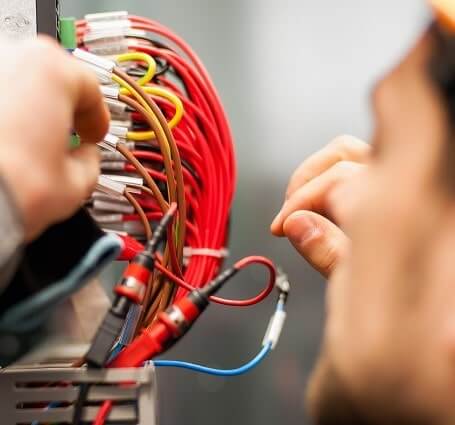
Whether they work in residential homes, commercial businesses or industrial buildings, electricians are a highly valued profession. Electricians install, maintain and repair electrical systems, including lighting in homes, businesses and factories. They rely heavily on their color vision, since electrical wiring insulation is color-coded to indicate the type of wiringand to what it should or should not be connected. Electricians must also be excellent troubleshooters, because they spend much of their time problem-solving, a task that requires attention to detail and knowledge of electrical safety.
So, is it worth it becoming an electrician? Some individuals discover career fulfilment in this hands-on role. Rather than sit at a desk for eight hours per day, electricians travel to job sites, work with their hands, and provide customer service to homeowners or building maintenance professionals. As a career path, electrical can be an energizing and structured environment in which to make a difference.
Electrical training gives aspiring electricians the chance to practice their growing trade skills in a shop setting while learning electrical theory in the classroom. Students use tools of the tradealongside their peers with support from dedicated instructors who have field experience. Through this learning environment, students can gain skillsets and confidence they may use in an electrical career.

Benefits of Trade School for Electrical
If you want to pursue a hands-on career in electrical, trade school is a great place to start your journey! There are many benefits of attending a trade school like Apex Technical School. Our students often cite the following reasons for choosing our electrical classes :
- Hands-on training opportunities
- Introduction to blueprints, residential wiring , breakers and fuses, grounding, bonding, splicing, currents and outlets
- Dedicated instructors
- Classroom and shop learning environments
- Electrical safety
- Practice using tools and equipment of the trade
- Job placement assistance
- Supportive school staff
Related: Get to Know an Apex Electrical Instructor
Learn About the Electrical Program at Apex
If you choose to attend Apex’s Electrical & Advanced Electrical program, you’ll take part in hands-on training, including 900 hours of shop and classroom learning experiences. After you complete the program, our Job Placement Assistance team can help you prepare to enter the job market by offering support with your resume and interview tips. Ready to take the first step toward an entry-level career as an electrician, electrician’s assistant or electrical apprentice? Learn more about our program.
EXPLORE THE ELECTRICAL PROGRAM

Construction Interview Questions | Apex Technical School
If you’re applying to entry-level construction or carpentry jobs and hope to have an interview on the horizon soon, keep up the great work! As you prepare for the future, check out these construction interview questions that you might be asked by potential employers, and practice your answers. The more you practice, the more prepared and confident you’ll be.
Interview Questions for Construction Laborers
Construction worker interview questions will likely start off general and become more specific and in-depth the longer your interview lasts. This method helps the interviewer get to know you first and understand if you’d be a good fit for the role. You’ll likely answer questions about your education, your goals and your interest in working for their company.
After that, the interviewer will typically shift to job-specific questions. Your approach to answering these questions—and the answers themselves—will tell the interviewer what he or she needs to know about your working style, your abilities and much more. Here are some common interview questions for construction laborers:
- Tell me about yourself.
- Why do you want to work in the construction and building field?
- What qualities do you think are important for this role?
- What are some skills you gained in school and/or at other jobs that can help you in this role?
- How is teamwork important for this position?
Practice these questions,and others, before you arrive on the day of your interview. The more you practice, the more prepared you’ll be to give the best, most honest answers. Plus, research shows that preparation leads to greater levels of confidence, which is a benefit to any interviewee.
Sample Answers
- What qualities do you think are important for this role?
To me, the three most important qualities for this role are attention to detail, problem-solving and efficiency. The best person for this job will have attention to detail, which is critical for completing projects correctly, as well as for staying safe on the jobsite . Problem-solving is another important quality for this role. There is no shortage of troubleshooting on a construction site, and creative solutions are valuable. Finally, efficiency is needed for this role because your company makes a promise to customers that a project will be finished on time and on budget, and the best worker for this role would be highly productive.
- What are some skills you gained in school and/or at other jobs that can help you in this role?
As a student in the Construction & Building Skills program at Apex, I had the opportunity to work with various tools and equipment in my carpentry classes, electrical classes, plumbing classes and remodeling classes. I was taught window and door framing, conductor and circuit breakers, drain waste vent systems and light fixture installation. I believe these hands-on learning opportunities will help me in this role and give me a solid foundation of skills on which I can keep building as a construction worker with your company.

What to Wear to a Construction Job Interview
The right attire is important for making a positive first impression at your interview. What’s the best way to dress to impress? A good rule of thumb: Wear clothing that is one step up from the required daily dress code on the job. At a construction or carpentry job, you’d likely wear durable jeans or cotton canvas pants, a long-sleeve shirt and steel-toe boots at the worksite.
When you get dressed for your interview, consider how you can take that attire to the next level. You may wear khaki or dark colored pants (not jeans), a button-down shirt and leather shoes. You’ll appear polished and presentable without looking overdressed for the role.

How to Get a Job in Construction
Practicing your answers to interview questions and dressing to impress are two important ways you can increase your chances of landing a job in construction. If you want to stand out from other applicants, here are a few more considerations:
- Bring 1–2 copies of your resume in a clean folder
- Research the company’s values and mission statement
- Offer to provide professional references (i.e., a former boss, instructor or mentor)
- Bring identification, such as your driver’s license and CDL (if applicable)
- Ask the interviewer 3–5 questions about the role or the company
Finally, if you still feel a little practice or guidance would be helpful to you, reach out to the Job Placement Assistance team at Apex. We’re happy to help you prepare for your interview, craft a resume, or look for jobs that may be a good fit. Contact us today to learn more.

History of Welding Tools | Apex Technical School
Did you know that welding is an ancient process? Welding history begins with the Egyptians, who used charcoal to pressure-weld swords as far back as 3000 B.C. using a process now known as forge welding. According to TheCrucible.org , forge welding was the main form of welding until the 19th century when discoveries related to important welding technologies led to the invention of the electric generator, gas welding and arc welding.Today’s welders can use a variety of welding tools, such as heat guns, torches, soldering irons and welding machines, to form a permanent bond between two pieces of metal. Keep reading to learn a little about the evolution of basic welding tools throughout history: the chisel, the torch and the electrode.
Chisels
Britannica.com reports that the chisel was invented around 8000 B.C. in Egypt for working wood and soft stone. However, many other ancient peoples adapted the chisel for a variety of uses, notably artists in 4 th century Greece who used chisels for marble carving and welders who employed the tool for cleaning up spatter and slag after a weld.Today, not much has changed for chisels in welding. Welders still use this simple, effective tool to remove spatter, sometimes in combination with a hammer for difficult-to-remove pieces.
Welding Torches
The blow pipe, or welding torch, was introduced in 1887 and was used with oxygen and liquified air for welding and cutting. According toMillerwelds.com, by 1900 the torch evolved considerably, and welders at that time could also weld with a torch that used low-pressure acetylene. Welding torches and welding machines grew in popularity and use during World War I, as countries needed a continual supply of weapons. Today, many welders use torches that fall into two main categories of oxy-acetylene torches: positive pressure type welding torch or injector type welding torches.
Related: MIG Welding and Other Common Welding Types
Electrodes
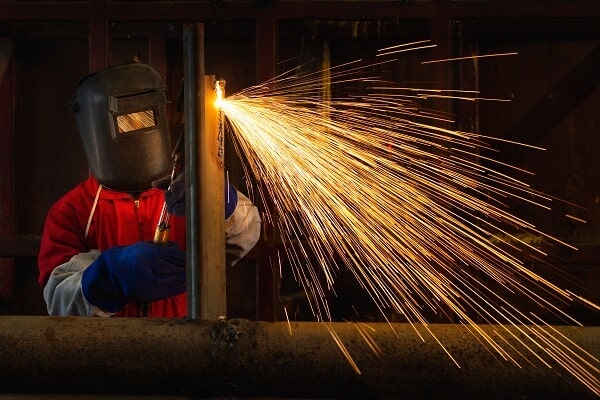
Welding electrodes are wires with chemical coatings that are connected to a welding machine. Electrodes create an electric arc through which a current passes and generates heat used to melt metals together. The electrode dates back to 1800 when Sir Humphry Davy produced an arc between two carbon electrodes using a battery, according to Millerwelds.com . Five years later, British and American patents for carbon arc welding were filed.By 1890, the first recorded patent for an arc welding process that used an electrode was introduced. This electrode was the first of its kind to carry melted metal and deposit filler into a joint, forming a weld. As arc and stick welding became more popular and accessible, manufacturers began making electrodes in great numbers to meet growing demand. By 1919, welders were widely using the heavy-coated electrode. Electrodes continued to evolve and include four main types today:
Electrodes
Welding electrodes are wires with chemical coatings that are connected to a welding machine. Electrodes create an electric arc through which a current passes and generates heat used to melt metals together. The electrode dates back to 1800 when Sir Humphry Davy produced an arc between two carbon electrodes using a battery, according toMillerwelds.com. Five years later, British and American patents for carbon arc welding were filed.By 1890, the first recorded patent for an arc welding process that used an electrode was introduced. This electrode was the first of its kind to carry melted metal and deposit filler into a joint, forming a weld. As arc and stick welding became more popular and accessible, manufacturers began making electrodes in great numbers to meet growing demand. By 1919, welders were widely using the heavy-coated electrode. Electrodes continued to evolve and include four main types today:
- Low-hydrogen carbon steel electrodes
- Mild steel electrodes
- Mild steel electrodes (non-ISI grade)
- Stainless steel electrodes
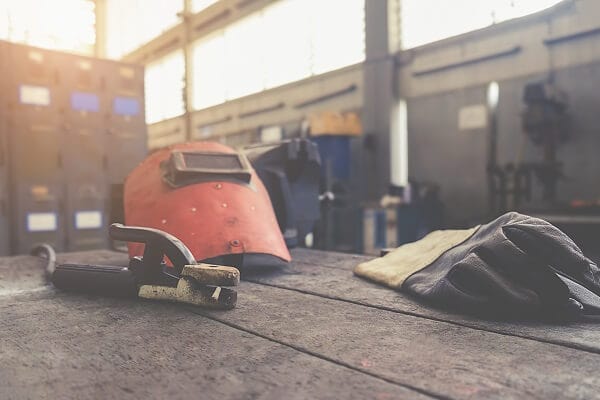
As the history of welding marches on, welding technology and tools will evolve too. Common tools today may be improved upon decades from now to help welders become more efficient and precise in creating or repairing buildings, pipelines, vehicles and other structures.
Explore the Combination Welding Program at Apex
Ready to step into the welding classroom and use common welding tools in the shop at Apex? Learn more about theCombination Welding Technology programnow.
Which Skilled Trade Should You Pursue in 2023? | Apex
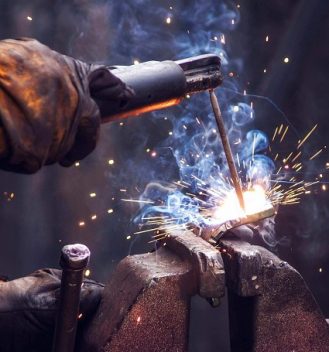
A new year means new goals or a fresh start with old goals that you still want to achieve. Is 2023 the year you’ll pursue the in-demand trade job you’ve envisioned for yourself? Hands-on training can help prepare you for an entry-level position in as little as 7 months. Have questions? That’s okay! We’ll lay out everything you need to know about how to kick off an exciting journey in trade school in 2023.
What is a skilled trade?
A skilled trade is an occupation that requires technical knowledge and a specific skill set. An education in a skilled trade differs from a traditional or community college education. Technical training, also called vocational training, is a hands-on approach to learning a specific skill set, while collegiate learning is an academic approach to studying a particular field.
What are the benefits of learning a skilled trade?
In a skilled trade, individuals can acquire deep levels of expertise by advancing their hard skills over time and with new experiences, equipment and resources. Some trade professionals can advance their careers faster than individuals who earned a college degree, because they have the opportunity to enter the workforce more quickly.
A skilled trade also provides the benefits of a hands-on career. Many individuals like to be active at work, not confined to a desk or computer. A job in the trades can look different depending on the field, but you’re likely to spend most of your time on a commercial or residential jobsite. Tradespeople get to spend their time problem-solving, creating, repairing and paying close attention to detail.

What are the best trades to learn?
When it comes to choosing a trade to pursue, the possibilities are vast! Learning a trade depends on a person’s skills and interests, but some of the best trades to learn may include:
Why are skilled trades in demand?
Skilled trades, like these and others, are often in demand for a number of reasons. Most notably, the Baby Boomer generation is retiring more and more each year—which means some of those trade workers’ positions will need to be filled by new employees. Another reason trade jobs are in high demand? The trades keep America running smoothly, from construction sites to mechanic garages to welding shops and more. Trades are a necessity and a powerful contribution to society.

Explore Trade Programs at Apex
No matter what the future holds for you, if you have a passion for learning a skilled trade, 2023 might be the best time for you to pursue your goals. Apex Technical School has six hands-on trade programs, industry specific equipment, and dedicated instructors who want to see students succeed in the classroom, the shop, and in life beyond school. Learn more about our programs, contact us with your questions, and have a happy New Year!

Women in the Plumbing Trade | Apex Technical School
Women now make up nearly half of the U.S. labor force. But what percentage are female plumbers? According to a 2022 study from Zippia.com , 5.3% of plumbers are female in the United States. Let’s explore why women may want to pursue a skilled trade —and how they can benefit today’s plumbing industry, plumbing classrooms and the future of the trade.
Break Old-Fashioned Stigmas
There are many myths surrounding the skilled trades. Myths about plumbing can make the trade feel off limits to some women who are interested in the field. However, women and men who work in plumbing or pipefitting roles want aspiring female plumbers to know:
- Plumbing isn’t all dirty jobs
- Plumbing requires knowledge of, and adherence to, safety
- Plumbing tools and equipment help plumbers complete tough jobs
As more people reject plumbing myths, there’s a higher likelihood that more women may consider plumbing and pipefittingas a possible career path.

Become a Role Model to Others
Role models help people envision new possibilities for themselves and realize their full potential. When it comes to choosing or changing your career path, you may first think about career options that align with your interests, that you could be happy pursuing, and that you’ve seen role models do successfully.
As a historically male-dominated field, plumbing doesn’t have an equal number of women role models yet. However, female representation continues to grow as more women enter the field and mentor other women who are training to become plumbers. You could be a role model on jobsites for women apprentices, or you could walk into a residential home where young children may see a female plumber for the first time.
Related: Why are Skilled Trade Jobs for Women an Excellent Choice?
Fill a Need in Plumbing Classes
Female plumbing students are starting to take up more seats in plumbing training classes, where students learn about everything from hand and power tools, fixtures, faucets, fittings, DWV piping and valves, and much more. Women in Apex’s plumbing classes are also taught pipefitting skills, such as sprinkler fitting and fabrication, flange and groove, and socket and butt weld pipe fabrication.
Technician training teaches women on-the-job skills they can use in an entry-level plumbing or pipefitting position. Women interested in pursuing an entry-level position in the plumbing field can get 900 hours of hands-on training in as little as seven months. Want to explore our Plumbing & Pipefitting program? Learn more now.

Should Mechanics Know Automotive HVAC Training? | Apex
Most people don’t think about the air conditioning unit in their car until it’s malfunctioning or broken. Air conditioning and ventilation isn’t as flashy as polished rims or as interesting as a historic vehicle—but on a sweltering day, air conditioning is both satisfying and essential. In fact, 99 percent of all new cars today are equipped with air conditioning. The same is true for heating in cars.
That’s why automotive technicians must have the knowledge and skills to repair these air conditioning, ventilation, and heating systems for motorists. If not, the place where Americans spend a great deal of time—in their cars—would be less comfortable, safe and enjoyable. Starting with the basics is the first step for motor vehicle air conditioning technicians (also called MVAC techs), so let’s explore common questions about automotive air conditioning.
How do air conditioning systems work in a car?
An automotive air conditioning system works to cool the air in the vehicle. To do this, the A/C unit changes refrigerant liquid into a gas. This process pulls humidity and heat from the air in the car and results in cooler, drier and more comfortable air.
There are five main parts to a vehicle’s automotive HVAC unit:
- Compressor
- Condenser
- Expansion tube
- Receiver/dryer
- Evaporator

Students at Apex are taught about air conditioning systems and their components in one of the six courses offered in our automotive program. Visit our website to more about the Automotive Service & Repair classes and curriculum.
What are common A/C problems in a car?
When something is wrong with a car’s air conditioning system, the driver knows right away. Typically, a malfunctioning A/C unit blows warm air, blows too little air, or won’t turn on. A bad air conditioner may be due to one or more of these issues:
- Refrigerant leak
- Broken condenser
- Blocked condensertube
- Bad fan
- Bad compressor
- Electrical problems
Sometimes, a car’s air conditioning may smell musty, stale, sweet or like chemicals. Here are common causes of a smelly A/C that students may be taught in MVAC training:
- Musty or mildewy : Dirt and debris has likely built up in the air intake vent, trapping moisture
- Sweet or syrupy : A leaky heater core is likely leaking engine coolant
- Chemical : The evaporator may be leaking refrigerant
- Stale : Dust has likely built up in the cabin filter, which can be replaced easily
Related: Women Mechanics in the Automotive Industry

Explore the Auto Repair Program at Apex
Does becoming an automotive mechanic sound like the path for you? Want to explore automotive HVAC certification? Not sure, but want to talk to an Apex Admissions rep? We’re here to answer all your questions, including how to enroll in hands-on auto repair training, if you qualify for financial aid, and when you can schedule a tour to see our classrooms and shops. To learn more, visit the Automotive Service & Repair program page or get in touch today.

Trade Student Spotlight: Jennifer Mextorf | Apex Technical
Jennifer Mextorf spent 13 years in the restaurant industry before she decided it was time to try something new.
“I went to Apex for a career change,” said Jennifer. “In the restaurant industry, I was drawn to the cash, which just made it easier for me to go down the wrong road. I realized a year ago that I had to get out of that environment. I wanted more for myself. And I know I can be anything I want to be.”
Despite going through rough patches and life-threatening experiences in her life, Jennifer saw hope for herself in pursuing a skilled trade like welding.
“I thought to myself: I’ve been doing the wrong thing all these years,” said Jennifer. “I finally want to do the right thing.”
Today, Jennifer is a graduate of the Combination Welding Technology program.
Making the Most of Class and Shop Time
Jennifer needed a hands-on, accredited welding program that offered class times that worked for her. At Apex, students can choose between day or evening classes.
“My class schedule worked around my personal schedule because I went to Apex from 8 a.m. to 2 p.m.,” said Jennifer. “It allowed me to have the rest of my day. Commuting to Long Island City, Queens, to the Apex campuswas challenging for me at first, but after about a week or two, I figured it out.”
Jennifer found that by giving herself enough time to arrive at Apex a half hour before class or shop started, she set herself up for success.
“I didn’t rush through the program,” said Jennifer. “I wanted to get the most out of my education until I got into the field. I wasn’t trying to ‘boom, bang, and get out.’”
Like Father, Like Daughter
Welding was present in Jennifer’s life from an early age—and she said it felt right that the trade would re-emerge again in her life.
“A counselor referred me to Apex for welding,” said Jennifer. “We talked about where my interests and passions might lead me in my career. Since my dad was a welder worked on bridges, I always had an interest in welding. I also happen to have a friend who had friend that attended Apex. She said it was a great school.”
Jennifer reached out to the Admissions team to get more information about the Combination Welding Technology program. As she learned about the hands-on welding classes offered at Apex, she thought about her dad.
“My dad motived me to attend Apex,” said Jennifer. “He passed away when I was 15. But I grew up around welding. Doing this brings me closer to him—he’s watching me do this. And it feels like it’s about time that I make him proud of me.”
Experienced Instructors and Extra Support
Apex’s dedicated instructors have field experience, so students get to learn from individuals with real-world trade knowledge. For Jennifer, this was critical.
“My experience in the welding program was great,” said Jennifer. “It’s not easy, but every instructor knows what they’re talking about, so that made it easier for me to learn.”
Jennifer’s positive experience didn’t stop there. Apex provides learning opportunities for students outside of traditional school hours.
“What I liked most about the program was the enrichment classes after school and on the weekends,” said Jennifer. “Those made me feel supported by Apex. It was great to be able to take advantage of the extra class time. I could redo projects because the more you do something, the better you can be at it. Enrichment time gave us the opportunity to catch up or get extra practice. It was great being able to stay after school or even come in on a Saturday.”
Hands-On Achievements That Pop
“My greatest achievement was a project in Mr. Peters’ class,” said Jennifer. “I was falling behind in class, so I cleared my work schedule. Another student and I, who helped each other out, committed to staying after school the whole week.”
Jennifer’s first day putting in extra work was a long one. She stayed on campus until 9 p.m. But she quickly realized all her extra work was worth it.
“I was super focused and zoned in on my project,” said Jennifer. “At the end, I handed in a welded Pop-Tart to Mr. Peters, and he held it up like a trophy! Later, he came to my booth and told me my grade was a 98 percent. He grabbed my finished project again and held it in the air. It was euphoric. It gave me more drive to want to become an even better welder. It was confirmation that I could do this.”
Related: Apex Student Spotlight: Garrett Hansen
A Simplified Trade School Admissions Process
Jennifer believes her experience training at Apex has set her up for success. She thinks it can do the same for others who are interested in different types of welding or another hands-on trade .
“At Apex, you’re able to get certifications you need for employment in the field,” said Jennifer. “And the Job Placement Assistance team is there to help.”
She also reassured prospective students not to be worried about the admissions process. Apex representatives are available to answer questions and provide more information every step of the way.
“It was a super easy enrollment process,” said Jennifer. “In three words: Helpful, well-explained, and clear.”
Learn more about Apex Technical School, trade school enrollment, and our hands-on programs.
HVAC Technician Interview Questions | Apex Technical School
Imagine this: You’ve just discovered an exciting job opening, and you want to apply. Or maybe you’ve already applied and have scheduled an interview! Now what? How should you prepare? Get ready to ace your entry-level A/C and Refrigeration interview with these helpful tips, HVAC question and answers, and general advice from the Apex Technical School team.
Practice A/C and Refrigeration Job Interview Questions
Most job interviews begin with general questions. General questions give you a chance to demonstrate your personality and work ethic—two important considerations that will help the interviewer decide if you’re a good fit for the role and the company culture. Some general questions include:
- Tell me about yourself.
- Why do you want to work in the HVAC field?\
- What do you know about this company?
- Tell me about your education/certification and what you learned.
- What are some skills you’ve gained at other jobs or at school that you feel you could use in this position?

As your meeting progresses, the nature of the interview questions changes too. You may notice that the interviewer asks more technical questions the longer your conversation lasts. This is normal! Technical questions are your chance to shine by communicating your skills and confidence in the HVAC trade. You may want to prepare answers for these common technical questions:
- Can you describe the A/C, refrigeration systems and appliances you have worked on and are most familiar with?
- Tell me about an HVAC problem or challenge you couldn’t solve. What did you do to find a solution?
- If you saw a coworker making a mistake or being unsafe, what would you do?
Lastly, what do you want to know about the company or role you’re interviewing for? Brainstorm a few questions when you’re preparing for your interview. Keep these in the back of your mind or write them down on a sheet of paper that you bring with you to your interview. This shows you’ve taken initiative to envision yourself in the position and that you’re serious about the job. Some questions you might ask the interviewer are:
- Are there opportunities for training or advancement within this role?
- What is the biggest challenge the company is facing right now, and why?
- What would a successful person be doing in this role two months from now? Six months from now? A year from now?
- What do you like most about working here?
What to Wear to an HVAC Job Interview
If you’re unsure what to wear to an HVAC interview, you’re not alone. Many individuals who are interviewing for their first entry-level position question what’s appropriate attire. A good rule of thumb? Dress one step up from what the job would require. Since HVAC jobs typically require work clothes and boots, that clothing may not always be right for the interview.
Instead, boost your professionalism one step by wearing casual business attire for your interview. This may look like an ironed button-down shirt, khaki pants (not jeans) and dress shoes. Depending on the company and if you’ll be customer-facing in your role, you could choose to wear a tie to the interview as well. Always maintain good hygiene.
Related: What Is the Refrigerant Certification for HVAC Technicians?
What to Bring to an HVAC Job Interview
Before you leave home for your interview empty-handed, plan what you may need to bring. It’s a good idea to ask the interviewer ahead of time if they’ll require you to install or repair equipment as part of the interview process. If so, bring your toolbox to the interview with a few basic tools:
- Screwdrivers
- Pliers
- Hammer
- Tape measure
- Multimeter
- Wrench
In addition to tools, it’s a good idea to bring extra copies of your resume inside a clean folder. Don’t assume the interviewer already has a copy. Plus, if they decide to bring another employee to ask you questions at the interview, you’ll have extra copies for that additional person. You may also want to bring a list of references, or people you know professionally who can speak to your character, work ethic and skills—such as former bosses, instructors or coworkers.
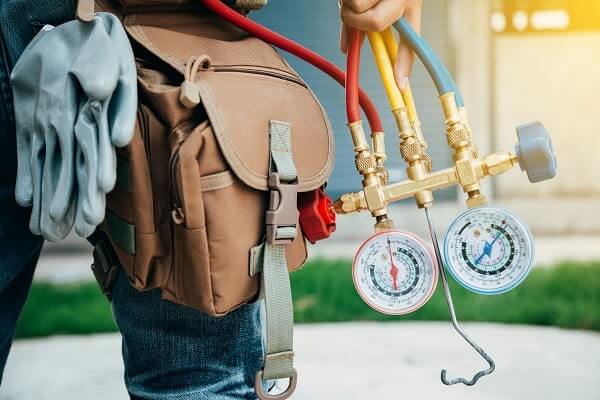
Now, you’re ready to knock your HVAC interview out of the park and be on your way toward an exciting career path! If you’re an Apex HVAC student who needs help with your resume or interview preparation, reach out to our job placement assistance team. We’re here and ready to help you!

