






Apex Insider
A Brief History of Welding Tools & Equipment
Did you know that welding is an ancient process? Welding history begins with the Egyptians, who used charcoal to pressure-weld swords as far back as 3000 B.C. using a process now known as forge welding.
Key Highlights
Did you know that welding is an ancient process? Welding history begins with the Egyptians, who used charcoal to pressure-weld swords as far back as 3000 B.C. using a process now known as forge welding. According to TheCrucible.org , forge welding was the main form of welding until the 19th century when discoveries related to important welding technologies led to the invention of the electric generator, gas welding and arc welding.Today’s welders can use a variety of welding tools, such as heat guns, torches, soldering irons and welding machines, to form a permanent bond between two pieces of metal. Keep reading to learn a little about the evolution of basic welding tools throughout history: the chisel, the torch and the electrode.
Chisels
Britannica.com reports that the chisel was invented around 8000 B.C. in Egypt for working wood and soft stone. However, many other ancient peoples adapted the chisel for a variety of uses, notably artists in 4 th century Greece who used chisels for marble carving and welders who employed the tool for cleaning up spatter and slag after a weld.Today, not much has changed for chisels in welding. Welders still use this simple, effective tool to remove spatter, sometimes in combination with a hammer for difficult-to-remove pieces.
Welding Torches
The blow pipe, or welding torch, was introduced in 1887 and was used with oxygen and liquified air for welding and cutting. According toMillerwelds.com, by 1900 the torch evolved considerably, and welders at that time could also weld with a torch that used low-pressure acetylene. Welding torches and welding machines grew in popularity and use during World War I, as countries needed a continual supply of weapons. Today, many welders use torches that fall into two main categories of oxy-acetylene torches: positive pressure type welding torch or injector type welding torches.
Related: MIG Welding and Other Common Welding Types
Electrodes
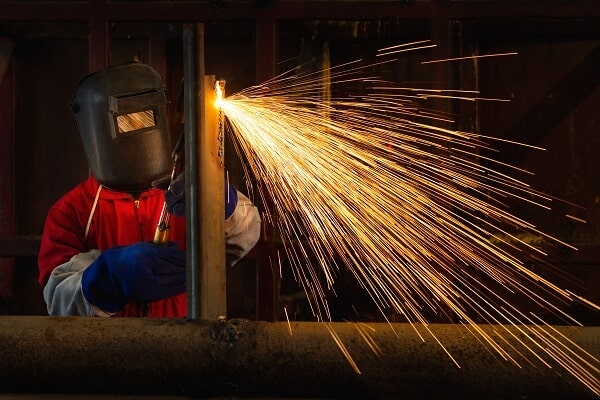
Welding electrodes are wires with chemical coatings that are connected to a welding machine. Electrodes create an electric arc through which a current passes and generates heat used to melt metals together. The electrode dates back to 1800 when Sir Humphry Davy produced an arc between two carbon electrodes using a battery, according to Millerwelds.com . Five years later, British and American patents for carbon arc welding were filed.By 1890, the first recorded patent for an arc welding process that used an electrode was introduced. This electrode was the first of its kind to carry melted metal and deposit filler into a joint, forming a weld. As arc and stick welding became more popular and accessible, manufacturers began making electrodes in great numbers to meet growing demand. By 1919, welders were widely using the heavy-coated electrode. Electrodes continued to evolve and include four main types today:
Electrodes
Welding electrodes are wires with chemical coatings that are connected to a welding machine. Electrodes create an electric arc through which a current passes and generates heat used to melt metals together. The electrode dates back to 1800 when Sir Humphry Davy produced an arc between two carbon electrodes using a battery, according toMillerwelds.com. Five years later, British and American patents for carbon arc welding were filed.By 1890, the first recorded patent for an arc welding process that used an electrode was introduced. This electrode was the first of its kind to carry melted metal and deposit filler into a joint, forming a weld. As arc and stick welding became more popular and accessible, manufacturers began making electrodes in great numbers to meet growing demand. By 1919, welders were widely using the heavy-coated electrode. Electrodes continued to evolve and include four main types today:
- Low-hydrogen carbon steel electrodes
- Mild steel electrodes
- Mild steel electrodes (non-ISI grade)
- Stainless steel electrodes
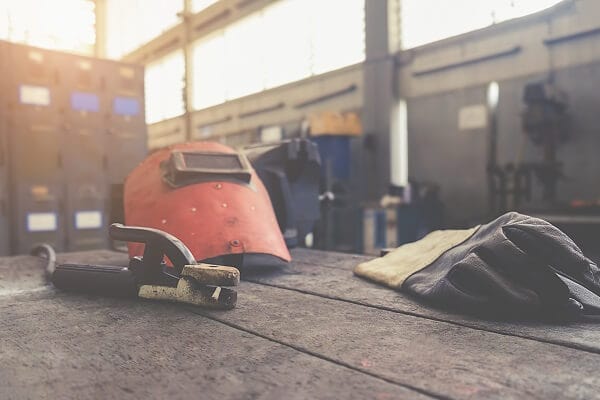
As the history of welding marches on, welding technology and tools will evolve too. Common tools today may be improved upon decades from now to help welders become more efficient and precise in creating or repairing buildings, pipelines, vehicles and other structures.
Explore the Combination Welding Program at Apex
Ready to step into the welding classroom and use common welding tools in the shop at Apex? Learn more about theCombination Welding Technology programnow.
Next classes
Classes start every month
Day and evening classes at our Long Island City and Midtown Manhattan campuses. Talk to admissions to save your seat.
On this page
Apex Technical School
Ready to start your career?
Day and evening classes start throughout the year at both campuses.
Apply nowOr call 212-645-3300





Frequently Asked Questions
How old is welding?


Why do welders use chisels?
When was the welding torch invented?
What is a welding electrode?
Where can I train in welding in Queens?
Contact us
Fill out the form to get started.

