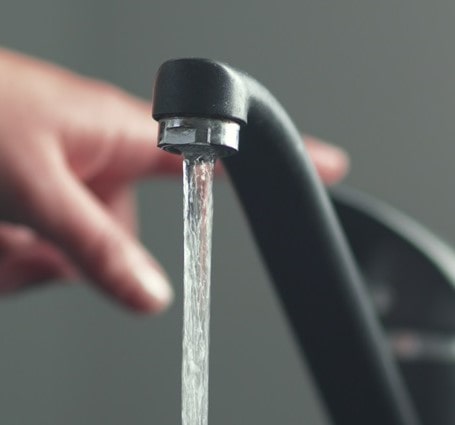
Advancements in New Plumbing Technologies | Apex Technical School
Recent innovations in plumbing materials and technologies have revolutionized the industry, making systems more durable, cost-effective and environmentally friendly. For prospective trade school students interested in gaining hands-on plumbing training, understanding these advancements is essential. Let’s delve into the evolution of materials, new technology in plumbing systems and the impact on trends in the plumbing industry.
The Evolution of Plumbing Materials
Historically, plumbing systems relied heavily on materials such as copper and galvanized steel. These traditional materials, while effective, had limitations since they are susceptible to corrosion and higher costs.
Over time, the industry has transitioned to modern materials like PVC (polyvinyl chloride), PEX (cross-linked polyethylene), and CPVC (chlorinated polyvinyl chloride). These materials offer some significant advantages:
- Durability : Modern materials are resistant to corrosion and scaling, ensuring longer lifespan and reliability.
- Cost-Effectiveness : PVC, PEX, and CPVC are generally less expensive than traditional materials, reducing the overall cost of plumbing installations.
- Ease of Installation: These materials are lightweight and flexible, making installation quicker and less labor-intensive.
By adopting these advanced materials, the plumbing industry has enhanced the efficiency and longevityof plumbing systems.

New Technology in Plumbing Systems
The advent of smart technologies has further transformed trends in the plumbing industry, introducing new levels of convenience and efficiency. Here are some of the most notable advancements:
- Smart Plumbing Systems : The integration of IoT (Internet of Things) has enabled the development of smart plumbing systems. These systems allow users to monitor and control water usage remotely, reducing waste and optimizing efficiency.
- Leak Detection : Advanced leak detection systems use smart sensors to identify leaks early and automatically shut off the water supply, preventing costly damage and conserving water.
- Water-Efficient Fixtures : Modern fixtures and appliances, such as low-flow toilets, faucets and showerheads, are designed to minimize water usage without compromising performance. These innovations help conserve water and reduce utility bills.
Learn more about smart plumbing systems , including smart toilets, water heaters and faucets.
Related: A Brief History of Plumbing Tools & Equipment
Impact on the Plumbing Industry
These advancements in plumbing materials and technologies have significantly impacted the industry. As the industry evolves, plumbers must be equipped with the knowledge and skills to install, maintain, and repair plumbing systems. This shift in trends in the plumbing industry can lead to job opportunities and career growth for those trained in the latest materials and technologies.
Hands-On Training at Apex

Apex Technical School offers a hands-on plumbing program designed to introduce students to skills that will help prepare them for entry-level employment in the modern plumbing industry. Students can complete their program in as fast as seven months.
The program emphasizes hands-on training, allowing students to work with a variety of materials and technologies. From installing PEX piping to troubleshooting leaks and more, Apex graduates are taught skills they can use to meet demands of today’s job market.
Success stories from Apex graduates illustrate the effectiveness of this approach. Many graduates have gone on to successful careers, leveraging their training to secure jobs and advance in the plumbing industry. If you’re interested in pursuing a future in plumbing, contact us today to learn more about the Plumbing & Pipefitting program .
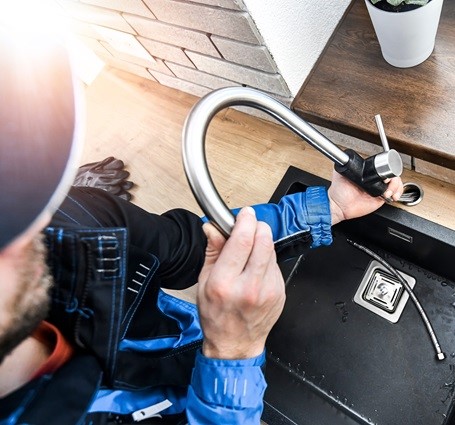
Welding Trade Student Spotlight: Tyree Damian Joshua | Apex Technical School
In today’s competitive job market, specialized skills and credentials are crucial. Trade schools like Apex Technical School in New York City offer the perfect opportunity to gain valuable, hands-on training. Tyree Damian Joshua, a recent trade school graduate of Apex Technical School, decided to enroll and obtain skills he could use to transition into a successful career in a demanding job market .
Tyree, who transitioned from the Combination Welding Technology program to the Construction & Building Skills program, has found satisfaction and inspiration in learning to use his hands in two detail-oriented industries.
Discovering Apex Technical School
When Tyree moved to New York City, he quickly realized that finding employment without trade credentials was a challenge for him. Determined to improve his prospects, Tyree began researching trade schools and soon discovered Apex Technical School. The comprehensive programs and practical training offered at Apex convinced Tyree that this was the right path for him.
“I made the choice to pursue a trade program at Apexshortly after moving to New York City to discover that I didn’t stand a chance in the job market without obtaining some sort of trade credentials to present to potential employers,” Tyree said.
Choosing the Welder Training Program
With an interest in welding, Tyree chose to enroll in the Combination Welding Technology program. He found the welder training program both enjoyable and challenging. The hands-on training and experienced instructors helped Tyree learn various welding techniques, including MIG, TIG and stick welding. By the end of the program, he had developed a solid foundation of skills that made him ready for an entry-level job in the welding industry.

Related: Instructor Spotlight: Miguel Diaz Is Teaching the Next Generation of Welders
A Transition to the Construction Training Program
Eager to expand his skill set and increase his employability, Tyree decided to enroll in the Construction & Building Skills program after completing the Combination Welding Technology program.
This decision was fueled by his desire to diversify his expertise and open up more job opportunities. Learning hands-on construction skills at Apex provided Tyree with comprehensive training in carpentry, electrical work, plumbing and more. Despite the challenges, Tyree thrived in this new construction training program, gaining valuable skills that complemented his welding background.
Related: Construction Student Spotlight: Naheim Goldson
Benefits of Dual Trade Certifications
Graduating from both the welding and construction programs boosted Tyree’s confidence, knowledge and employability. With dual certifications, he became eligible for a wider range of job opportunities for which he was previously unqualified.
“Now that I’ve graduated from both programs, I am eligible to obtain employment I was never qualified for,” Tyree said.
Employers value the versatility and comprehensive skill set that come with dual trade certifications, and Tyree’s confidence in his qualifications soared. He feels more prepared to take on roles that require expertise in both welding and construction, which can make him a desirable candidate in the job market.
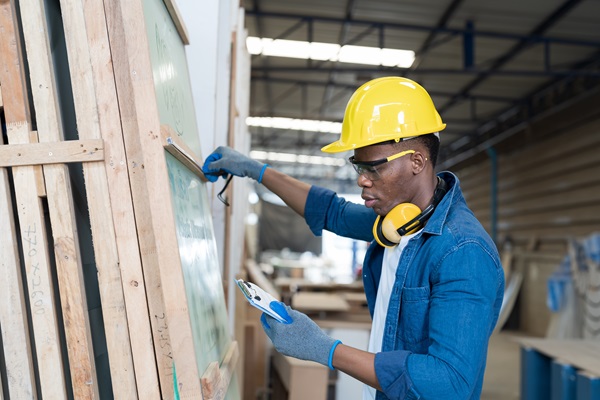
Entering the Job Market with New Skills
Armed with the skills he acquired at Apex, Tyree is eager to enter the job market and make a significant impact. His aspirations include working on large-scale construction projects, utilizing both his welding and construction skills.
“I chose programs that I enjoyed and found challenging,” Tyree said. “I’m now aspiring to utilize these skills I learned at Apex in the job market.”
Potential job roles for Tyree include positions in construction management, welding inspection and specialized trade contracting. The hands-on experience and practical training provided by Apex have equipped Tyree with the tools he needs to succeed in entry-level employment.
Find Your Own Path at Apex
For anyone considering a career in the trades, Tyree’s success story serves as an inspiring example of what can be achieved through dedication and the right training. If you’re interested in pursuing a trade career and want to learn more about the programs offered at Apex Technical School, we encourage you to explore our website or contact us directly to find out how you can enroll and start your own journey towards a successful and rewarding career in the trades.
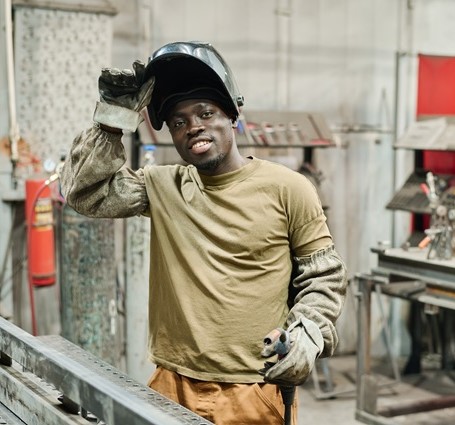
Why Gen Z Is Choosing a Skilled Trade Education | Apex Technical School
Among the many trends set by Gen Z, from TikTok to streaming services and a resurgence of 90s fashion, the biggest rising trend is their approach to a career path. More and more Gen Zers are choosing trade schools over traditional four-year colleges. Why the sudden changes in higher education? The reasons may be more practical than trendy.
Faced with the daunting costs of traditional college education and ballooning student debt, many Gen Z students are choosing the trade school route, which offers financial relief and a quicker entry into the workforce. This shift—motivated by economic realities and job market opportunities—has sparked the nickname “the Toolbelt Generation.”
Changes in Higher Education
The financial burdens of traditional college are growing, and Gen Z students have signaled they are not as willing to take on as much (or more) debt as generations before them. In fact, “the average cost of college in the United States has more than doubled in the 21st century,” according to research from the Education Data Initiative via NPR .
As the price rises, many Gen Z students are looking for other options—and the skilled trades are a tempting alternative. According to the Wall Street Journal, there was “a 16% rise in enrollment in vocational-focused community colleges last year,” showcasing a significant shift toward hands-on training.
Just a Dirty Job? Not Exactly
The skilled trades used to be known as gritty, greasy or dirty work. Despite their critical impact on society, the trades gained a lesser reputation compared to white-collar jobs. But in today’s rapidly evolving job market, trade professions are shedding old stereotypes and emerging as smart, technology-driven career paths.
Advancements in technology are revolutionizing fields such as welding, A/C refrigeration, and automotive repair, with high-tech tools and software that are attractive to Gen Z students who have grown up with technology at their fingertips.
Plus, some trade starting salaries outpace those of university graduates, even offering potential six-figure earnings within a few years of on-the-job experience and upskilling, according to the Wall Street Journal . The appeal of earning a comfortable income can be a powerful draw to Gen Zers trying to carve their unique path to financial security and career growth.

The Benefits of a Trade School Education
Trade schools like Apex Technical School offer more than just an alternative to four-year universities and two-year community colleges. They create a pipeline to a career opportunity in essential industries . By emphasizing hands-on learning and practical knowledge, Apex instructors help students become job-ready the moment they graduate to meet the growing demand left by retiring workers.
A strong Job Placement Assistance team at Apex supports students in their transition from classroom to career. This helps students feel ready to enter the workforce, a key concern for Gen Z students navigating an unpredictable job market. Gen Z prefers to seize control of their futures, and Apex empowers its students to do just that in their chosen trades.
Gen Z Education Is Overcoming Stigmas

As the technology and narrative around trade professions continue to evolve, Gen Z is playing a significant role in creating a broader acceptance of these vital roles in the workforce. Once viewed as a fallback option if college didn’t work out, the skilled trades are now more widely recognized for their innovation, financial potential, and personal and professional growth.
For those seeking a viable and respected career path for practical or economic reasons, Apex Technical School is an established and accredited option in New York City for Gen Z education. Learn more about our trade programs and reach out today for a campus tour.
Sources:
- https://www.npr.org/2024/04/22/1245858737/gen-z-trade-vocational-schools-jobs-college
- https://www.wsj.com/lifestyle/careers/gen-z-trades-jobs-plumbing-welding-a76b5e43
- https://educationdata.org/

Auto Instructor Spotlight: Nigel Campbell | Apex Technical School
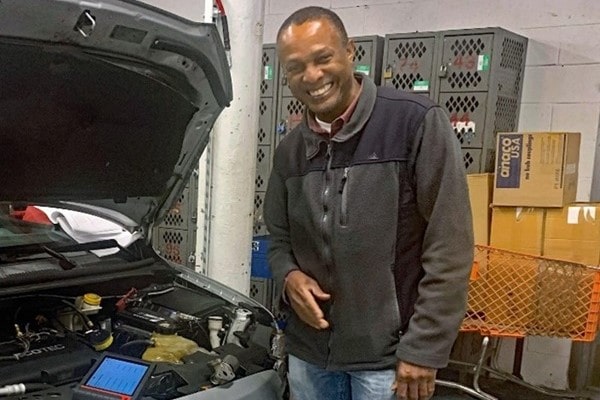
For Nigel Campbell, an Apex Technical School graduate and licensed automotive educator in the Automotive Service & Repair program , a passion for the trades and passing down that knowledge to the next generation runs in the family. He’s the proud son of an electrician and his brother teaches an electrician program in Jamaica. Mr. Campbell’s love of the automotive field started as far back as he can remember—while working on cars as a child.
From Star Student to Admired Automotive Teacher
After graduating from the Automotive Service & Repair program in 2012, Mr. Campbell went back to Jamaica to use his formal training and expand his expertise. He worked hands-on in the automotive trade for three years before returning to Apex to teach in 2015.
Not only does Mr. Campbell hold several Automotive Service Excellence (ASE) certifications, but he is a great example of what it means to be a dedicated student. During his seven months as an Apex student, he was never late or absent, and he received a Top Tech Award in each segment.
Impactful Teaching Starts with Students
While teaching the automotive class segment on fuels, Mr. Campbell loves the interactions he has with students, especially when they begin to understand a concept or a technique.
“I find the moment when you can see the ‘light bulb turn on’ to be the most rewarding part of being an automotive instructor,” he says. “It’s phenomenal.”
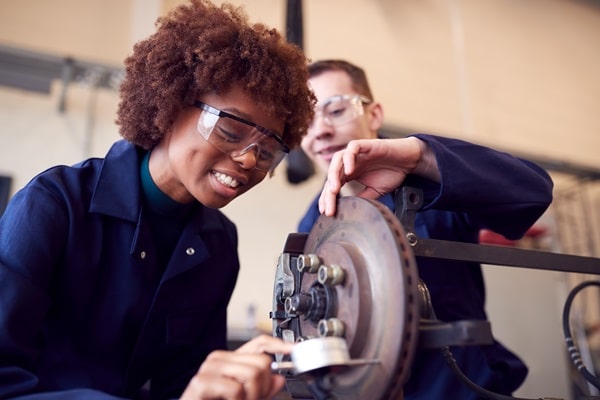
Mr. Campbell understands that it is not just imparting knowledge but knowing how to simplify it for the students that makes the interaction truly successful. His students appreciate this approach and testify to his calm and patient demeanor.
Automotive students have described Mr. Campbell as “a great teacher” who is “very knowledgeable,” “friendly and helpful,” and an “outstanding” instructor who “teaches us how to be technicians.”
Celebrating a Commitment to Excellence
Apex is not only proud to call Mr. Campbell one of its own automotive instructors, but to have him train and usher in the next generation of great automotive mechanics. His ability to blend technical expertise with accessible teaching methods sets a high standard within the community.
Mr. Campbell’s dedication to his students’ success is evident in the successful outcomes of his graduates, making him a pivotal figure in their professional development. For those interested in pursuing a career in this vibrant field, exploring the Automotive Service and Repair program at Apex could be your first step towards a successful and rewarding career.
Interested in changing lives by teaching the next generation of our workforce? Contact us at (212) 645-3300 or apply for an open position below.
EXPLORE OPEN POSITIONS AT APEX
Electrical Student Spotlight: Xsevier Morales | Apex Technical School
“We don’t leave each other behind. We are a team, we are a unit, we are brothers.”
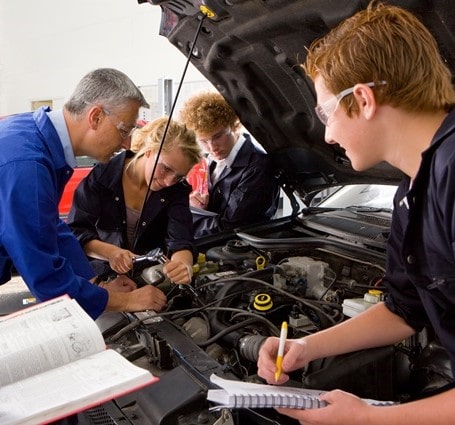
Recent trade school graduate Xsevier Morales forged a brotherhood during his time in theElectrical & Advanced Electrical programat Apex. For Morales, brotherhood wasn’t just a facet of his education but a cornerstone of his success—providing him with a support network and a sense of belonging that fueled his journey from student to graduate.
The supportive environment at Apex positioned Morales to cultivate hands-on skills, personal habits, professionalism and the confidence to pursue continuous learning beyond the walls of the school. His instructors, especially, left a lasting mark.
“You will learn to take from each teacher different skills,” Morales says. “Good habits will be instilled.”
A Foundation of Brotherhood & Community
Morales learned an important lesson on day one ofelectrical classesfrom Mr. Mack, Segment 1 teacher and retired Local 3 Journeyman.
“He told us that ‘being an electrician is more than just a blue-collar trade—it’s a lifestyle and a brotherhood,’” Morales says.
Morales and his partner learned to be prepared to start class when Mr. Mack walked into the room.
“We started searching for the most pristine receptacles and got our measurements prepared to be done before lunch with our projects,” Morales says. “Then, we’d go back and help any other brother from falling behind.”
Gaining a Hands-on Skill Set
At Apex, learning from dedicated instructors with field experience means acquiring a range of hands-on skills. Morales learned how to be precise with tasks such as wire splicing, as well as how to bring his own sense of artistry to drawing wire diagrams.
Instructors like Mr. Allen, dubbed by Morales as the ‘Picasso of job plans,’ ensure that students’ work isn’t just functional but marketable. The curriculum is designed with a clear understanding that to succeed in the ever-evolving electrical field, one must be versatile and proficient in a variety of techniques.
“Mr. Crossen, another Local 3 Journeyman, will make sure that before you leave Segment 3 you are prepared to work for a company,” Morales says. “But before you get there, you will already have the tools and understanding of how to wire an entire house.”
This hands-on approach not only prepares students for entry-level employment but also creates a mindset of confidence that can lead to future specializations.
Fostering Professional Habits & Continuous Learning

An Apex education goes beyond the technical. For Morales, it instilled professional habits that mark the difference between a job and passion for a career. He learned punctuality, preparation and a commitment to continuous learning.
“Mr. Watson teaches how to efficiently take notes on the theory behind the National Energy Code (NEC) regulations and safety procedures,” Morales says. “It’s the electrician’s bible, and it changes every three years. You will learn from him that an electrician never stops learning.”
Mr. Tanski, department head, instilled in Morales and his classmates the benefits of being punctual.
“It’s mandatory to learn how to be early and get a head start on the day,” Morales says. “It makes all the difference because preparation is key.”
Related:Get to Know Tom Tanski, Electrical & Advanced Electrical Instructor
Fostering Professional Habits & Continuous Learning
Electrical classes at Apex unlocked deep potential for Morales. Armed with knowledge, skills and a supportive network, he graduated ready to pursue entry-level employment in a trade he’s passionate about.
When asked what advice he has for incoming electrical students or prospective students who are unsure if trade school is right for them, Morales insists on the power of a hands-on education.
“You can leave Apex with so many jewels and the power and understanding that you can build a new life for yourself and your family,” he says. “There’s a future you can create with your own two hands.”
Interested in learning more about the Electrical & Advanced Electrical program that Morales completed? Explore the program now and contact us to schedule a tour!
Empowerment to Build a New Life

Electrical classes at Apex unlocked deep potential for Morales. Armed with knowledge, skills and a supportive network, he graduated ready to pursue entry-level employment in a trade he’s passionate about.
When asked what advice he has for incoming electrical students or prospective students who areunsure if trade school is rightfor them, Morales insists on the power of a hands-on education.
“You can leave Apex with so many jewels and the power and understanding that you can build a new life for yourself and your family,” he says. “There’s a future you can create with your own two hands.”
Interested in learning more about theElectrical & Advanced Electrical programthat Morales completed? Explore the program now and contact us to schedule a tour!
Welding Instructor Spotlight: Miguel Diaz | Apex Technical School
“You can tell right away that he cares about his students learning what he’s teaching.”
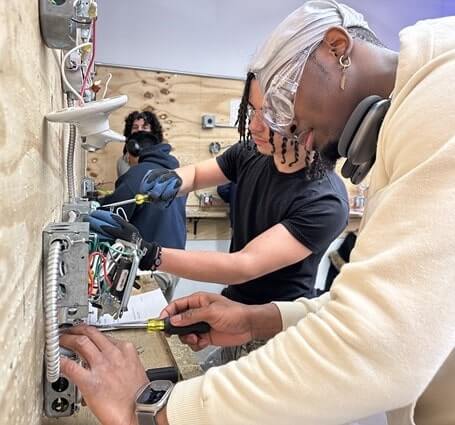
At the heart of the Combination Welding Technology program at Apex works an instructor synonymous with dedication, skill and passion: Miguel Diaz. For 23 years, he has not only taught but also inspired countless students, guiding them in the basics of welding and showing them important techniques. However, Mr. Diaz’s journey begins long before his tenure as a licensed welding educator.
From Student to Welding Teacher
Mr. Diaz’s relationship to welding started at Apex Technical School—as a student himself. At the time, he didn’t know that Apex would one day become his teaching ground. After graduating, he was eager to work hard and carve out a successful career in the welding industry.
He earned certifications such as DOT vertical 3G, F60, C60, C92, C94, and F01 and quickly made a name for himself in the field. After working for several years, Mr. Diaz felt called to give back to the community that helped him grow into the welder he is today. He decided to return to Apex—this time to share his journey, knowledge, and experience with aspiring welders.
“I’m grateful to Apex and the opportunities it gave me,” he says. “It gave me a job that allowed me to raise a family.”
Teaching Philosophy: Building Confidence and Skills

For Mr. Diaz, the most rewarding aspect of teaching is witnessing the transformation of students.
“You can see the progress from a novice to being able to weld,” he says. “You can even see a change in attitude and confidence over the short time I’m with them.”
Mr. Diaz takes great pride in his students. Some of his favorite moments are when they return to share their achievements with him.
“When they say thank you after they’ve been out there… I like helping them out,” he says.
The impact of Mr. Diaz’s teaching is echoed in the sentiments of his students.
“Great teacher! He honestly cares,” says one student. Another adds, “You can tell right away he cares about his students learning what he’s teaching.”
Related: Get to Know Tom Tanski, Electrical & Advanced Electrical Program Instructor

Beyond the Classroom: The Therapeutic Art of Welding
Mr. Diaz’s connection to welding is about more than technical skills and industry knowledge. For him, welding is a form of meditation—a way to focus on the moment.
“It calms me,” he says. “It takes me to another world. It puts blinders to the outside world for a time when I’m focusing on what’s in front of me,” he says.
This passion extends into his personal time, where he crafts beautiful artistic pieces from metal as a hobby, showcasing the creative potential of welding.
Through his dedication, Mr. Diaz not only shapes the skills of his students but also molds their characters, preparing them for success both in and out of the welding workshop.
Interested in changing lives by teaching the next generation of our workforce? Contact us at (212) 645-3300 or apply for an open position below.
EXPLORE OPEN POSITIONS AT APEX
The Future of Auto Mechanics | Apex Technical School
The automotive landscape is facing changes on the horizon. These changes are largely in response to government mandates that encourage electrification, but also due to the innovative spirit of some automakers like Tesla and Rivian. The rise of electric vehicles (EVs) could usher in a new era for the automotive industry, introducing both challenges and opportunities in manufacturing, maintenance and more.
Everyone from consumers to automotive mechanics might wonder— what does the future hold ? Will EVs make traditional cars obsolete? While EVs seem like an urgent development, there are 1.4 billion internal combustion engines worldwide as of January 2023, and that number is expected to grow through 2050. EV adoption remains a cost-prohibitive goal that may take decades to achieve. In the meantime, motorists will continue to drive gasoline-powered vehicles and rely on mechanics to maintain and repair them.
Let’s take a look at how the automotive industry has evolved and consider some challenges it faces in bringing EVs to market.
A Brief History of Auto Industry Trends
Since it began in the late 19 thcentury, the automotive industry has been in a constant state of evolution. Automobiles began as gasoline-powered vehicles and were considered a luxury only the wealthiest individuals could afford. However, Henry Ford brought cars to a mass marketwith his assembly line method, which cut the price and made them accessible to more people.
Over the decades, the automotive industry advanced significantly with safety regulations—like seat beltsand crash test mandates—as well as efforts to reduce harmful emissions. Most recently, the global shift has created a push for electric vehicles and autonomous vehicles (self-driving cars). Government policy in places like the UK, France, Germany and the United Statesencourage the transition from internal combustion engines to electric vehicles, with many acknowledging this shift will be gradual and expensive.
Manufacturing Challenges

EVs require complex electrical systems and software that traditional assembly lines aren’t designed to accommodate. Manufacturers will need to modify combustion engine assembly lines to meet EV manufacturing requirements and demand. This transition involves integrating new technologies and investing in new manufacturing equipment.
Additionally, manufacturers must re-evaluate their supply chains and seek suppliers for batteries, sensors and special components. As the automotive manufacturing landscape becomes more technologically sophisticated, innovation poses challenges in terms of costs and assembly line adaptation.
Maintenance Challenges
Maintenance practices for vehicles will evolve with the arrival of electric and self-driving technologies. Electric vehicles have fewer moving parts compared to traditional cars and can require less frequent maintenance. However, the maintenance they do need tends to be more specialized, sophisticated and time-consuming.
Material Sourcing Challenges

Benefits of electric vehicles include zero emissions at the point of use. In this way, EVs could help to reduce the industry’s environmental footprint. Despite these potential gains, EVs pose a challenge to the automotive industry because they require battery production and responsible material sourcing that could negatively impact the environment unless carefully considered.
What Does This Mean for Auto Mechanics?
EVs won’t change the automotive trade overnight. Traditional internal combustion engines still dominate roadways, from passenger cars and buses to delivery trucks and more. Skilled, hands-on mechanics play a critical role in the automotive industry today and will continue to for decades to come.
If you’re passionate about combustion engines and car maintenance, a future in automotive service repair could be a good fit! Apex offers courses through out Automotive Service & Repair program. Classes are starting soon. Explore the program and contact us with your questions today.
Sources:
- https://apnews.com/article/epa-electric-vehicles-emissions-limits-climate-biden-e6d581324af51294048df24269b5d20a
- https://www.producer.com/crops/improving-the-internal-combustion-engine/
- https://corporate.ford.com/articles/history/henry-ford-biography.html
- https://www.ghsa.org/issues/seat-belts
- https://electrificationcoalition.org/work/federal-ev-policy/

The Future of Smart Home Plumbing | Apex Technical School
Homes are getting “smarter” as advances in technology make living easier and more convenient than ever before. Some smart home integrations make it possible to adjust the thermostat from a mobile app or ensure your favorite song plays when you get home from work. But did you know that smart home plumbing is on the rise?
Traditional plumbing appliances and fixtures are still a predominant choice in homes. However, as technology evolves and homeowners replace old or broken appliances, they can be faced with an increasing array of smart or automated plumbing options at the hardware store. These integrated plumbing systems can have a range of benefits—such as monitoring water usage and detecting leaks.
Let’s take a look at common smart plumbing appliances and devices.
What Is Smart Home Plumbing?
Smart plumbing systems use sensors, automation and remote monitoring to improve water usage, prevent leaks and protect property against water damage. These systems are typically connected to a network where a homeowner’s automated plumbing devices share data. The network lets you check and manage it remotely from a smartphone in real time.
Smart Home Integration Benefits

Why would a homeowner invest in smart plumbing, and what can plumbers help their customers understand about these systems? Automated plumbing appliances and fixtures can:
- Prevent flooding and damage to homes by alerting to leaks, clogs or unusual water flow
- Connect to Wi-Fi, Bluetooth, and smartphone apps
- Offer a way to check in through remote monitoring and controls
- Reduce wasted water by lowering consumption
- Lower electricity bills due to increased energy efficiency
Related: The Benefits of Going to Trade School for Plumbing
3 Types of Smart Plumbing:
In the realm of smart home technology, smart plumbing stands out by offering convenience, efficiency, and conservation . Together, these advancements represent the future of plumbing—where plumbing continues to play a critical role in daily living as it blends seamlessly into the home’s ecosystem.
Smart Toilets
As one of the most-used appliances in the home, the toilet is the main source of water use. According to the Environmental Protection Agency (EPA), toilets are responsible for nearly 30%of a home’s indoor water consumption—with some older toilets using as much as six gallons per flush! Smart toilets are designed to save water by using less per flush.
Some smart toilets offer a partial flush feature to conserve water. They can also let you know if there is a clog or leak that needs to be addressed before it leads to large repair bills.

Smart Water Heaters
Families may opt for a smart water heater, which can be programmed to provide a continuous supply of hot water for long showers, laundry or radiant floor heating . Smart water heaters, controlled through Wi-Fi or Bluetooth, can help monitor water usage, predict patterns and send notifications to your smartphone.
By understanding when your home uses hot water, you can deprogram your smart water heater during the day when you’re at work and return it to its regular setting in the evening—saving you money on electricity bills.
Smart Faucets
Smart faucets are designed for convenience and many feature voice activation, enabling you to turn them on without touching them. Other smart faucets are tappable anywhere on the spout or handle, which is helpful for messy hands, children, or individuals with disabilities. Some smart faucets have an LED light that changes color to indicate the water’s temperature and reduce accidental burns.
With a smart faucet, water efficiency is key. EPA research indicates that “by installing WaterSense labeled bathroom sink faucets or faucet accessories, an average household can save more than 500 gallons each year.” Smart faucets achieve this by dispensing a designated amount of water before automatically shutting off, or they can be given a command to shut off by voice or app.
Related: Why Learn Plumbing Skills at Trade School
Preparing for a Future in the Plumbing Industry
Plumbers and students interested in pursuing the plumbing trade can prepare for the future by gaining hands-on experience. A foundational knowledge of the trade, its history and its tools is needed for entry-level employment, and these elements serve as building blocks for career development in this exciting and necessary field.
To learn more about the Plumbing & Pipefitting program at Apex, explore the courses we offer or contact us with your questions
Sources:
- https://www.epa.gov/watersense/residential-toilets
- https://19january2017snapshot.epa.gov/www3/watersense/pubs/ws_bathroom_faucets.html
- https://www.prideplumbingofrochester.com/blog/smart-plumbing
- https://www.mrrooter.com/southeast-georgia/about-us/blog/2023/september/the-future-of-plumbing-is-smart-technology-iot/