






Computer Systems for Automotive Paint Jobs | Apex Technical School
Auto body shops specialize in repairing damaged cars. In addition to making vehicles safe to drive again, a body shop’s goal centers on revitalizing and fixing cosmetic flaws. Accidents, rust and age often require skilled trade workers to apply a fresh coat of paint. With the help of computerized systems, individuals in the auto body trade create custom car paint colors to match any original shade. Learn more about how computers help auto body shop workers with the car paint matching process.
Car Paint Matching Codes
Paint codes are specific digits that represent a vehicle’s paint color. Without the paint code, individuals in the auto body repair industry could apply the wrong shade during large restoration projects or small touch ups. To avoid choosing the wrong shade, auto body technicians can locate the paint code, which is typically provided in the driver’s side door jam.
The paint code, along with the car’s model and year it was produced, gives individuals in the auto body repair trade the information they need to enter into the car paint matching computer.
Identifying the Variant Color
Locating the paint code is just the first step. Next, workers determine the variant of the color. What is a variant color? There are often multiple variations, or shades, of a color. These can differ from batch to batch, or across different paint suppliers.
Blending the Match
After the computer determines the variant color, workers mix the paint and spray a sample on a test card. The test card is compared to the vehicle’s color. If the colors match, auto body technicians get to work painting the car with a fresh coat of paint. They carefully blend the new paint into the old paint. Color is blended into surrounding areas. When the automotive paint dries, the new color will be indistinguishable from the old color.
Auto Body Repair Classes
Students at Apex Technical School learn to improve a vehicle’s appearance. They use paint and welding techniques to restore cars damaged by rust and age. Students also learn to fix structural, safety and cosmetic issues such as dented doors and bumpers. If you have a passion for cars and want to pursue your goals in trade school, visit Apex to learn more. Schedule a tour to see our auto body shop, meet our friendly staff and observe students in class.

3 Trade School Myths and Why They Are Wrong | Apex Technical School
It’s no surprise that traditional college isn’t for everyone. Millions of students attend college every year, while countless others choose to pursue their goals at a trade school. This is an important, life-changing decision for many individuals and getting it right requires careful consideration.
Choosing to go to trade school over college is a viable option for many reasons. However, as you think about your goals and interests, it’s important to understand the benefits of a trade school education and know how to spot common trade school myths. Here are three trade school myths to debunk before you enroll in technical training classes.
Myth 1: There are only a few trade school options.
Welding, electrical and plumbing are well-known trades might be viewed as the backbone of the labor workforce. These trades help keep America’s homes, buildings and machines running smoothly. Many trade schools focus on providing students with entry-level skills and knowledge in these three industries—but they don’t stop there.In addition to training in the plumbing, welding and electrical trades, trade schools may offer a variety of important coursework and shop experience for students such as:
- Auto body repair
- Automotive service and repair
- Air conditioning, refrigeration and appliance controls (HVAC)
- Construction and building skills
Trade school students don’t need to feel stuck or pressured to pursue a trade they aren’t interested in. Many trade schools, like Apex, offer students a variety of quality, hands-on programs to choose from. To find a career path you’re passionate about, you might start by exploring classes in each Apex trade program .
Myth 2: Potential employers don’t want to see trade school programs on a resume.
By completing a trade program, you show you’re ready to start an entry-level trade school job. Because technical training involves a mix of classroom and shop learning, students are exposed to a well-rounded and hands-on approach to learning. An educational experience like this sharpens your skills and preps you with knowledge you can carry with you anywhere your goals take you. Plus, hands-on career readiness shows employers you’ve practiced for the role of an entry-level employee.
Myth 3: Trade schools can’t obtain accredited status.
Another trade school myth involves accreditation, or proof that a school or institution meets strict – standards. Being granted accreditation means a school follows best practices for student success and continually finds ways to help students on their educational journey.Like four-year traditional colleges, trade schools can receive this designation from accrediting organizations, including the Accrediting Commission of Career Schools and Colleges which is recognized by the United States Department of Education. Just like many traditional colleges, accredited trade schools can also obtain special licenses and memberships that contribute to a quality learning experience.Now that you’ve debunked some myths about trade school, learn if Apex is a good fit for you in this infographic . Have questions? Schedule a tour to visit the school and talk to our friendly staff.Learn more about our programs today.

Is Auto Body School Right for You? | Apex Technical School
If I start trade school, which trade should I pursue? Is repairing damaged vehicles the right path for me? Do my interests and strengths align with restoring, painting and welding cars?
Millions of cars, trucks and other automobiles travel America’s roads every day. With so many vehicles on the road, accidents are inevitable. Fortunately, individuals in the auto body repair trade play a key role. They help ensure damaged cars are fit and safe for travel again. If you’re interested in cars and maintaining their appearance, you might consider auto body training classes. To learn more, explore these four indicators.
I am a good listener.
You are an active listener—you invite people to share their opinions and concerns with you. – You ask questions to help you understand someone else’s perspective. By focusing on helping others when they come to you for support, you are able to build trust and respect.
Students learning auto body repair techniques work closely with peers and instructors in the classroom and body shop. They not only practice communication with coworkers but also how to speak to potential clients or customers dealing with the stress of vehicle damage or disrepair. As an individual who is open and receptive to conversations, you can use your communication strengths to set others at ease in paint and body school.
I look for creative solutions to mechanical problems.
As an open-minded person, you question the status quo. You look for new ways to solve old problems. You are not afraid to try something unique or think outside the box. New tools and technology motivate your strong work ethic.
These qualities are valued in auto body training. While some repair techniques are tried and true, others evolve over time as software, technology and equipment change. As a person who embraces new ideas, your attitude can help auto body jobs run smoothly for all parties involved—from painting and welding to rust removal and more.
I like learning about tools and technology.
You enjoy hands-on work that requires tools. You might have an interest in machinery, technology or other equipment. When something goes wrong, your first instinct is to plot a plan to fix it—including what you’ll need to get the job done. You’re confident that with the right supplies, you can tackle any challenge.
In auto body repair school, students use specific tools for specific jobs. As a student, your passion for tools can take you to the next level as you learn to use plasma cutters, hydraulic jacks and plastic or glass repair tools. A variety of tools help auto body tradespeople repair structural and cosmetic issues, such as dented doors, bumpers and rust spots.
I tackle projects with precision.
You pride yourself on your attention to detail. You might make mental checklists or remember faces years after meeting people. If given enough information, you can see patterns easily and understand the big picture—a trait that has helped you in school, at work or in your personal life.Individuals in the auto body repair trade focus on intricate details. When a car is damaged in a collision or distressed due to age, auto body workers inspect the vehicle closely to draw precise conclusions about the car’s condition. To ensure a car is safe to operate, workers in the auto body repair industry draw on their skills for precision and detail—from cost estimates to sanding, finishing, aligning and painting.If you are interested in learning entry-level auto body repair skills or starting trade school classes, explore our Auto Body Repair program and schedule a tour online today.

Is HVAC Training Right for You? | Apex Technical School
Is trade school the right choice for me? Do my interests line up with a specific trade? I think I’m interested in HVAC training, but how do I know if heating and cooling school is the right path for me?
If you are considering taking your education, skills and knowledge to the next level by going to a trade school, you have probably asked yourself these questions. Individuals interested in a future in the heating and cooling trade often wonder if their personality, interests and skills are a good fit. As you weigh your options and plan for the future, consider these indicators.
I am a reliable worker.
You are a dependable person who understands everyone plays an important role. Family, friends, coworkers and supervisors trust you to work hard and fulfill expectations. People know you will follow through with what you say you will do—whether it is a small request or an important appointment.
These qualities help students studying the HVAC trade complete their work. For example, if an air conditioning unit stops working in the middle of the night, homeowners and building managers want a trustworthy individual with the skills and knowledge to resolve the problem right away.
I like solving problems.
You are a technically minded person—which means you approach a problem by locating patterns and efficiencies. You may prefer to create a system or routine when you want to be successful with work or school. Following a process gives you control over challenges, and you often break a project into smaller parts because you want to see how things work.
In HVAC school, you can use this trait to your advantage. Heating, cooling and refrigeration systems have a web of inner parts, and students learn how and why things work to produce cold or hot air. When one of these important systems breaks or malfunctions, an individual in the HVAC trade is often the first person on the scene. Students who are technically minded are prepared to examine a control panel and locate patterns to complete important repairs.
I enjoy an active lifestyle.
You like staying active—whether you are spending time with family and friends or learning hands-on in the classroom. You are the type of person who does not mind taking a walk or a drive with no destination in mind—as long as you are going somewhere, you are happy. A traditional desk job sounds a little boring to you, and you think you want a future that requires working on your feet.
People in the HVAC trade spend time driving to job sites, working with their hands and maybe crouching into tight spaces to assess and service heating, cooling or refrigeration equipment. This active role calls for individuals to be comfortable moving on their feet for periods throughout the day.
I like helping people understand things.
When you know how something works, it is easy for you to teach others to be successful with it, too. Your knowledge and passion for a topic—such as cars, cooking, or movies—sets you apart from others. You are friendly and approachable, and you feel comfortable talking to strangers.
Individuals in the HVAC industry interact with many people throughout the day—and they are often answering important questions about their trade, skills, knowledge of various equipment, or why a replacement part is necessary and how it will improve an overall system. Homeowners, contractors and business managers want to understand what a red flag looks like—and an HVAC tradesperson is responsible for explaining various elements about a furnace, air conditioner, refrigerator or other appliance. Strong communication and patience help make these interactions successful.
If you are interested in learning entry-level HVAC skills or starting trade school classes, explore our A/C and refrigeration program and schedule a tour online today.

2019 Plumbing Industry Trends | Apex Technical School
For centuries, plumbing has improved hygiene and provided clean water to homes and businesses. Though the industry isn’t new, plumbing continues to evolve as modern technologies change the way water is delivered, heated, pumped and stored. New plumbing solutions benefit homeowners, business owners and hard-working tradespeople in the plumbing field.Here are three bathroom trends in the plumbing industry to keep in mind, whether you are just starting technical school plumbing classes or brushing up on the latest plumbing news.
More Concerns About Aging Pipes
In America, some pipes are 150 years old. Iron and steel—traditional materials for plumbing and waste water pipes—make up nearly two-thirds of municipal water pipes according to the New York Times. When water sits in older metal pipes, chemicals used to treat the water can break down the pipe and contaminate the water. Although outlawed by Congress, very old pipes still lurk inside older homes and infrastructure. Many individuals avoid lead exposure in their drinking water by replacing old pipes in their home with lead-free alternatives.
To do this, many people turn to trade workers who have the knowledge and skills to replace pipes and maintain plumbing systems. As older pipes continue to age in America, people will depend on individuals in the plumbing trade for guidance and expertise.
Popular Plumbing Fixtures
In addition to updating old pipes, homeowners are turning toward sleeker and smarter plumbing fixtures in their bathrooms and kitchens. Plumbers can be aware of the latest designs and upcoming trends they may encounter in homes or businesses, such as:
- Single-handle faucets – These user-friendly fixtures allow a single touch to start or stop the flow of water. Plumbers may repair or install these faucets in kitchens or bathrooms.
- Drop-in sinks – Large, single-bay sinks make it easy to wash pots and pans. Plumbers should be aware that drop-in sinks, while convenient for homeowners, reduce under-sink space and make for smaller repair areas.
- Freestanding bathtubs – Different from antique clawfoot tubs, freestanding tubs are typically offered in unique, sleek shapes and are often installed in the center of the bathroom.
No matter what fixtures or appliances are in style, plumbers can take extra care to protect bathroom designs from damage during an installation or repair. Quality workmanship and attention to detail are signs of a skilled plumber.
Plumbing Trends for Green Living
Homeowners and business owners alike are becoming increasingly environmentally conscious. More consumers make choices that directly affect the planet and their wallets. Some traditional plumbing systems create unnecessary energy and waste. Here are several increasingly popular plumbing solutions that leave a lighter footprint on the planet.
- Solar-powered water heaters
- Touchless and tankless fixtures
- Variable-flow toilets and showers
- Low-flush toilets
- Constant water pressure systems
- Whole-house water filtration systems
- Faucet-flow reducers
Although some green plumbing systems are more expensive up front, they can help consumers save on utility bills over time. The more aware tradesmen and tradeswomen are about plumbing fixtures, the better they are able to diagnose, install, repair or maintain plumbing systems that offer efficient benefits.Stay up to date with the plumbing trade, trends and industry news by exploring other plumbing topics on the Apex Technical School blog. To learn more about plumbing classes at trade school, schedule a tour of our campus where you will talk with friendly admissions staff and observe a plumbing class.
Interested in learning more about plumbing? Explore the Plumbing and Pipefitting program at Apex.

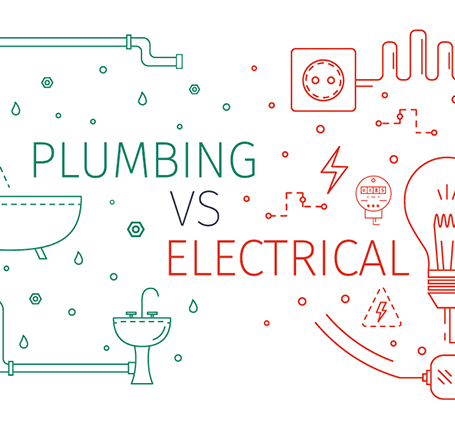
Plumbing vs. Electrical Trade Programs [Infographic]
Plumbing has delivered clean water and protected people from disease for centuries, starting with the Roman Empire. Today, plumbing allows people to enjoy the comforts of daily living, including hot water, showers, toilets, dishwashers and washing machines. Similarly, electricity helps power many plumbing appliances in homes, as well as refrigerators, computers, air conditioning systems and lighting. Without these technological advancements—and the skilled tradespeople who install, repair and maintain them—modern living would be very different.
At Apex Technical School, we offer training programs focused on helping students build technical knowledge and skills in plumbing and electrical. Interested in learning which program is a good fit for you? Discover the difference between these programs in the infographic below.

Find a Trade School Program to Fit Your Goals | Apex Technical School
There’s no one size fits all when it comes to school. Some students attend a traditional college to earn a two- or four-year degree. Many others discover a combination of knowledge, skills and technical training is the right path for them. A vocation education at trade school provides students with a variety of positive benefits. If you’re interested in attending trade classes, keep reading to learn about our programs.
Automotive Service Repair
At Apex, the automotive service repair program helps students learn to repair vehicles, help vehicles operate safely and get specialized training for an entry-level position. It provides a foundation of technical skills students use to evaluate mechanical systems and make repairs, as well as:
- Fix and maintain the inner parts of the vehicle
- Test major components when a vehicle breaks down
- Work on engines, transmissions and brakes
- Perform basic car care and maintenance, including oil changes
Students spend time in the classroom and shop where instructors incorporate diagnostic procedures, proper tool usage and much more. Auto mechanic classes are often a good fit for individuals who enjoy hands-on learning and have a passion for cars. Discover four signs auto mechanic school is right for you .
Air Conditioning, Refrigeration, Appliance/Controls
This vocational program focuses on teaching skills related to repairing and troubleshooting air conditioners, refrigeration systems, electrical control panels, major home appliances and gas-fired heating systems. Students in the HVAC program at Apex learn how to:
- Use the basics of electricity for installation, service and maintenance
- Repair and maintain domestic and commercial units
- Learn about cooling towers, piping and ductwork
- Follow codes and safety practices
HVAC training classes include both basic and advanced segments where students split their learning time between the classroom and shop. Interested in the HVAC field? Learn more about
Auto Body Repair
From preparing a car for body repairs to learning how to weld and retexture plastic, students in this vocational program train to enter the auto body repair industry. Students not only learn to improve a vehicle’s appearance but also:
- Work on collision repairs, windshields and window glass
- Fix structural, safety and cosmetic issues, such as dented doors and bumpers
- Use paint and welding techniques
- Restore older cars damaged by rust and age
In auto body repair classes , experienced instructors teach students techniques for fixing everything from minor to major auto collision damage. Explore the differences between the
Combination Welding Technology
Apex’s trade classes give students hands-on experience and teach a range of welding knowledge. Students learn techniques for welding repair and maintenance as well as how to use some forms of advanced welding equipment. Apex instructors focus on helping students:
- Read blueprints and interpret welding symbols
- Perform the four major welding processes, including SMAW, GMAW, GTAW and FCAW
- Weld plates and pipes in multiple positions
Welding has been used for centuries to join two pieces of material together and continues to be a viable modern career option. Interested in learning if combination welding classes might be a good fit for you? Here are three signs you should consider welding training .
Electrical and Advanced Electrical
This trade school program prepares students to perform a variety of electrical tasks—from reading circuit diagrams and installing wiring for lighting to learning about green energy systems and more. Apex students learn with instructors and peers, study theories in the classroom and get hands-on experiences in the shop. Students training in the electrical program learn to:
- Use basic tools and equipment to repair electrical conductors and components
- Perform splices, bonding and grounding
- Install circuit breakers, fuses and wiring
- Install security systems, fire alarms, intercoms and other electronic systems
Electrical and advanced electrical classes span six segments and help students earn 900 hours of trade school training. Interested in exploring a bright future in the electrical field? Discover four reasons the electrical trade could be the path for you .
Construction and Building Skills
Individuals in the construction and building trade program touch upon a variety of skills—ranging from carpentry and electrical familiarity to plumbing, kitchen and bath knowledge. These tradesmen and women use their hands-on skills to:
- Troubleshoot and repair electrical boxes and fittings
- Frame windows and doors
- Install light fixtures, wiring and countertops
- Use power tools and plumbing blueprints
At Apex, students prepare to enter the construction field by taking six segments of carpentry and building skills classes , as well as learning to build a model house in the shop. Think you might be a good fit? Explore five signs a construction career path is right for you .
Plumbing and Pipefitting
Students in this vocational program learn how to install water heaters, water supply and waste disposal systems found in private kitchens and bathrooms. They also learn the basics and practice real techniques, including:
- Assemble pipe sections, tubing and fittings
- Locate leaks and repair pipes, fixtures and drainage systems
- Follow blueprints, codes and safety specifications
- Use a variety of hand and power tools, levels and other materials
Plumbing classes give students the opportunity to learn how to find the source of a problem, as well as what it takes to solve the problem. Wondering if you’re ready to pursue the plumbing trade? Here are four signs a plumbing career could be a good fit .
How to Manage Family, Work and Trade School | Apex Technical School
Single parents in college or technical school often wonder how they can accomplish their education goals with a family at home. While it may seem difficult, it’s possible to manage a family, work and trade classes. Here are three back-to-school tips for parents in trade school.
Schedule your tasks.
- Use a calendar. It can be on your refrigerator, mobile device or in a small planner. For example, if trade school class starts at 9 a.m. and you must finish studying and drop your son off at child care—make sure you schedule “studying” and “traveling to child care” on your calendar. Not only will you be on time for class, but you’ll take advantage of the quiet morning hours to study before your son wakes up.
- Block out distractions. If you must study safety codes for your plumbing or electrical class, make sure you can devote time, energy and concentration to the task. Some students prefer to study as soon as they get home from class, when the material is fresh in their minds. Whenever you study, make sure you channel your attention on only one task. Ask family members not to disturb you. Leave your mobile phone in another room.
Prep meals.
Imagine this: You’ve just finished a class in the auto body repair shop. You learned new techniques for repairing rust on old vehicles. You’re proud of yourself, but now you’re tired. It’s time to go home and relax with your daughter who is staying with you for the weekend—except, you forgot about dinner.
- Fix healthy meals for the week. Meal prepping can be a smart way to eat healthier foods because you won’t have to pick up fast food every night. Use an hour of your free time for prepping meals: slice vegetables, cook rice or pasta in bulk and sauté chicken that you can add to different meals throughout the week.
- Save time and money. Eating prepared meals at home saves dollars at the grocery store and fast food restaurants, since it means you’ll be able to grab prepared food right from the refrigerator. It also gives you more time in your busy schedule to spend with family, studying or working.
Ask for help.
Sometimes, it seems like you must accomplish more than you’re capable of accomplishing. Maybe it’s difficult to juggle work, school and being there for your family when they need you. Or maybe time management is easy for you, but you’re afraid of falling behind in your trade classes because you don’t understand a new technique.
- Talk to your support system. The people you surround yourself with are there to help you—whether that includes family, friends, trade school instructors, your religious community or other students in your classes. Asking questions helps everyone learn, grow and get better. When you’re learning something new—like a hands-on technical trade—you’re bound to discover your strengths and weaknesses. Rely on your support system to help you improve and finish strong.
- Contact us. Our friendly representatives at Apex can answer your questions, from financial aid for trade school , to job placement assistance and other services offered at the school. Need help or have a question? Contact us today for more information.

