Benefits of Trade School | Apex Technical School
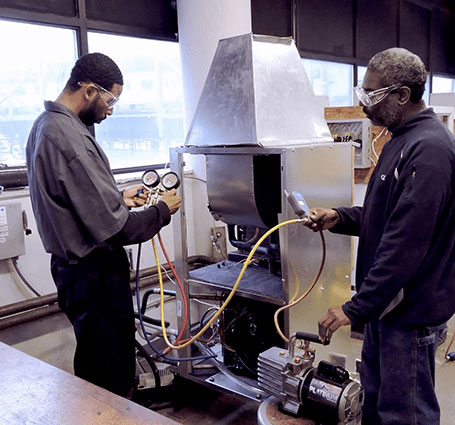
Figuring out your future isn’t easy. If you’re considering trade school, it’s important to understand what a technical education offers. Trade schools provide the benefits of a specialized education and can be a faster route to entering the workforce. The trade school environment can be an enjoyable experience for students who like to learn hands-on. To help you determine a path that’s right for you, let’s explore the advantages of trade school.
Time
Trade school focuses on the essentials—including theories, basic skills and industry skills. Students who are looking for a direct route to a technical education should consider a trade school. On the other hand, two-year degree-granting community colleges and four-year universities can be a longer commitment and may require students take unrelated elective courses—for example, history or English.
Two- and four-year colleges may not be a good fit for students looking for a direct route to practical training. Depending on your program, lifestyle, schedule and other factors, you could finish trade school in as little as seven months .
Smaller Classes
Small classes can be a benefit of trade school. Classes are smaller than classes held in large lecture halls at a college or university. The close-knit environment at trade school helps you get to know instructors who teach theories and guide hands-on learning. Additionally, trade students in small classes get to know each other, learn new ways of problem solving and establish a strong support network . Some students keep in touch with their peers after completing their program as they pursue an entry-level position in their chosen industry.
Hands-on Learning
Everyone learns differently. Some students are auditory learners, meaning they learn new information best by hearing it. Others are kinesthetic learners who thrive by learning hands-on. These learners prefer to try a task for themselves to fully understand and remember it. Both styles are available to students who enroll in a trade school program. Are you a hands-on learner who is excited to get out of the classroom, practice in the shop and start entry-level work after training? If so, trade school may be a good fit for you.

What to Expect in Electrical School | Apex Technical School
Electrical programs help beginners in the electrical trade learn the basics for a fulfilling path in an exciting industry. From learning how to install a switch or an outlet, to finding a loose neutral in a wiring circuit, your days in an electrical school are spent obtaining skills that can help you grow your knowledge in the electrical field.
The average time in Apex’s electrical program involves splitting your time between both theory class – where you’ll learn about electrical theory, past methods and basic fundamentals – and shop class, where you’ll get hands on experience and tips of the trade to use in an entry- level position.
Meet the Instructors
Once students enroll at Apex, they meet their day to day instructors. These individuals have experience in the electrical trade and will introduce students to the concepts and practices of the trade. Instructors take the time to support students and give them space to practice wiring, splicing, grounding and the proper use of over current protection devices.
Tools of the Electrical Trade
Day-to-day learning in an electrical school involves knowledge of industry tools and equipment. Trades people use a variety of trade tools to complete the task at hand, including, but not limited to:
- Digital multimeter
- Tape measure
- Conduit bender
- Wire stripper
- Wire crimper
- Screwdrivers
- Pliers
Basic tools are required to perform installation, repairs and routine maintenance. Instructors teach students the proper use and handling of electrical tools by giving them the opportunity to practice using tools in the shop with their peers. Students will also learn which tools they should keep on hand in their toolbelt at all times on jobsites.
Discover more about the electrical program when you visit the Apex campus. Contact us online for a tour.

Discover 7 Trades for Women | Apex Technical School
Women’s contributions to the U.S. labor force are vast. Traditional occupations have changed since women began entering the workforce in large numbers during World War II. As the country continues to blur the lines between gender roles at work, women thrive more than ever. However, women are still underrepresented in male-dominated trade industries.
Education is an opportunity for women to get their foot in the door and succeed in a trade they’re passionate about. What trade programs are a good match for women looking to learn a new skill or refine their knowledge? Check out seven trades for women now.
Residential Service Trades
Strong women across the country are supporting their households, whether they work outside the home, as a full-time homemaker or both. Women trade workers have the unique opportunity to connect one-on-one with women customers in the home who make financial decisions for themselves and their families. According to Bloomberg.com , women drive 70–80 percent of consumer purchasing. They influence a lot of decisions in a household and are often home at the time of repair or installation, especially in the following industries:
Plumbers may work long hours on a commercial construction site or install water heaters in a residential home. Whatever the job calls for, plumbers don’t back down from the challenge. Women looking to enter the plumbing trade learn to use tools and technologies to solve problems on the jobsite.
Heating, cooling and ventilation help keep indoor spaces comfortable. The industry also includes refrigeration systems, electrical controls and heating systems. Individuals in the HVAC trade are diligent workers with the skills to resolve problems efficiently.
Workers in the electrical field install, maintain and repair power and lighting systems in homes and businesses. The trade requires concentration, attention to detail, and adherence to best practices. Women who enjoy troubleshooting and problem solving may find fulfillment as electricians.
Automotive Trades
As more women choose an automotive education, their visibility and presence help change the industry for the better. In fact, women have been involved in the auto field for decades. Mary Anderson invented the windshield wiper in 1902 and Florence Lawrence invented the turn signal in 1914. Today, female mechanics make an impact in auto collision repair shops and automotive garages across the country.
Auto body repair workers improve the appearance of cars damaged by things like collisions, age or rust. They specialize in making cars safe to drive again, as well as fixing cosmetic flaws. With the help of computerized systems, auto body workers mix and apply fresh paint.
Automotive repair technicians help customers who need structural and mechanical maintenance on their cars. They fix the inner parts of vehicles that have broken down and perform oil changes and other basic car maintenance. Women who want an active, hands-on career path may find auto repair is a good match for them.
Building and Crafting Trades
Women who feel more suited to field work than to a desk may add unique strengths to a construction crew. New technologies, tools and equipment mean that these trades are as detailed as they are hands-on.
Individuals in the construction trade build things with their hands. They work hard in residential, commercial or government settings to erect office buildings, homes, schools and more.
Welders use focused concentration, a steady hand and time-tested best practices to enhance, repair or create projects. This field holds potential for women who are strong team players and efficient when they work alone, too.
Why is learning a skilled trade an excellent choice for a woman? Potential entry-level employers are looking for proficient individuals with training. Learn how you can start your journey to learning a trade today by exploring programs at Apex.

3 Reasons to Pursue Commercial Construction Trade in NYC | Apex Technical School
New York City is full of incredible views, culture and opportunities. It’s difficult to image a world without America’s most iconic city. Each person who lives, works and visits New York City leaves a unique mark on the community—especially those who dedicate their skills and sweat to crafting the buildings that make up the Big Apple.
It’s true—commercial construction workers have found many reasons to pursue their trade in New York. Can you see yourself pursuing a construction future in the city that never sleeps? Here are three benefits of working in the construction trade in New York City.
The city depends on your skills to grow.
New York City neighborhoods need skilled individuals to build offices, schools, roads, hospitals and skyscrapers. Construction projects bring new life to communities by creating infrastructure and economic opportunities for the people who live and work nearby. Individuals in the construction trade also contribute important skillsets that help New York City flourish as a tourist destination by helping erect museums, monuments, shopping centers and public transit facilities. Students who study the residential or commercial construction trade can help expand the development in their city.
You can leave your suit and tie at home.
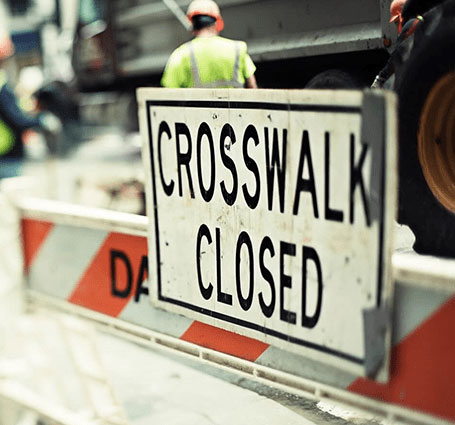
Do you prefer steel-toe boots to polished loafers? Do ties and stiff collars sound like an uncomfortable uniform? For many construction-minded individuals, formal clothing is unnecessary. New York City construction workers don’t iron their 9 to 5 work clothes each morning, but they do suit up for a hard day’s work. They may wear safety goggles, hard hats, protective footwear, reflective vests and other protective workwear. In New York City, safety is a priority—especially in high-traffic areas, on high-rise jobsites and around pedestrians and heavy machinery.
Hands-on work is satisfying.
Construction projects in New York City—think skyscrapers, roads, bridges, restaurants and apartment buildings—need skilled individuals who enjoy working with their hands. In the construction trade in New York, craftsmen often don’t sit at a desk in an office building all day. They work with their hands and operate equipment. There are several famous construction workers who contributed to New York’s skyline and structures.
Interested in gaining construction skills for entry-level position in New York City? Contact us to schedule a tour, view our classrooms and ask questions about the construction program.
US Landmarks By Builders and Tradesmen | Apex Technical School
Every summer, the United States celebrates its birthday on the Fourth of July. Fireworks and barbeque are a festive way to recognize America’s independence, heritage and cultural landmarks. But a quick look around the nation’s cities and neighborhoods proves our country’s history is still being written—thanks to the trade industry.
America’s buildings, bridges, roads, landmarks and homes wouldn’t exist without skilled tradesmen and tradeswomen who are essential to society and the economy. Here’s a look at the trades that built America’s most famous landmarks.
Trades Building America
Skilled trade workers keep America running. Individuals in the trade industries have worked together for more than two centuries in America. They install, maintain, repair, engineer and construct buildings we use every day and landmarks that hold cultural significance. Trades people work on construction jobsites, with trade-specific crews such as:
- Plumbers, pipefitters, steamfitters
- Electricians
- Stone and brick masons
- Carpenters
- Glaziers
- Welders, cutters and solderers
- Fabricators
- Mechanical technicians
- Roofers
Notable U.S. Landmarks in America
Trade workers build and maintain every day necessities, such as cars, homes, bridges and schools. Sometimes, their hard work results in well-known landmarks that are recognized and appreciated around the world for their craftsmanship, ingenuity and design. In fact, builders and tradesmen helped construct some of the most famous landmarks in the USA:
- Empire State Building – Completed in 1931, this New York City skyscraper took 3,400 tradesmen to build. It stood 1,250 feet and was the world’s tallest building until 1970.
- Golden Gate Bridge – This structure spans two miles across the strait where the San Francisco Bay connects to the Pacific Ocean. Opened to the public in 1937, it is the most-photographed bridge in the world.
- Hoover Dam – Boulder City, Nevada, was created for 5,000 of Hoover Dam’s trade workers and their families. A total of 21,000 workers helped construct the dam, which became the target of a German bomb plot during World War II. Today, seven million tourists visit each year.
- Gateway Arch – St. Louis, Missouri, is home to the Gateway Arch, designed by Eero Saarinen in 1965. As the tallest monument and the tallest arch in the world, it required the city to demolish 40 city blocks to make way for its construction.
- Solomon R. Guggenheim Museum – Renowned American architect Frank Lloyd Wright designed the Guggenheim Museum in 1959. The New York City building spirals up toward the sky with six stories of white, coiled concrete.
- Washington Monument – Standing 555 feet tall, the monument is the tallest in Washington, DC. By law, no other structure may be taller. It was constructed by Thomas Casey and the U.S. Army Corps of Engineers.
If you’re interested in pursuing a hands-on trade, explore trade programs at Apex Technical School.
Sources
https://www.history.com/news/10-surprising-facts-about-the-empire-state-building
https://www.history.com/topics/landmarks/golden-gate-bridge
https://www.history.com/news/7-things-you-might-not-know-about-the-hoover-dam
https://www.architecturaldigest.com/story/facts-about-st-louis-gateway-arch
https://www.britannica.com/topic/Guggenheim-Museum-art-museum-New-York-City

Tips for Time Management in School | Apex Technical School
Trade industries are powered by skilled individuals. What do those individuals have in common? Without work ethic, tradesmen and tradeswomen in fields such as construction, electrical, automotive and many others would fall short of their potential. Being proud of your work ethic starts with learning how to balance what you want to do with what you need to do.
Trade school is an ideal time to practice working hard and making the most of each day. Here are three ways you can manage your time to find success at school.
Try Proactive Learning
Trade school gives students the opportunity to learn new skills and practice them hands-on. The more hands-on practice students have, the more skills they retain over time and the stronger their critical thinking muscles become.
Time management is one way to help you be a proactive learner, or someone who is dedicated to taking initiative. Try making a to-do list that will help you balance school work along with your other responsibilities. Take advantage of each day in trade school and try the following proactive learning tips:
- Keep an open mind
- Ask questions and seek out information
- Practice new techniques
- Set aside time for studying at home
Network, Network, Network
Making connections is another way to make the most of your time in trade school. Trade school is an ideal place and time to form relationships with peers and instructors who not only help you reach your goals in school each day but also offer support when you’re pursuing entry-level employment or later in your career.
Networking may seem difficult at first. If you want to talk about a welding technique, you may need to stay after class to meet with an instructor. A small conversation now has the potential to build up your professional network later. Because you took the time to network, your instructor may be willing to speak to potential employers about your work ethic, character and passion for welding.
Learn How to Balance Your Day
When you have too much on your plate—think family responsibilities, trade school, a job, sports, hobbies and friends—learning how to balance your day is essential. Time management helps you stay on track, prevent distractions and say “yes” to the important things.
Time management isn’t just looking at your calendar and arriving to class on time. It involves learning how to make the most of each day, balancing what you need to do with what you want to do, and finetuning your work ethic along the way. Apex instructors and staff want to help you achieve your goals. Contact us today to learn more.

What to Expect at Welding School | Apex Technical School
Welding programs are a top choice for those thinking about going to trade school. In welding classes, students learn how to use welding tools , follow safety regulations and best practices, and gain fundamental skills for an entry-level position.So, what is the average day like for a student in welding school? Individuals may be interested in welding school but unsure what to expect once they enroll and begin classes. Some may wonder, “Will welding be a good fit for me?”, “What do welding students learn in class?” or “Can I make welding classes work in my busy schedule?” If you’re asking these questions, keep reading to learn more about starting a welding program.
Safety First
Students at Apex choose day or evening classes. Many students need to balance school with a job, family and other responsibilities—and having options when it comes to class times helps students stay on track to meet their goals. Whether they choose day or evening classes at Apex, students learn that safety comes first, especially in the welding shop.
Putting on protective gear is one of the first things students do when they start shop for the day. Individuals in the welding trade must protect themselves from open flames, loud noises and heavy materials. This may include:
- A welding helmet
- Safety goggles
- Long sleeves and pants
- Flame-resistant welding jacket
- Welding gloves
- Work boots
- Earplugs
Welding Basics
Learning the ‘why’ behind the welding trade is just as important as learning how to weld in the shop. At Apex Technical School, students walk into the classroom and learn about gas and electric welding processes, manual and automatic cutting techniques, blueprint reading for metal layout and fabrication, including welding thin through thick metals, exotic metals, pipe welding and tube welding. Welding classes at Apex include:
- Blueprint Reading and Fabrication
- Oxyacetylene Welding, Cutting and Brazing
- Basic Shielded Metal Arc Welding (SMAW)
- Gas Metal Arc Welding (GMAW)
- Gas Tungsten Arc Welding (GTAW)
- Advanced Shielded Metal Arc Welding (SMAW)
Welding students at Apex spend more than 50 percent of their time in the shop with instructors who share their knowledge of welding best practices.
Tools of the Welding Trade
Students pursuing the welding trade may encounter a variety of tools and equipment when they attend a technical school. Some days, students use tools they may be familiar with, such as tape measures, hammers and wrenches, while other days they must learn how to properly use stick welders, gas cylinders, welding wire and spool guns. Instructors help students hone their skills by using tools of the welding trade in the shop.
Still wondering if welding is the path for you? Contact us today to schedule a tour to visit the school and get more information about our programs.

Summer Heating and Cooling Problems | Apex Technical School
Across the country, temperatures begin to heat up in May, June and July. Homeowners and commercial businesses rely on air conditioning to keep indoor spaces comfortable and cool. However, sunny days bring problems for A/C units that must work overtime all summer long. In fact, technicians who work for HVAC companies may find themselves facing a few common problems. Learn about summer air conditioner problems and how an individual in the HVAC trade solves them.
Low Air Flow
The summer sun helps grass, shrubs and vegetation flourish. While that may be good news for homeowners, it spells trouble for air conditioning units. Overgrowth around an A/C unit causes overheating and inefficient air flow. Upon inspection, air filters may be consistently dirty, especially when foliage grows on or near the unit and prevents air flow.
Low air flow and dirty filters lead to dirty coils. Homeowners should maintain their lawns and keep all overgrowth to a minimum near A/C units. HVAC technicians clean dirty coils and provide the maintenance necessary to keep an air conditioning system running effectively.
Capacitator Failure
Capacitator failure is another reason an air conditioning unit shuts down in the summer. Like a rechargeable battery, the start capacitator and the run capacitator supply energy to start the motor and keep it running. Capacitators are vulnerable to overheating—especially if the unit is running too hard, too long or short cycling.
A capacitator is part of the unit’s electrical system, and when it overheats, wears out or experiences a power surge, the air conditioner malfunctions. Individuals in the HVAC trade can replace a capacitator with a new one because they have knowledge of electrical systems. Malfunctioning or broken capacitators that aren’t repaired or replaced right away can lead to costly expenses.
Low Refrigerant Charge
Refrigerant is an essential component to an A/C unit. It works to dehumidify the air by absorbing indoor heat. Refrigerant starts as a liquid, changes to a gas then turns back to liquid. This process repeats continuously to ensure heat is absorbed and the air stays dry and cool. However, sometimes in its liquid stage, refrigerant leaks from the A/C coils.
When refrigerant is leaking, individuals in the HVAC trade usually discover that a low refrigerant supply is the culprit. Technicians repair and test the system to ensure the refrigerant is circulating properly and maintaining a stable temperature in the residence or commercial building.
Maintenance is important to keep air conditioners running efficiently during the hottest months of the year. However, issues may still occur for HVAC systems running around the clock. The good news is most air conditioner problems can be prevented or repaired by an individual in the HVAC trade. Apex offers students the entry-level knowledge and skills they need to diagnose summer heating and cooling problems. Learn more about the Air Conditioning and Refrigeration program at Apex, including classes on residential and commercial appliances, electrical and more.