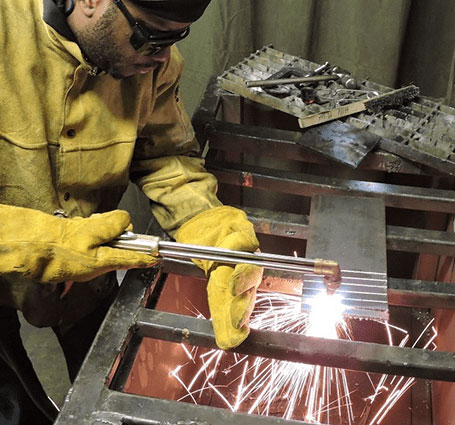
Auto Service Repair vs. Auto Body Repair [Infographic]
Since the debut of the Model-T Ford, cars and trucks have transformed America, helping people travel from point A to point B. Today, with more than 253 million vehicles on the road, auto mechanics and auto body technicians have never been more important. These skilled individuals help maintain vehicles, whether they perform routine care under the hood or fix damaged cars after an accident.
At Apex Technical School, we offer two auto training programs focused on helping students build technical knowledge and skills. Interested in learning which program is a good fit for you? Discover the difference between two auto programs at Apex Technical School in the infographic below.


4 Signs the Electrical Trade Is the Path for You | Apex Technical School
Is technical school my next step? Should I turn my interest in electrical school into a reality? How do I know if electrical training courses are a good fit for me?
These questions are common when you’re determining how—and where—to pursue your education. If you’ve always had an interest in electricity or wondered how it works, consider what you like about the industry. Next, imagine yourself as an individual in an entry-level electrical position. Do your interests, personality traits, and strengths make you a good fit for the trade? Explore four indicators to learn more about yourself and the electrical trade below.
I’m persistent when projects get tough.
You’re a patient person who knows how to keep your cool. When team members, classmates or friends get frustrated, you’re the strong voice in the group with a plan. Your knack for endurance has helped you through hard times. You’re capable of finding the silver lining in tough situations because you trust yourself to solve problems.
In the electrical trade, persistence helps you stay focused. Electrical repairs require concentration, attention to detail, and adherence to best practices learned in electrical training courses. Your determination is an essential trait that makes you an asset for jobs that need maintenance or installations because these jobs can be time consuming and complex.
I’m a dependable person.
As a family member, friend, student and co-worker, you are trustworthy. People know they can count on you because you honor commitments. Not only do you hold others accountable but also yourself. You don’t wait around—you take initiative and jump into a project or situation with confidence. If you make an error, you own up to it. Next time, you’ll incorporate what you learned from that mistake.
Individuals in the electrical trade must be reliable. Customers, managers, and co-workers depend upon electrical tradespeople to get the job done right. If a job is performed incorrectly, it can result in repairs that do not meet code standards or installations that cause dangerous electrical fires. Dependable people working in the electrical field take their skills seriously and use them to maintain safety and ethical standards.
I learn by doing and working with others.
Do you learn best in a hands-on situation? Many individuals in the electrical trade are tactile learners. This means they thrive by getting their hands dirty and remember things by physical movement. You prefer to touch, move, draw, or plot out information as you learn. You feel like you learn more when you’re in a lab or shop compared to a traditional classroom.
People in the electrical industry start by learning from skilled instructors with on-the-job experience. Because you’re a hands-on learner, you can learn new things by trying something yourself several times or observing others completing a task. Once you’ve learned the basics, you can use this skill throughout your time in the industry because new methods, electrical tools , and technology require electrical tradespeople to be lifelong learners.
I’m a critical thinker with a strong memory.
You’re a logical person who considers all sides of an argument or problem before rushing to a conclusion. You’re clear, rational, and open-minded in how you approach life and work. As a student and employee, you don’t take information at face value; instead, you ask questions if you don’t understand. When you uncover the facts, you try to commit them to memory.
Individuals working in the electrical industry are required to remember best practices and uphold important safety codes. The National Electric Code is the manual that all electricians rely on in the field. Critical thinking skills and a steadfast memory can help set you apart and make you a strong candidate for pursuing a future in the electrical trade.
There are many exciting trade industries and countless reasons to consider a technical school to continue your education. If you’re interested in learning how to learn entry-level electrical skills or start trade school classes, explore our electrical and advanced electrical program or schedule a tour online today.
Want to pursue your interest in electrical? Explore the Electrical and Advanced Electrical program at Apex.

Driving the Dream: Custom Cars Made into Art | Apex Technical School
Cars come in all shapes and sizes and can be as different as the people who drive them. Some people view cars as a blank canvas, and increasingly, mechanics, artists and engineers have transformed their vehicle into a stunning work of art.
Car body art got its start in the 1960s when hippies began customizing vehicles with peace signs and psychedelic patterns. Today, car enthusiasts can find customized cars in every city and around the world. If you enjoy automotive body repair and car artwork, check out these four creative car transformations.
Utility Kinetic Insect
The Utility Kinetic Insect , called UKI, is a unique machine with pulsing wings, a surround sound system, LED lights, and all-terrain tires. Make Mob, a group of engineers and creative thinkers constructed UKI at their workshop in Melbourne, Australia. The team was inspired by Mad Max, nature, circus equipment, and bugs found in the Australian outback.UKI sits on a modified four-wheel-drive chassis and runs on electric power. While the mutant vehicle only reaches speeds of approximately six miles per hour, UKI has an impressive sound mixing desk and has traveled to festivals such as Burning Man in 2017.
Swamp Mutha by Ann Harithas
Artist Ann Harithas wanted to create a symbol of the swamps and bayous where she lived on the Gulf Coast. The 1982 Chevrolet Monte Carlo features gold-rimmed tires, a gold body, and a hand-painted scene showcasing swamp creatures such as alligators, rats, and ducks. Harithas also added deer antlers, skulls, and hand-crafted snakes to the Monte Carlo’s roof.Part of the permanent collection at the Art Car Museum in Houston, Texas, Swamp Mutha is an example of visual appeal and self-expression. Mechanics, artists, engineers, kids and thousands of others travel to see it each year.
Nokturnal Car Club’s Custom Creations
Hector Esquivel, president of the Los Angeles, California chapter of the Nokturnal Car Club , began building custom cars when he was just 15 years old. Over the last four years, he has spent about $90,000 on his personalized yellow truck. His organization continues to grow each year with more than 250 members and 28 chapters across the United States, Europe, and Asia.In addition to transforming regular cars into show-stopping rides, Esquivel and a few others crafted a custom golf cart with 14-inch rims, airbags, air ride suspension, LED lights, TVs, and an Xbox 360 in the back for passengers. The golf cart was a way for him to challenge himself and create something new and exciting with his son in his spare time.
BMW 3.0 CSL by Alexander Calder
The first car in BMW’s series was entered in the 1975 “24 Hours of Le Mans,” a race in France. Before it raced, artist and sculptor Alexander Calder modified the now-famous car with intense colors on the hood, sides, and roof. Still impressive by today’s standards, the BMW 3.0 CSL features:
- Six-cylinder inline engine
- Four valves per cylinder
- Twin overhead camshafts
- Displacement: 3210 cm³
- Power output: 480 bhp
- Top speed: 291 km/h
Calder’s painted masterpiece raced for seven hours before a defect forced it to retire. It’s now on display in London for car enthusiasts and BMW fans to enjoy.
Learn Automotive Repair Skills at Trade School
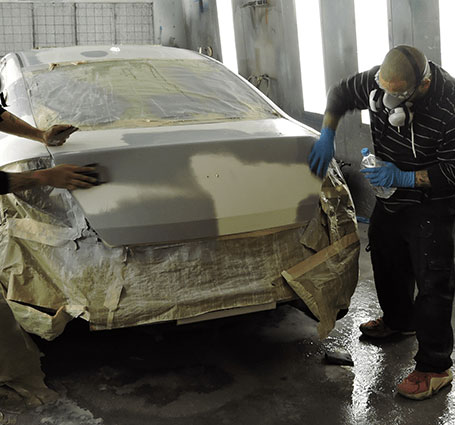
While some people transform their cars as a hobby, many workers in the auto repair industry use their skills to help repair cars after serious collisions or minor damages. If you’re interested in learning more about auto body paint and refinishing techniques, computerized paint-mixing systems or laser measurement technology, explore our auto body repair program .If you’re interested in automotive mechanics—including car parts removal and inspection, energy, electrical circuits, manual and automotive transmissions, fuel systems and air conditioning repair—check out our automotive service and repair program .Have questions? Contact us or schedule a tour online to visit our automotive classrooms and shop.
The Importance of Teamwork Skills in Trade School | Apex Technical School
Saying yes to trade school is a commitment that can help you achieve your goals—from learning new skills with your hands to building confidence in your abilities and interests. As you focus on taking your goals to the next level, consider the skills you’ve gained from school, sports, part-time jobs and the military. Think about your next educational step, and remember: You may already have transferable skills for trade school.
Here are 3 areas that can help you move forward and learn new technical skills.
History of Playing Sports
Have you played a team sport such as basketball, soccer or football? Or maybe you enjoy individual sports like boxing and mixed martial arts? Sports may not initially come to mind if you’re considering your talents—especially if you play for fun in your free time. However, sports can be a valuable way to gain skills for school, work and beyond.
Individuals who play sports learn to prioritize their time efficiently. Athletes learn time management skills by balancing practice and game days with personal commitments like school and jobs. At trade school, this skill can help you manage to-do lists, study and complete tasks in the shop. Plus, sports also teach athletes to work as a team and overcome obstacles.
In trade school, teamwork can help you make connections with peers and network with instructors who will mentor you throughout your trade program. A student who is a strong team player collaborates well with others in real-world scenarios, such as learning to wire an electrical circuit for a technical school project or working on an HVAC unit with other students.
Military Experience
If you have a military background, you’re accustomed to upholding commitments. You’ve stood up for your country, and when it comes time to fulfill commitments to yourself and your future, you’re well-equipped to move forward. At trade school, your sense of dedication is considered a military transferable skill—and it can help you choose a technical program , submit the application and complete coursework.
Members of the military are also effective leaders who know how to follow rules as well as enforce them. Strong leaders are fair managers and creative thinkers. In the military, a leader is someone who takes on responsibilities while helping others do their best. In trade school, such qualities help you ask tough questions in the classroom and get hands-on technical experience in the shop.
Customer Service Skills
Many customer service support personnel are active listeners, problem solvers and clear communicators. Whether you’ve been a cashier, retail manager, call center associate, food service employee or something in between, your experience in customer service has likely provided valuable communication skills that can take you far in trade school.
When you take these skills into the classroom or shop, you set yourself up for success. Communication skills help you ask the right questions when you need to know more from instructors. Other customer service skills—such as patience, work ethic and positivity—can also keep you on track. With work ethic and a positive attitude at trade school, you’ll take time to think through and solve problems, and get one step closer to accomplishing your goals.
Interested in transferring your skills into a trade? Browse our programs to learn what Apex offers. Schedule a tour of Apex Technical School today.
4 Reasons to Become a Plumber | Apex Technical School
Should I pursue my goals of becoming a skilled tradesman? Is the plumbing industry right for me? How do I know if I should follow the plumbing career pathway?
It’s normal to ask these questions as you consider the next steps in your career. Perhaps you’ve repaired plumbing or pipefitting work in your home, but you don’t know if you should pursue plumbing training. As a first step, it’s helpful to evaluate what you like about the field and how to take advantage of your personal characteristics. Consider these indicators as you learn more about the plumbing trade.
I’m a problem-solver.
You’re a curious person with a knack for working with your hands. You like the challenge of solving puzzles, problems and collaborating with a group. Even if you’re unsure at first, you’re confident you can figure out most problems. You are both practical and creative when it comes to finding solutions.
Tradespeople in the plumbing industry need to think efficiently. Installations and repair jobs require plumbers to draw on their knowledge and skills of the trade. Because there are many types of fixtures, faucets and pipes, plumbers must know how to handle a variety of tools, read blueprints and find solutions for many systems and appliances.
I take pride in being reliable.
Your friends, family and coworkers, know they can depend on you to follow through, show up on time or finish a project. You value hard work in others and you expect it from yourself.
Workers in the plumbing trade need to demonstrate reliability to customers and business partners. Some individuals are responsible for several house calls per day, commercial plumbing projects and installs and repairs. A tradesperson who is consistent and trustworthy is an asset to the plumbing industry.
I like to learn and test new things.
You’re interested in the mechanics of how things work. You’re a hands-on person who prefers to troubleshoot an issue, take your time finding the right solution and complete a challenge the right way—and even if the right way takes longer, you never cut corners. You enjoy assembling pieces and parts to find out how things work together.
In the plumbing trade, workers often repair a variety of pipes and appliances—some new and some old. While homeowners may do their best to fix a plumbing problem, a skilled plumber can recognize an unsafe repair job, locate the correct tools and materials and quickly correct the issue. To stay knowledgeable in their trade, plumbers must keep current on techniques, tools and housing and building codes.
I don’t mind small spaces.
Individuals in the plumbing industry often find themselves in confined spaces such as crouching under a sink, working in tight corners, and maneuvering around appliances. These areas may be uncomfortable at times and require individuals in the plumbing trade to maintain good health. In addition, manual dexterity and physical fitness help plumbers minimize their risk of injury.There are many exciting trade industries and countless reasons to consider a technical school to continue your education. If you’re interested in learning about our trade school classes, explore our plumbing and pipefitting program or contact Apex today.

4 Signs of a Strong Work Ethic | Apex Technical School
In addition to skills and on-the-job training, a successful tradesperson has a strong work ethic and a professional attitude. Good professional work habits benefit even the most experienced technicians. While you learn skills to enter the trade field, start practicing good work habits while you train or apprentice. On-the-job training exposes you to real-life work situations , testing your skills and professionalism.
No matter where you are in your education or training, use these four professional work habits of successful tradespeople and develop a strong work ethic.
Problem solving skills
In the classroom and at the jobsite, get in the habit of presenting solutions in addition to problems. Offering solutions to problems or issues shows critical thinking and leadership. Problem solving helps you earn trust from your colleagues and superiors. When you solve problems, be sure to observe, listen and ask questions so you fully understand the issue.
Consider offering a few solutions when working within a team or directly with customers. Take advantage of more experienced teammates or supervisors by asking for their advice on solutions. Gain additional knowledge and understanding from others that can help you solve similar problems in the future.
Continuous learning and education
Keep your skills sharp and gain more experience by participating in continuous learning. As you continue to learn valuable skills for your trade or industry, you learn more techniques and get familiar with new technologies. While working on a jobsite, don’t be afraid to say, “I don’t know.” Learn from others by asking for help from teammates or supervisors.
A desire to learn shows passion and a commitment to doing good work. Look for new or additional learning opportunities to develop or practice skills. Consider asking instructors to connect you with industry leaders or local trade organizations. Gain access to new opportunities or learning workshops by getting involved with professional trade or networking organizations.
Be kind
Kindness goes a long way in every trade industry. As a skilled tradesperson, interacting and working with customers may be a large part of your job. Treat every customer, teammate and supervisor with respect and kindness. Good customer service tends to play a huge role in every trade field. Polite, clear communication helps build trust with customers, managers and project owners.
If you find yourself working within a team, avoid gossiping on the job─even on breaks. A positive attitude lets others see you as a dependable team player. Keep personal issues at home, even if you become friends with your colleagues. Don’t let issues outside of work affect or influence your job.
Stay organized
Get in the habit of writing or recording dates and information. Learn an organization system or create your own way to stay organized using a calendar, a planner or a mobile app. Even if you use a company- or job-provided time tracking or project management system, keep your own records to prevent clerical errors.
Keep your equipment organized, as well, by properly storing and cleaning tools after using them. Have tools ready to use at the start of each day or before starting a project. Good organization preserves and protects your equipment, so you can get the most use out of your tools.
Interested in technical school training? Learn more about the trade programs at Apex Technical School.
5 Questions for the HVAC Trade | Apex Technical School
Individuals in the A/C and refrigeration trade keep buildings, offices, stores and homes cool and comfortable. Heating and air conditioning systems control the temperature, humidity and overall air quality. By providing a climate-controlled environment, refrigeration systems make it possible to store and transport food, medicine and other perishable items.
In America, most homes and buildings use some form or system for air conditioning or refrigeration. Additionally, the popularity of air conditioning systems worldwide continues to grow with the development of new technology and products.
Interested in pursuing HVAC technical training? Read more to learn what to expect as an individual in the HVAC industry.
What does an individual in the HVAC trade do?
In the air conditioning and refrigeration trade, technicians may install, maintain and repair industrial, commercial and residential HVAC systems and component parts. To install HVAC systems, technicians mount or place system components based on drawings or verbal instructions. Then, the technicians assemble and install the refrigeration or air conditioning system. HVAC technicians calibrate controls on the unit, which includes wiring, and test that the system works properly.
Residential or commercial HVAC system maintenance includes checking system parts, lubricating moving parts and monitoring the refrigerant charge. Additionally, to repair a HVAC system, a technician diagnoses the problem and fixes the unit by replacing or repairing controls, electric wiring or other parts. HVAC technicians may also repair heating equipment and troubleshoot gas-fired equipment.
Where does an HVAC tradesperson work?
Refrigeration and air conditioning technicians usually work for companies that install and service A/C or HVAC systems. Some refrigeration and air conditioning technicians are self-employed.
As an air conditioning and refrigeration tradesperson, expect to work in homes, schools, stores, hospitals, office buildings, or factories. Technicians often work in hot and cold environments depending on the type of unit, building or repair. Working in small spaces, outdoors, on rooftops and during irregular hours is common in the A/C and refrigeration industry.

How long is HVAC school?
Depending on your enrollment, an A/C and refrigeration program generally takes between six months and two years to complete. When considering HVAC programs and certification, look for trade schools that are licensed by the state. You might also want to see if the school is accredited.
At Apex, students can spend as little as 7 month s in the program. Learn more about enrolling in trade school at Apex Technical School.
What HVAC tools does a tradesperson use?
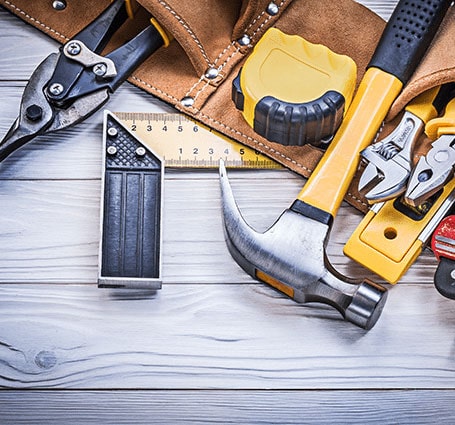
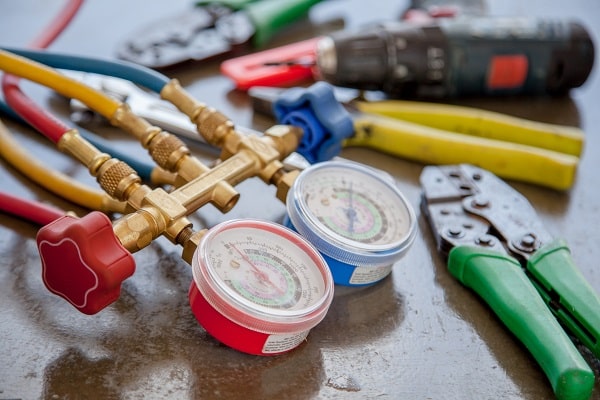
In the A/C and refrigeration industry, technicians use a variety of tools to install, maintain or repair residential and commercial cooling systems or units. For general HVAC work, expect to use these tools: an electric drill, a tape measure, pliers, wrenches, screwdrivers, ladders, and electrical testers. Some common air conditioning tools for installing or repairing units: a tubing cutter, refrigeration gauges, and a vacuum pump.
How do I gain HVAC skills in New York?
New York offers opportunities for skilled A/C and refrigeration technicians. A large population and a temperate climate has need for heating and cooling system installation, repair and maintenance. If you’re interested in gaining entry-level skills for the HVAC industry, enroll in a trade school, like Apex Technical School
At Apex, students in the air conditioning and refrigeration program develop skills to work on:
- Major home appliances
- Basic domestic and commercial refrigeration systems and air conditioning
- Advanced commercial refrigeration systems and air conditioning
Interested in pursuing a path in the refrigeration industry? Learn more about the HVAC trade and training program by visiting the Apex Technical School’s website.

Choosing a Welding Career Path | Apex Technical School
Welding joins two pieces of metal together using fire and pressure. The process began in prehistoric times, and methods have evolved the welding process throughout history . Today, there are many types of welding careers, including combination welding. Find out if your personality and natural talents lend themselves to a welding career path with the following indicators.
I like to solve problems.
You enjoy learning how things work, especially when it’s a challenge. You don’t shy away from a problem and will do what it takes to find a solution. You’re ready to adapt to changing situations, and you feel a sense of accomplishment when you crack puzzles others can’t solve. Your knack for logical thinking has always been one of your strengths.
I like working on projects alone.
You believe it’s important to come to work prepared and on time—even when no one is looking. You’re independent, responsible and motivated. You can work with little to no supervision. Because you take initiative, people trust you to get the job done right. You often receive praise for your high-quality work. While you prefer working on your own, you’re a strong team player and can motivate others to do their best work, too.There are several types of welding careers; many welders work on bridges, ships or in manufacturing plants. They work in hands-on, solitary conditions and are responsible for controlling their welding tools and equipment . Independence and self-motivation are key for students pursuing welding training.
I like to learn new things and improve my skill set.
Sometimes you find yourself taking something apart to see how it works or Googling the answer to a technical question that pops into your head. At work, you ask tough questions because knowing the answers makes you feel more confident.Because a welder’s job involves inspecting, trimming and soldering complex metal objects, welders must pay close attention to detail. While welding school provides a foundation of knowledge, tradesmen and women typically learn new machines and techniques throughout their careers in order to meet evolving safety standards and technologies.Consider technical training opportunities for welding schooling in New York by exploring our Combination Welding Technology program .