






Apex Insider
A Brief History of Electrical Measuring Tools & Equipment
What do the ancient Greeks, Benjamin Franklin , Thomas Edison and Nikola Tesla have in common?
Key Highlights
What do the ancient Greeks, Benjamin Franklin , Thomas Edison and Nikola Tesla have in common? They are the forefathers of modern electricity. As scientists and inventors, their work with electricity, currents and power distribution systems was crucial for the electrical trade we have today. The work from Edison and Tesla led to electric power in homes in the late 1800s and into the 1920s when rural electrification brought electricity to more households.
The Evolution of Electrical Tools
As electricity illuminated more homes and buildings, electricians were required for installation and repair. Electricity can be dangerous and necessitates the right tools and gear. Early tools for electricians like pliers, screwdrivers and wire cutters were metal and did not protect against the risk of electrical shock. However, electrical tools have improved greatly over time and have made electrical work saferand more efficient. Let’s dive into the history of some of the most important electrical tools.

Insulated Hand Tools
The development of insulated hand tools in the 1900s was a major breakthrough for the electrical trade. Insulated hand tools such as pliers, wrenches and screwdrivers quickly became standard among electricians for their ability to protect against shocks, burns and electrocution. The plastic or rubber coating on insulated hand tools prevents the electrician from becoming a path to ground if the tool contacts an energized conductor.
Many hand tools today have a double layer of insulation to ensure backup protection in the event one layer is cut, warped or worn down. OSHA requires electricians to use insulated hand tools as a safety precaution.
Related:A Brief History of HVAC Tools & Equipment
Multimeter
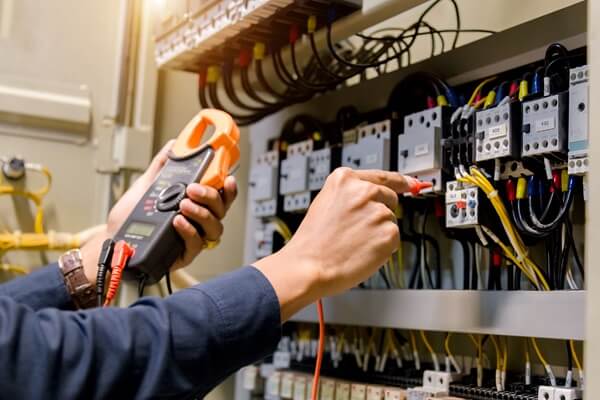
The history of the electrical industry would be incomplete without the multimeter. This electrical measuring tool is an essential tool for electricians to measure voltage, current, resistance and other parameters. Early galvanometers in the 1830spaved the way for the first multimeters to be developed in France in 1924, which measured volts, milliamps and ohms. Handheld multimeters gained popularity in the 1960s and digital multimeters emerged in the 1980s.
The digital nature meant that electricians had more precision. As multimeters gained more special features in the 1990s, their safety and accuracy improved as well. Today’s advanced, wireless multimeters offer electricians the ability to log and graph results on a computer.
Cordless Power Drills
Advances in battery technology led to the development of the cordless drill . In the 1800s prior to cordless options, drills were bulky, corded and used mainly for industrial applications. However, in the 1900s, lead-acid batteries allowed drills to go cordless for the first time; they were popular despite their limited power and short runtime. By the 1960s, Black and Decker debuted a lightweight cordless drill that ran for a few minutes.
It wasn’t until 1991 when lithium-ion batteries transformed cordless drill capabilities. Today, lithium-ion batteries can power cordless drills with a full-day runtime, making it easy for electricians to drill holes to run wiring , sink screws and bolts to install electrical boxes, mix drywall mud, and feed cables through conduit holes.
Explore the Electrical Program at Apex
Ready to step into the electrical classroom and use common electrical tools in the shop at Apex? There are clear benefits of hands-on electrical training . Learn more about our Electrical & Advanced Electrical program now, so you can start planning your future!
Explore the electrical program
Sources:
1 https://www.kleintools.com/blog/klein-s-legacy-tells-history-lineman-s-pliers
2 https://www.fluke.com/en-us/learn/blog/electrical/7-essential-electrician-tools
3 https://hausoftools.com/blogs/news/the-history-and-evolution-of-insulated-tools
Next classes
Classes start every month
Day and evening classes at our Long Island City and Midtown Manhattan campuses. Talk to admissions to save your seat.
On this page
Apex Technical School
Ready to start your career?
Day and evening classes start throughout the year at both campuses.
Apply nowOr call 212-645-3300









Frequently Asked Questions
Why were insulated hand tools important for electricians?


When was the multimeter invented?
What does an electrician use a multimeter for?
How did cordless drills become useful for electricians?
Where can I learn to use electrical tools hands-on in NYC?
Contact us
Fill out the form to get started.

