






Protection is one of the first things individuals in the welding industry learn about their trade. Welding protective gear can help keep the skin, eyes, hair and face safe from the task at hand. At Apex, we require safety gear for welding students in the shop, where students engage in hands-on learning with welding tools and equipment . Keep reading to learn about the types of PPE required for welding—from professional welding helmets to protective hand gloves and more.
PPE Required for Welding
Welding requires personal protective equipment (PPE) to keep the welder safe from hot metal, bright light and UV radiation. Different types of welding may call for various types of gear. Common types of welding protective gear found in the industry include:
- Welding helmets
- Goggles
- Respirators
- Fire/flame resistant jackets or aprons
- Ear plugs
- Gloves
Why Is Eye Protection Important in Welding?
Welding protective gear for the eyes helps shield against ultraviolet radiation, flying particles, debris, sparks, intense light, irritation and chemical burns. Eye injuries can occur from bright welding light; therefore, welders should wear helmets fitted with a shade appropriate for the type of welding they are doing.
If a welder is not wearing a welding helmet with an eye shield, he or she should wear safety goggles with side protection to prevent particles and debris from entering the goggles and damaging the eyes.

Using Protective Hand Gloves for the Skin
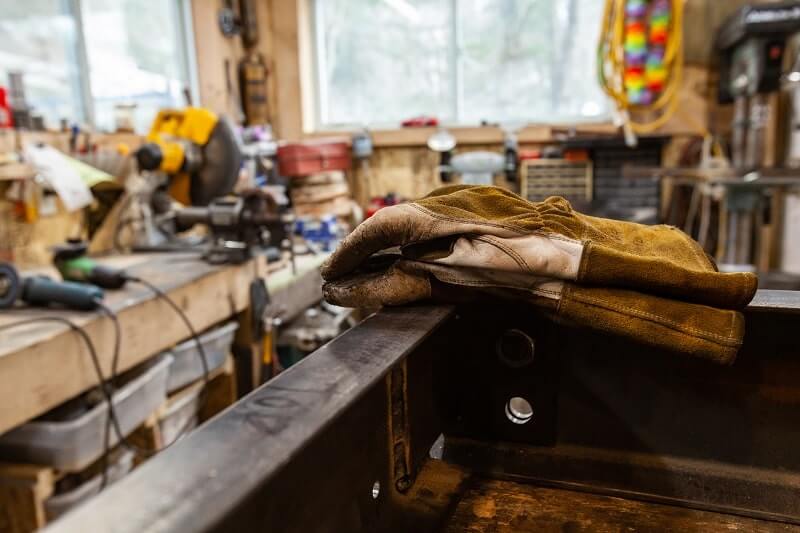
Insulated gloves protect against electric shock, heat, burns and fires. Protect the wrists and forearms by wearing cuff-style leather gloves with protective sleeves. When kept dry, leather is a good electrical insulator. Gloves also protect the skin against ultraviolet radiation while allowing range of motion and an enhanced grip. According to Engineering 360, three common types of protective hand gloves include:
- TIG welding gloves – Designed to provide adequate protection and finger sensitivity. Made of goat, cow, or pig hides.
- MIG welding gloves – Designed to provide maximum protection with some dexterity. Made of pig, cow, or deer hides.
- Stick welding gloves – Designed to provide the most robust protection. Made of cow or elk hides.
Related: Common Welding Types
Tips for Wearing Protective Clothing
All clothing types aren’t suitable for welding. It’s best to wear clothing made from heavy-weight wool or cotton to protect against ultraviolet radiation and flames. Make sure clothes don’t come into contact with oils or gasoline, as these are combustible and can catch fire easily. Wear high boots to protect the legs, ankles and feet from hot metal sparks.
Do not wear:
- Jewelry
- Synthetic materials
- Torn or frayed clothing
- Broken or damaged helmet lenses
Learn more about the Combination Welding Technology Program at Apex Technical School by visiting our program page or by contacting us today.


